Busan is a port city, and its food shows it: cheap, filling, seafood-heavy and shaped by refugees, dockworkers and fishermen. Blog posts written by Busan residents keep returning to the same dishes. This guide ranks them by how often they come up and tells you how to order.
1. Dwaeji gukbap (pork and rice soup)
The signature dish. A milky pork-bone broth with sliced pork and rice, served with salted shrimp (saeu-jeot), chives, and kimchi on the side. Add the shrimp and chives yourself, then season to taste. Order "dwaeji gukbap" and say whether you want lean ("sutgogi") or mixed cuts ("seokkeo"). Several shops open very early or stay open late, so it works for breakfast or after a late night in Seomyeon or Nampo-dong.
2. Milmyeon (Busan wheat noodles)
Chewy wheat noodles in an ice-cold broth, or mixed with a spicy sauce ("bibim milmyeon"). The dish is tied to refugees from Hamhung who settled in Busan during the Korean War and adapted their cold-noodle tradition to local wheat flour. It is a summer favorite, but locals eat it all year. Cut the noodles with the scissors provided and add mustard and vinegar a little at a time.
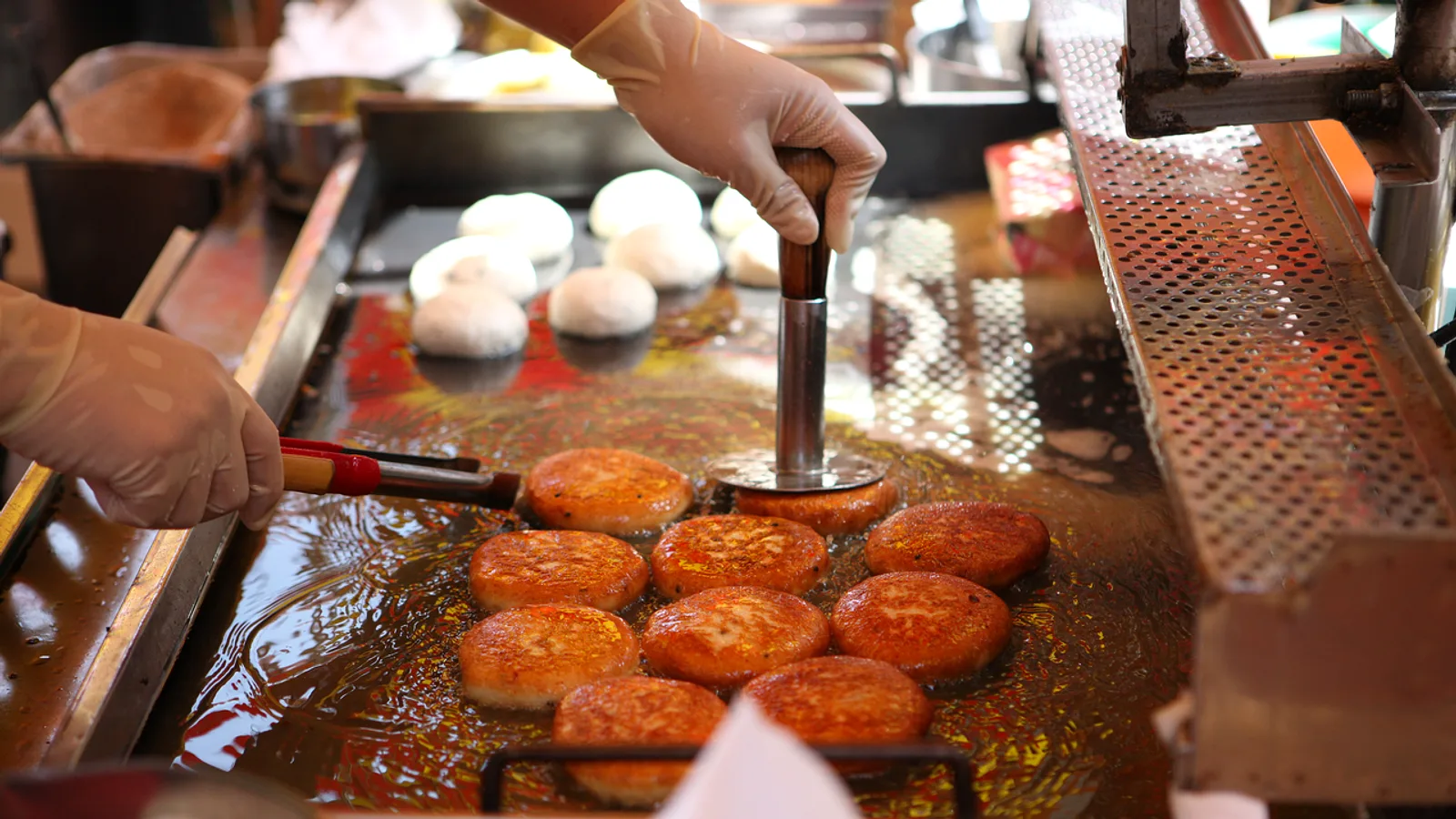
3. Ssiat hotteok (seed-stuffed pancake)
Busan's version of hotteok is filled with sunflower seeds, pumpkin seeds, peanuts and brown sugar and fried crisp. It is the classic walking snack around BIFF Square and Gukje Market. Eat it hot, and be careful of the molten sugar.
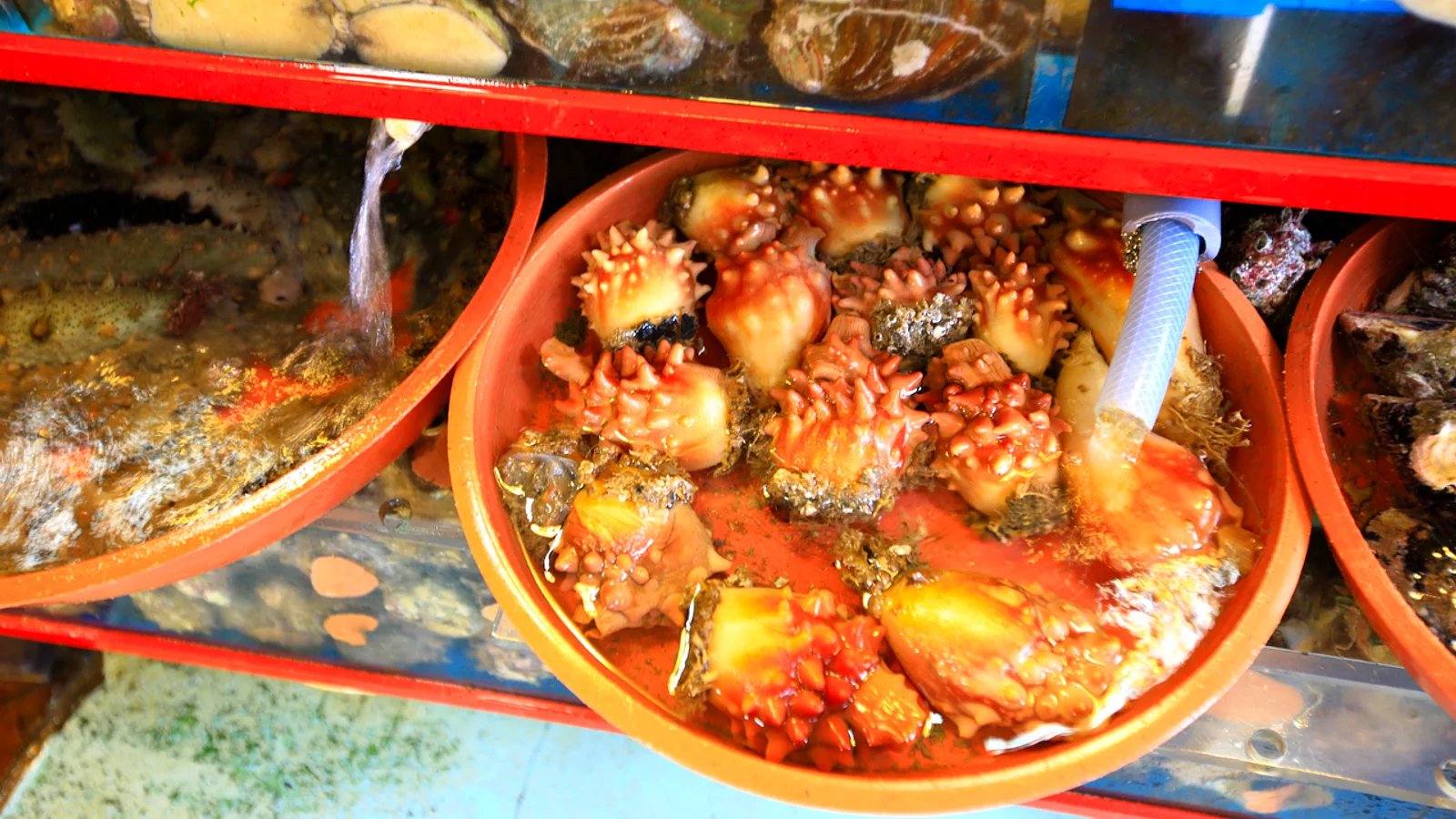
4. Raw fish at Jagalchi and Millak
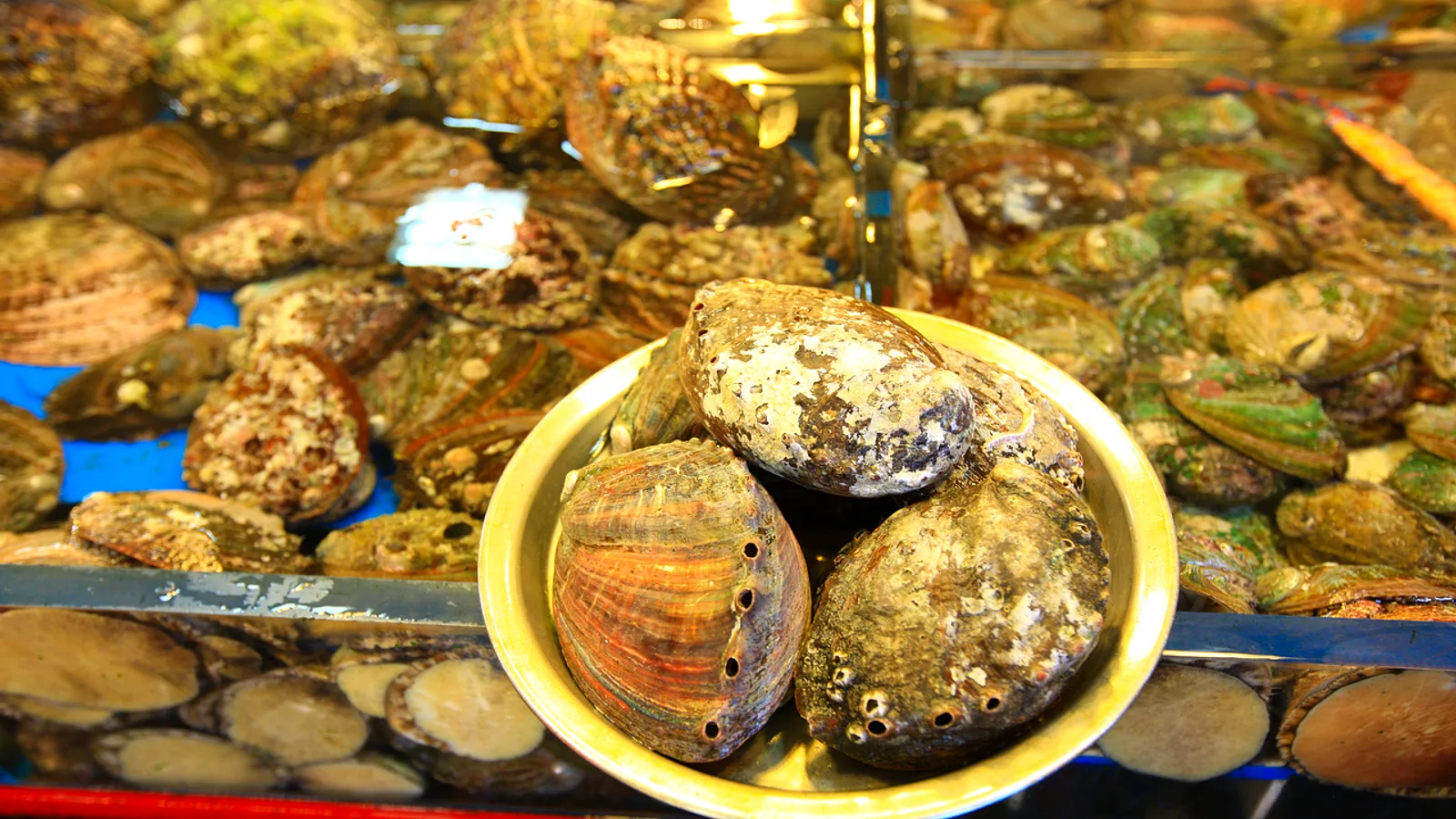
Pick fish from the tanks at Jagalchi Market, have it cut, and eat upstairs or at a nearby restaurant for a small seating fee. For a more relaxed setting with sea views, Millak Waterside Park near Gwangalli is popular. Ask for the total price before you order, and choose a seasonal fish.
5. Gomjangeo (spicy grilled hagfish)
Hagfish grilled on a hot plate with a spicy sauce, a classic drinking food near the Jagalchi area. The texture is chewy and not for everyone, but it is a real local choice.
6. Eomuk (fish cake)
Busan is the center of Korea's fish cake industry. Eat it from a street stall as a skewer in a hot broth, or try the filled and baked varieties sold by bakery-style shops in Yeongdo and near Busan Station.
7. Daege (snow crab) in Gijang
Gijang, at the northern end of the coast, is known for crab restaurants. Best as a group meal. Always check weight and price before the crab is steamed.
8. Dongnae pajeon (scallion pancake)
A thick scallion pancake with seafood, historically from Dongnae. Pair with makgeolli (rice wine).
Practical tips
- Many restaurants have photo menus or touchscreen kiosks. Naver Map and Kakao Map show real opening hours and queues; Google Maps is less accurate for small shops.
- Solo diners are welcome at gukbap and milmyeon shops. Seafood grills usually require two orders.
- Pork soup comes with salted shrimp on the side, and fish cake contains fish. If you have an allergy or follow a halal or vegetarian diet, show a card in Korean and ask before ordering.
- Prices change often. Check the menu board before ordering rather than relying on any list.
Video: Nampo-dong street food walk (Haps Korea)
Related
See our guides to Busan's markets, the Haeundae coast, and a three-day Busan itinerary.