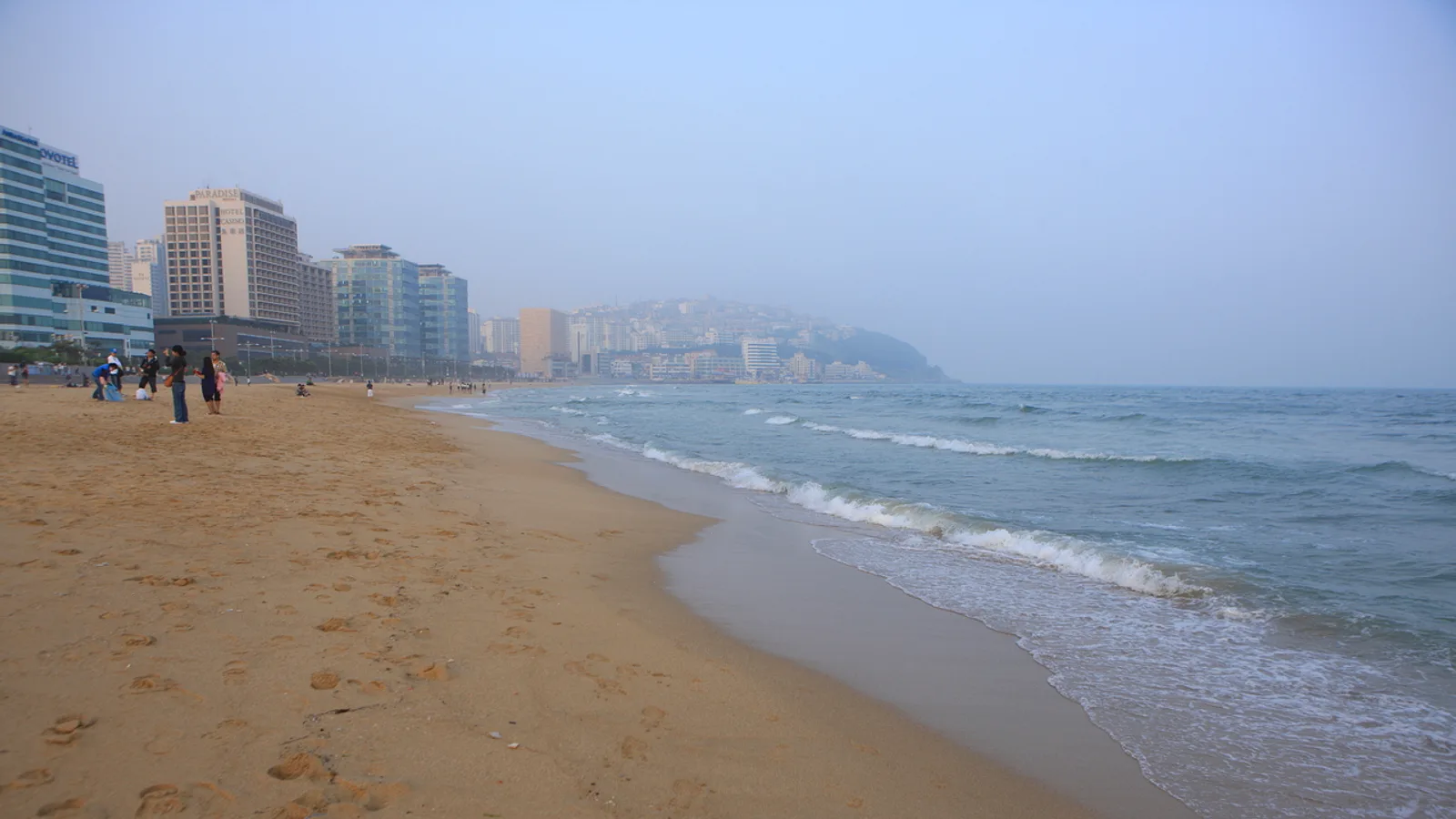
Busan is a long, spread-out port city, and the area you sleep in shapes how much time you spend on trains. Four districts cover most visitors' needs: Haeundae for the beach, Gwangalli for the bay and its night view, Seomyeon as a central transport hub, and Nampo-dong with Busan Station for markets and rail connections. None is the best in every respect, so the right choice depends on your priorities.
Haeundae: Beach and Resort Atmosphere
Haeundae is the most familiar base for first-time visitors who want a beach holiday feel. It is served by metro Line 2, which makes it simple to reach other parts of the city without transfers in many cases.
- Good for: summer beach days, sea-facing hotels, easy walks along the shore, families and travelers who want a resort-style stay.
- Trade-offs: it is busy in peak season and on weekends, and rooms with sea views usually cost more than comparable rooms a few streets back. Check current rates on booking sites rather than relying on general impressions.
- Transport: Line 2 runs along the district, but the ride to Nampo-dong or Busan Station is long, so day trips to the old downtown take real time.
Gwangalli: Bay Views and Evening Scenery
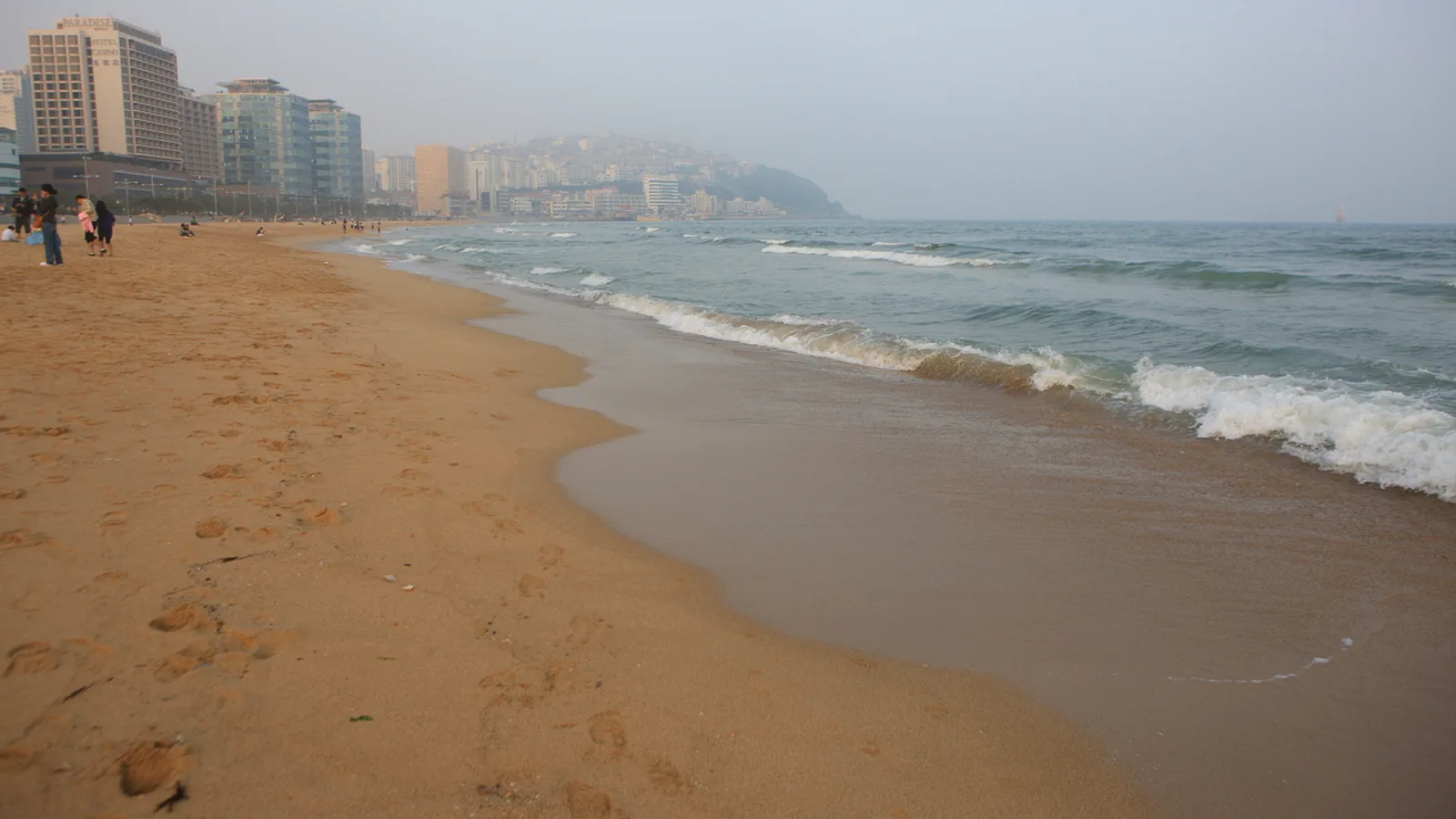
Gwangalli is known for its night view across the bay, with the Gwangan Bridge lit up after dark. It suits travelers who prefer a stay with a view and a lively but compact seaside setting.
- Good for: evening walks, bay-facing rooms, cafes and restaurants within walking distance of the sand.
- Trade-offs: the waterfront strip can be loud at night, especially on weekends. If you are a light sleeper, ask for a room facing away from the beach or on a higher floor.
- Transport: it is a little less direct than Haeundae or Seomyeon for metro users. Check the walking distance from your accommodation to the nearest station on Naver Map or Kakao Map before booking.
Seomyeon: The Central Hub
Seomyeon is where metro Lines 1 and 2 cross, which is the main reason to stay here. From this interchange you can reach both the Haeundae side and the Nampo and Busan Station side without long detours.
- Good for: short stays with a packed itinerary, travelers who plan to visit many districts, and anyone who wants plenty of choice in shops and restaurants.
- Trade-offs: it is an urban commercial area, not a beach resort. Expect city streets, crowds and evening noise instead of sea views.
- Transport: the strongest of the four for flexibility. Late-night returns from other districts are also easier when your station is a major interchange, though you should confirm the last train times on a map app.
Nampo-dong and Busan Station: Markets and Rail Links
This area combines the traditional market districts of Nampo-dong with Busan Station, the city's KTX terminal. It is the logical base if you arrive or depart by high-speed rail from Seoul or other cities.
- Good for: market browsing, street food, a short walk from your hotel to the station, and an early or late train.
- Trade-offs: it feels more like an older working port than a leisure resort. There is no beach nearby, and some streets are quiet and less lively late in the evening.
- Transport: excellent for rail, and the metro connects onward to other parts of the city. The beaches on the east side are a longer trip.
Food Notes
Busan is famous for seafood, and markets in Nampo-dong are a natural place to try it. Travelers with shellfish, fish or other allergies should be cautious: many dishes use seafood broth, fish sauce or shellfish stock even when the main ingredient looks different. Raw seafood also carries a higher risk for pregnant travelers and anyone with a weak immune system. Ask staff to check ingredients, and use a translation app with your specific allergy written out in Korean.
How to Choose
- Beach and resort feel: Haeundae.
- Night view and a quieter bay setting with a lively edge: Gwangalli.
- Maximum flexibility on the metro: Seomyeon.
- Arrival by KTX and market access: Nampo-dong or Busan Station.
- Split stay: for four nights or more, consider two bases, such as Nampo-dong first and Haeundae after, to cut down on cross-city travel.
Tips
- Check the exact distance from your accommodation to the nearest metro exit on Naver Map or Kakao Map. In Busan, "near the station" can still mean a steep or long walk.
- Hills are common, especially around Busan Station and older districts. If you have heavy luggage, look for accommodation with step-free access.
- Weekends and holidays, along with summer, bring crowds to the beach districts. Book early, and confirm cancellation terms on the official booking page.
- Sea-view rooms often differ by floor and direction, so read the room description carefully and confirm with the property if the view matters to you.
- Check official sites for KTX and metro schedules, since services and operating details can change.
- If you are a light sleeper, request a quiet room in any of the four areas.