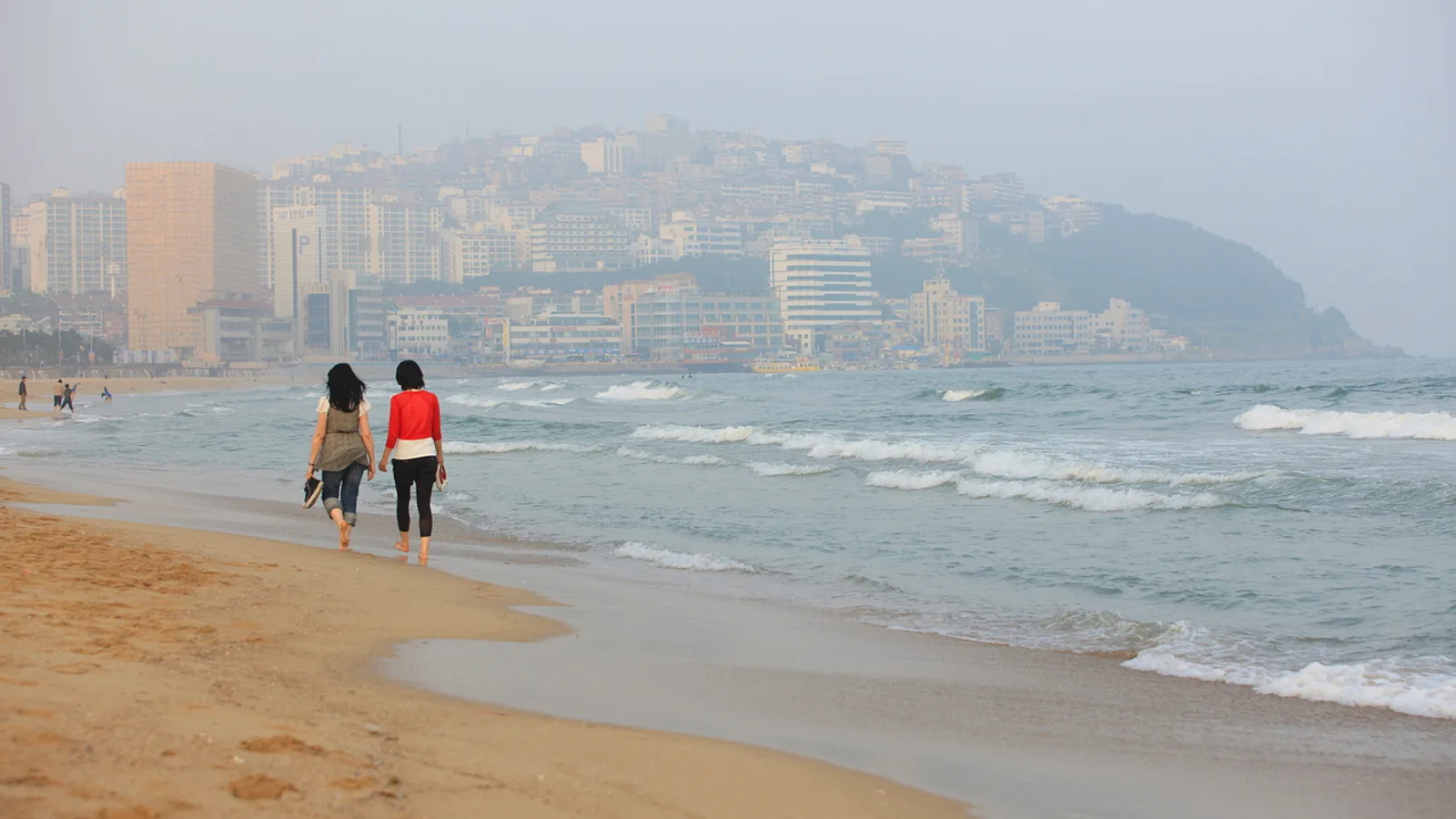
Busan sits on the southeast coast of South Korea, and the sea shapes its weather all year. Winters are milder than in Seoul, summers are humid, and the sea breeze makes evenings cooler than conditions inland. Knowing what each season brings helps with choosing travel dates and with packing the right layers. The sections below go through the year, then cover items that are useful in any month.
Spring (March to May)
Spring is known for cherry blossoms. Dalmaji Hill and Namcheon-dong are two of the best-known places to see them, and both draw crowds when the trees are in bloom. Exact bloom dates change from year to year, so check the latest forecasts shortly before departure rather than relying on a fixed week.
Yellow dust days also occur in spring. On those days the air can look hazy and may irritate the eyes and throat. Check the daily air quality reading on Naver Map or a weather app, and plan indoor activities if the level is poor.
- Pack layers: a light jacket or cardigan over a T-shirt.
- A mask suited to fine dust is useful for sensitive travellers.
- Comfortable walking shoes suit hilly viewpoints and blossom walks.
Summer (June to August)
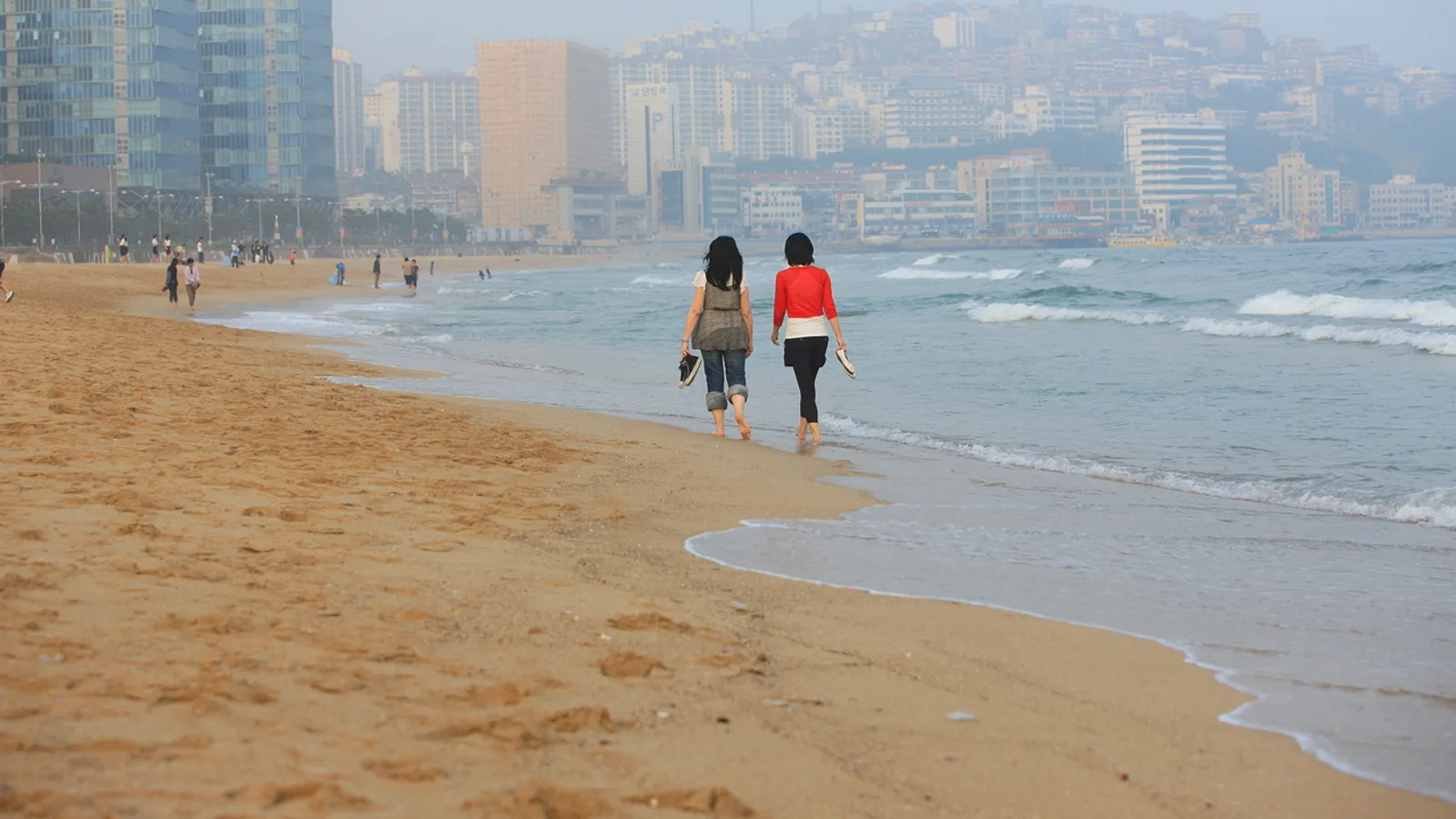
Summer begins with the monsoon season, followed by hot, humid weather. The humidity is the main challenge, so expect sticky days even when the temperature is not extreme. Beaches are open in July and August, which makes this the peak period for swimming and beach activities.
Late summer carries a typhoon risk. Storms can disrupt ferries, flights and outdoor plans, so keep itineraries flexible and follow official weather warnings. Check airline and transport operator announcements if a storm is forecast.
- Pack breathable, quick-drying clothing.
- Bring a compact umbrella or a light rain jacket for the monsoon period.
- Sandals with a secure strap handle wet pavement better than flat canvas shoes.
- Sunscreen, a hat and a refillable water bottle help on hot days.
- A swimsuit and a quick-dry towel are needed if beach time is planned.
Autumn (September to November)
Autumn is the most comfortable season in Busan. The humidity of summer eases and days are well suited to walking along the coast and exploring neighbourhoods on foot. September can still overlap with the late typhoon season, so keep an eye on forecasts early in the month.
October is a busy month because the Busan International Film Festival takes place then. A fireworks festival is also held in autumn. Accommodation can fill up around major events, so check official festival sites for dates and book early if the trip coincides with them.
- Pack light layers that can be added or removed through the day.
- A medium jacket is sensible for evenings near the water, especially later in the season.
- Comfortable shoes are enough for most sightseeing.
Winter (December to February)
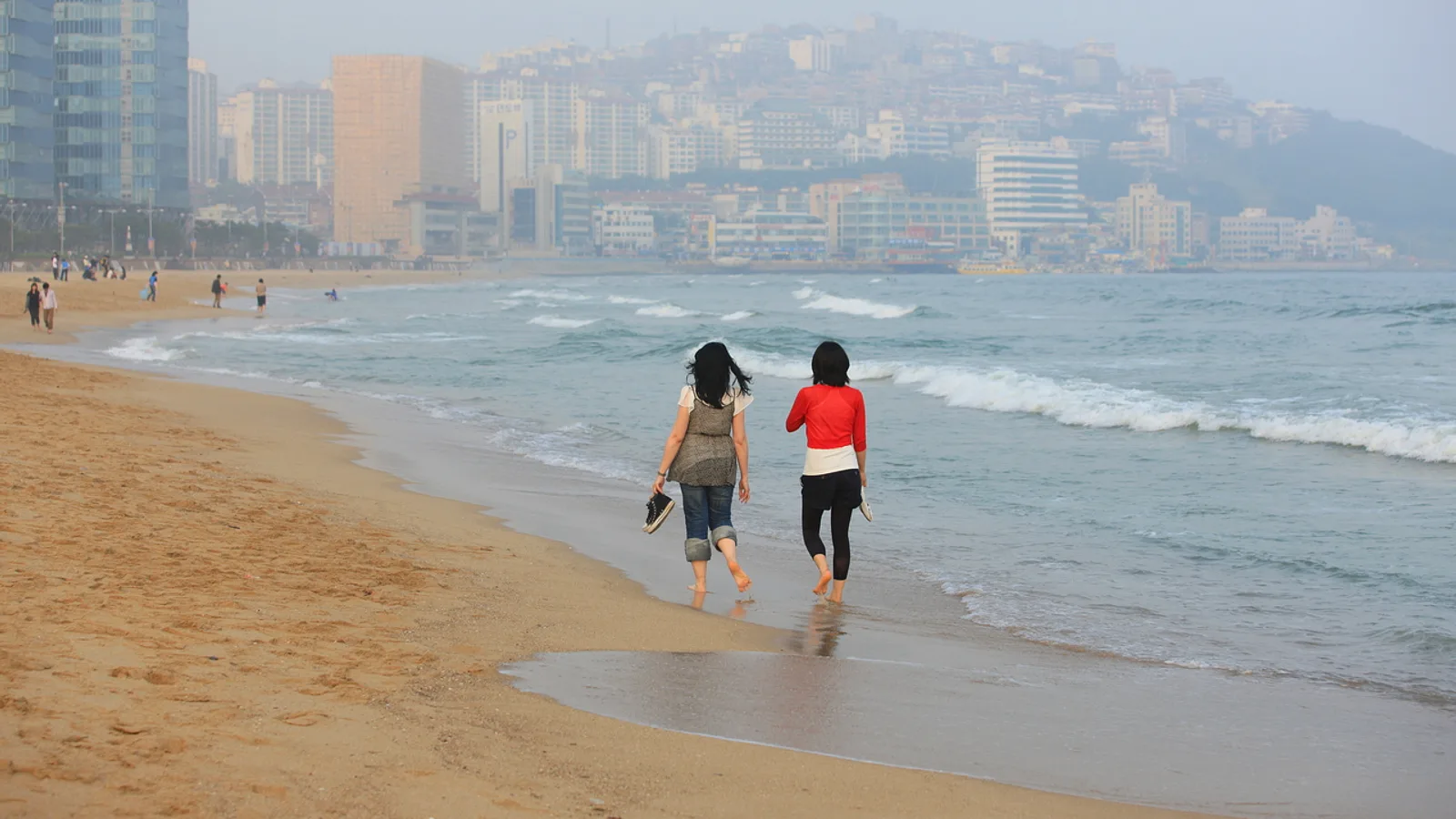
Winter is dry and windy, and snow is rare. Busan is milder than Seoul in this season, but the wind off the sea can make it feel colder than the thermometer suggests, particularly on beaches, harbour fronts and exposed hills.
- Pack a windproof outer layer rather than relying only on bulk.
- Add a scarf, gloves and a hat for coastal walks.
- Moisturiser and lip balm help with the dry air.
- Thermal base layers are worthwhile for travellers who feel the cold.
Evenings and the Sea Breeze
In every season, the sea breeze makes evenings cooler than inland areas. A day that feels warm in the city centre can feel noticeably fresher on a beachfront promenade after dark. Carrying a light extra layer is a simple way to stay comfortable, even in summer.
Choosing When to Go
- For blossoms: spring, with the caveat of possible yellow dust days.
- For beaches: July and August, accepting heat, humidity and some typhoon risk.
- For the most comfortable weather and events: autumn, especially around the film festival in October.
- For fewer weather concerns about heat and a quieter feel: winter, with warm outer layers.
Tips
- Check a reliable forecast and the air quality reading a few days before departure and again on the morning of each outing.
- Pack in layers rather than for a single temperature.
- Keep a compact umbrella in the daypack from the monsoon through the typhoon season.
- Follow official warnings and operator announcements if a typhoon is forecast, and allow buffer time around flights and ferries.
- Look up festival dates on official sites and book accommodation early for the film festival period in October.
- Use Naver Map or Kakao Map to check indoor alternatives nearby when weather changes plans.