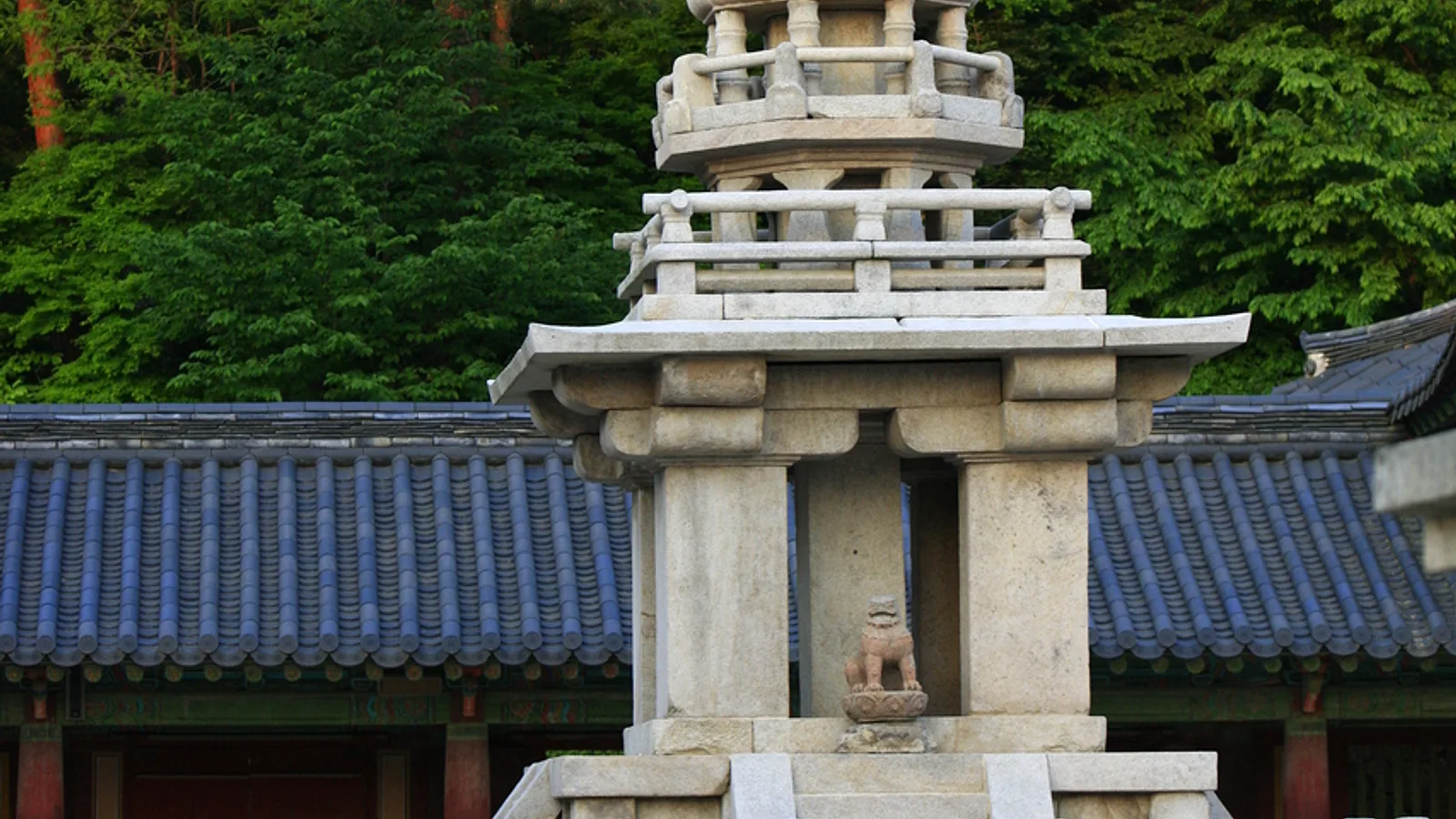
Gyeongju was the capital of the Silla kingdom for roughly a thousand years, and much of the old city survives as temples, royal tombs and palace ponds. From Busan it is close enough for a long day trip, but the sights are spread out, so the order of stops and the return plan matter more than the number of places visited. This guide covers getting there, a practical route and how to protect the trip home.
Getting from Busan to Gyeongju
There are two main options: the KTX high-speed train and the express bus.
- KTX: Trains arrive at Singyeongju Station, which sits outside the historic centre. From there, a city bus takes visitors into town and to the main sights.
- Express bus: Buses run between Busan and Gyeongju and generally drop passengers closer to the city than the KTX does. Check the departure terminal and the arrival terminal in advance, since Busan has more than one.
Compare fares, journey times and schedules on the official Korail site, the express bus booking sites or Naver Map and Kakao Map. Both options work well; the train is convenient if the schedule fits, while the bus avoids the transfer from Singyeongju Station.
Suggested Day Plan
The route below follows the order in which the sights work best geographically and by light. Adjust it to match the actual arrival time.
- Bulguksa first
- Daereungwon next
- Lunch in Hwangnidan-gil
- Donggung and Wolji at dusk
- Return to Busan
Starting at Bulguksa places the farthest sight at the beginning, while energy is high. Finishing at Donggung and Wolji suits the evening, when the pond and pavilions are lit.
Bulguksa
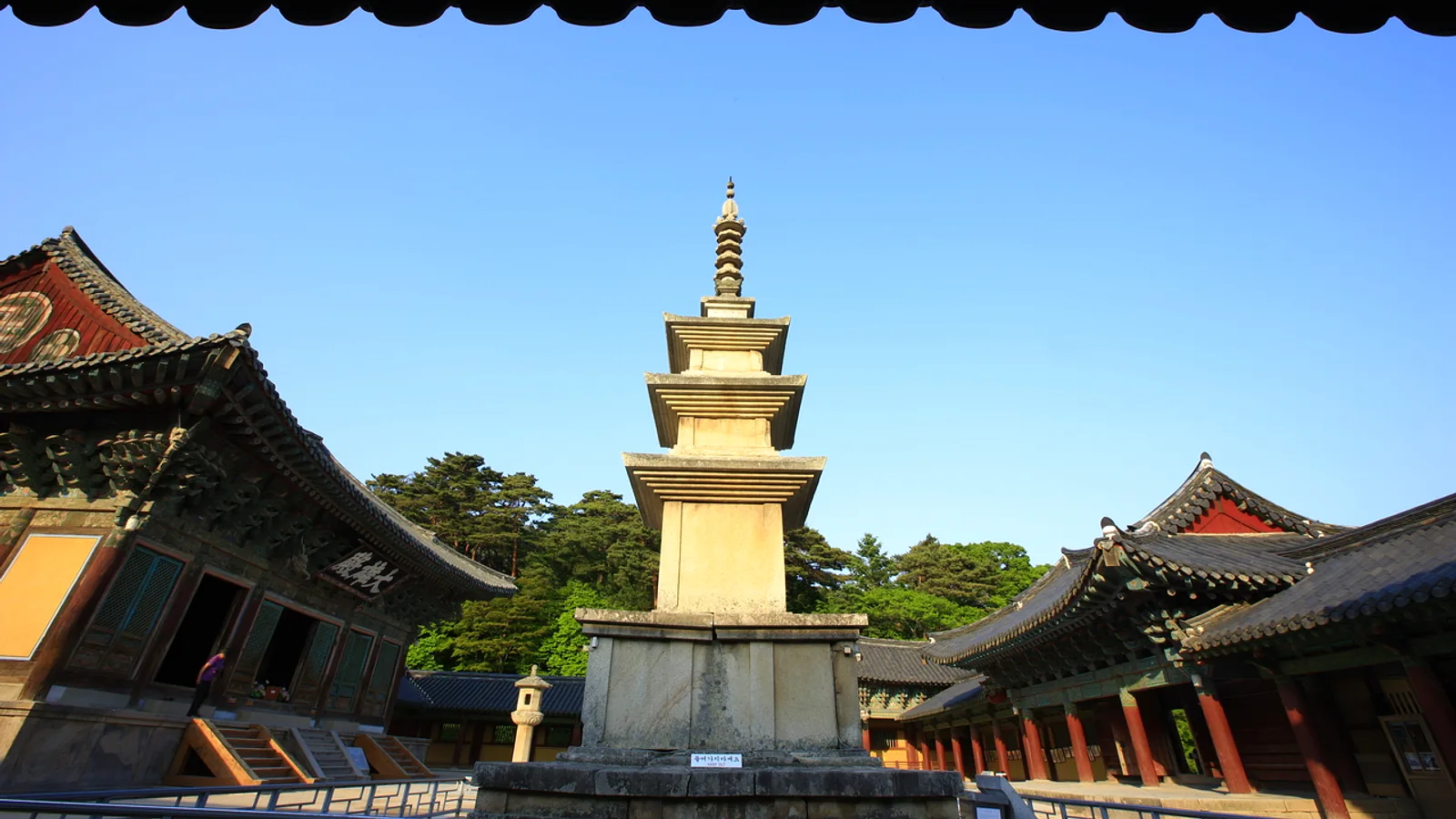
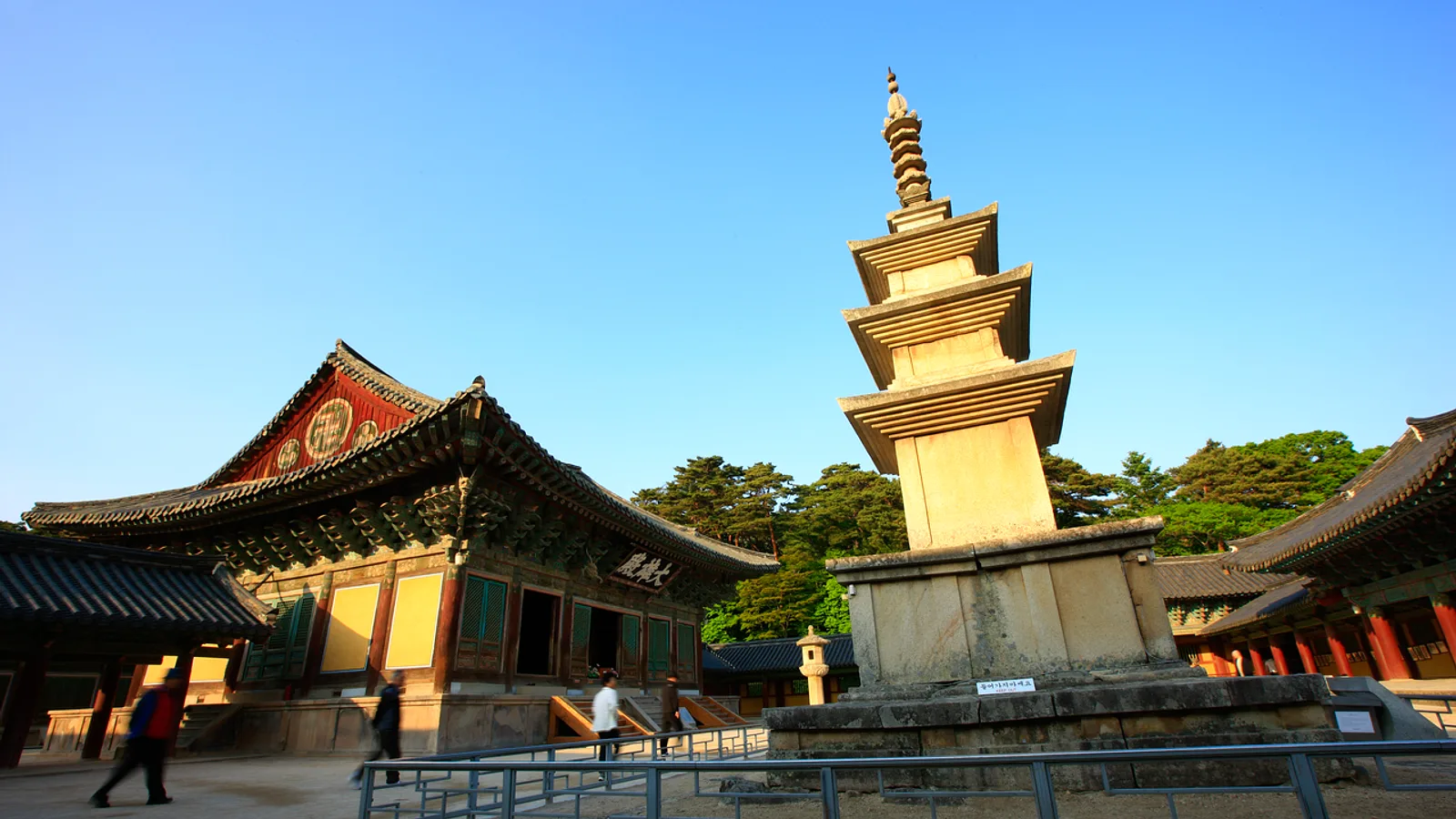
Bulguksa is the best-known temple in Gyeongju and a UNESCO World Heritage Site. The complex has stone bridges, pagoda-topped courtyards and wooden halls on raised stone terraces. It is outside the central area, so allow transit time from the station or bus terminal. Use Naver Map or Kakao Map to find the right city bus, and confirm opening hours and entrance details on the official site before going.
Daereungwon
Daereungwon is a park of large grassy burial mounds belonging to Silla royalty and nobles. One mound is open to enter, which shows how the tombs were built. The park is flat and easy to walk, and it sits near central Gyeongju, which makes it a natural step between Bulguksa and lunch. The paths are open and mostly unshaded, so bring sun protection in summer and warm layers in winter.
Lunch in Hwangnidan-gil
Hwangnidan-gil is a pedestrian-friendly street area close to Daereungwon, with a mix of restaurants, cafes and small shops in renovated low-rise buildings. It is convenient to walk there directly from the tombs.
- Look at menus posted outside before sitting down; many places display photos and ingredient lists.
- Allergy caution: Korean dishes commonly contain sesame, soy, shellfish, egg and wheat, and stocks are often made with anchovy or other seafood. Vegetarians and vegans should ask whether broth or seasoning contains fish or meat, as dishes that look plant-based may not be.
- If a dietary need is strict, show a translated allergy note on a phone rather than relying on spoken explanation.
- Popular streets fill up at midday, so a slightly early or late lunch can reduce waiting.
Donggung and Wolji at Dusk
Donggung and Wolji preserve the site of a Silla royal pleasure garden, with a pond and reconstructed pavilions. Visiting around dusk is the main reason to save it for last, as the buildings are lit and reflected in the water. Check the official site for the current lighting and closing arrangements, because they can change by season. Dusk times shift considerably through the year, so look up sunset for the travel date and plan backward from it.
Returning to Busan
Treat the return as the fixed point of the day, not an afterthought.
- Book or check the last KTX train and last express bus before leaving Busan, not at the end of the evening.
- Leave Donggung and Wolji with real margin for the city bus ride back to Singyeongju Station or the bus terminal.
- Decide a hard cut-off time in advance, and drop a stop rather than risk the final departure.
- If the last train is full, the express bus is a backup, so know where its terminal is relative to the pond area.
Tips
- Buy return tickets early on weekends, holidays and during autumn foliage season, when seats fill.
- Carry a transit card or payment method that works on Korean city buses, and confirm it before the trip.
- Wear comfortable walking shoes; the day involves a lot of walking on gravel, grass and paving.
- Download offline maps and use Naver Map or Kakao Map for bus numbers, which change over time.
- Check weather forecasts, since rain makes the temple stone surfaces and tomb paths slippery.
- If time runs short, Bulguksa and the dusk visit to Donggung and Wolji are the stops most worth keeping.