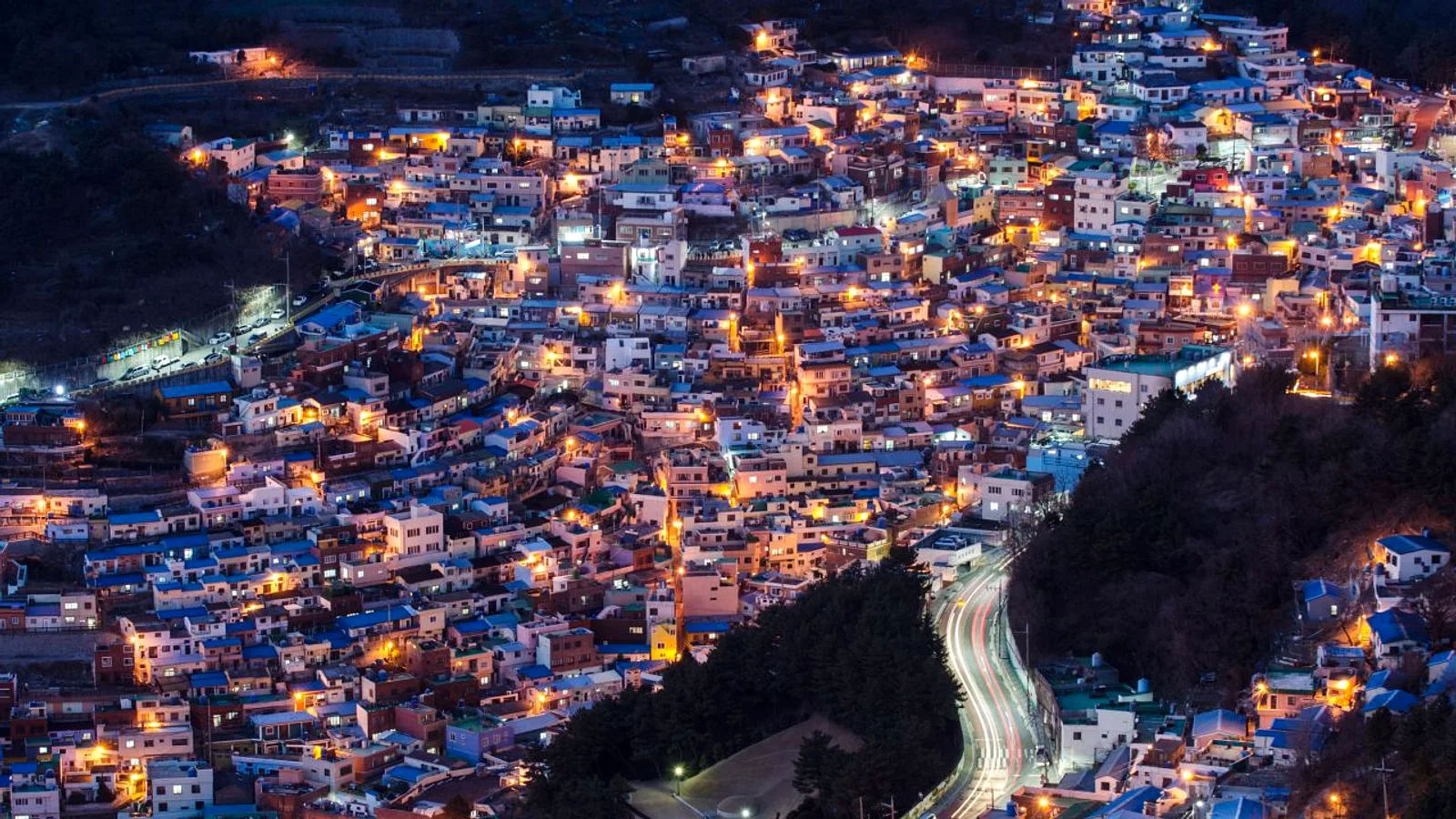
Busan and Gyeongju make a natural pair for a first trip to South Korea beyond Seoul. Busan is a large port city with steep hillside neighborhoods, busy markets and a long coastline. Gyeongju, the former capital of the Silla kingdom, is a smaller and calmer city where grassy burial mounds sit among ordinary streets. This plan gives two days to each, with a transfer of about one hour in the middle. It is built for visitors who want a mix of city energy and history without rushing.
How the four days fit together
- Days 1 and 2: Busan, covering Gamcheon, the markets and the Haeundae coast.
- Day 3: Travel to Gyeongju in the morning, then start with the tomb area.
- Day 4: Donggung and Bulguksa, then head onward.
Two nights in Busan and one or two nights in Gyeongju work best. If the trip ends in Gyeongju, plan the onward departure before booking a return time.
Day 1: Gamcheon and the markets
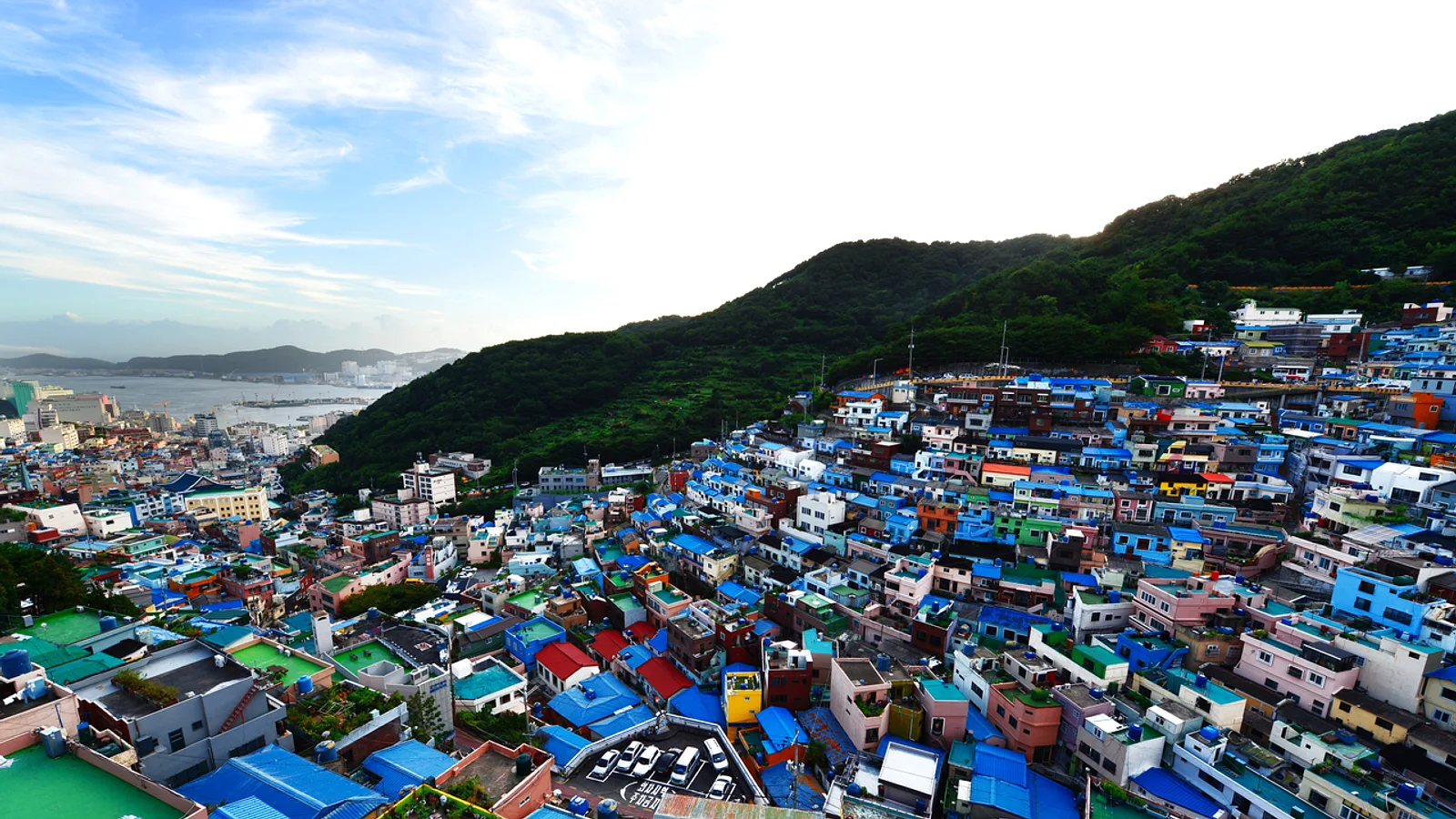
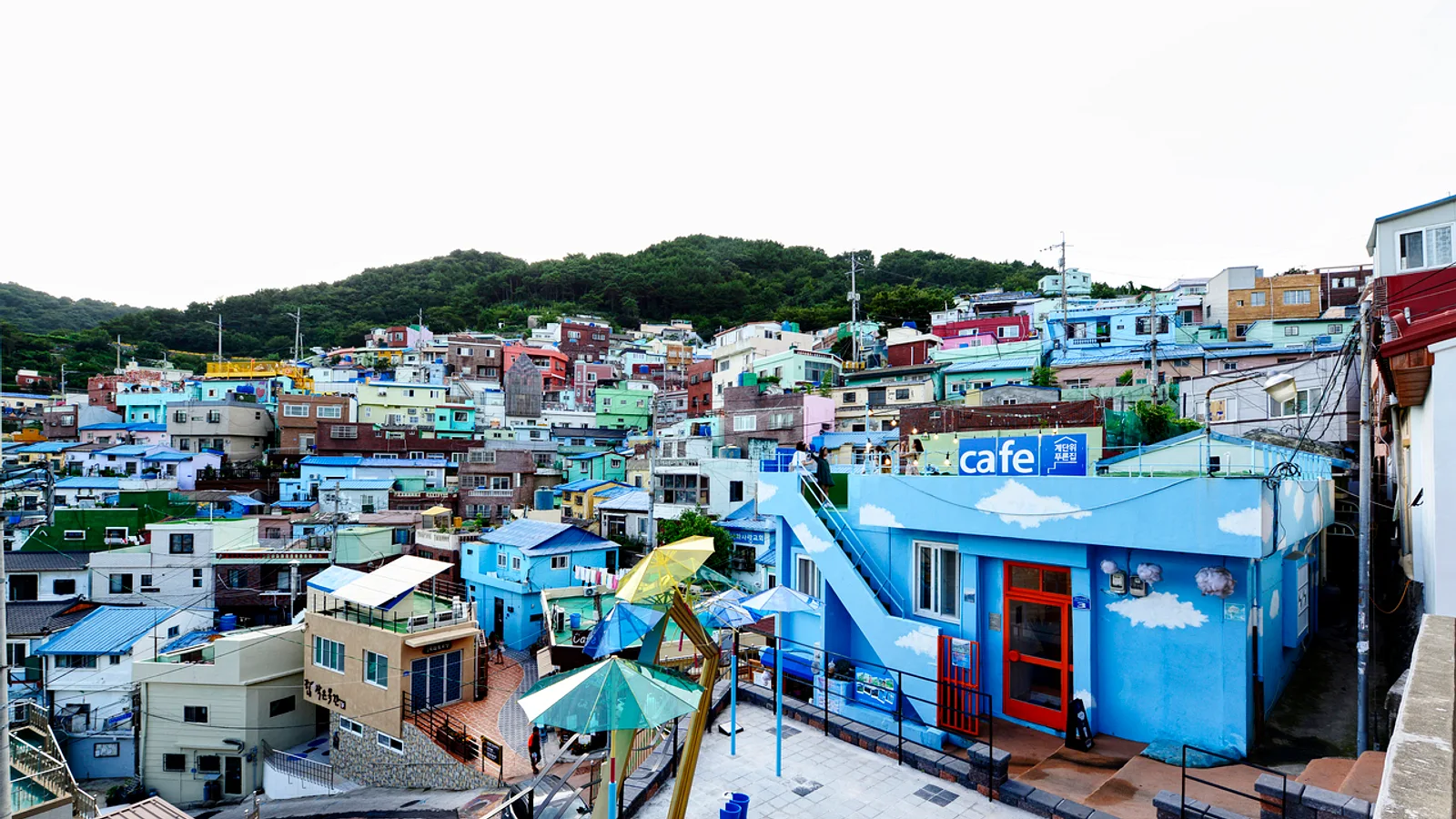
Gamcheon Culture Village is a hillside neighborhood of stacked, brightly painted houses, narrow stairways and small art installations. The slopes are steep, so wear shoes with grip and expect a lot of walking up and down. Residents live here, so keep voices low and stay on the marked routes.
After Gamcheon, spend the afternoon at one of Busan's traditional markets. Markets are good places to see how local food and daily shopping work, and most are easiest to explore on foot. Opening days and hours vary by market, so check Naver Map or Kakao Map before going.
Seafood is a Busan specialty, but it is not for everyone. Shellfish, fish, squid and fish-based broths are common in market food, and they often appear in dishes that do not look like seafood. Visitors with shellfish or fish allergies should say so clearly, use a translation app, and choose stalls where ingredients are visible.
Day 2: The Haeundae coast
Haeundae is Busan's best-known beach district, and the coastline around it suits a slower day. Walk along the sand, follow the shoreline paths and leave time for a long meal or a cafe stop. The beach is most pleasant outside the peak summer crowds, and weather can change how much of the coast is comfortable to walk, so check the forecast the evening before.
If energy remains, use the subway or a taxi to reach other parts of the coast rather than trying to walk everything. Distances in Busan look short on a map but include hills and busy roads.
Moving from Busan to Gyeongju
The trip takes about one hour by train or express bus. The two options differ mainly in where they arrive:
- Train: Services to Gyeongju stop at Singyeongju Station, which is outside the old city center. From there, a local bus or taxi is needed to reach the central area and most accommodation. Check the current connection on Korail's official site or an app before leaving.
- Express bus: Buses generally drop passengers closer to the city, which can be simpler with bags. Confirm the arrival terminal on the operator's site or on Naver Map or Kakao Map.
Because of the extra leg from Singyeongju Station, allow more buffer time on the train than the ride alone suggests.
Luggage
Hauling suitcases up Busan's hills and through Gyeongju's tourist areas is tiring. Practical options:
- Leave bags at the Busan hotel on the morning of departure if check-out comes before your plans end.
- At Singyeongju Station or the bus terminal, look for lockers or a luggage service, and check availability in advance, since lockers can be full at busy times.
- Send larger bags ahead to the next hotel if the property offers it, and ask the front desk.
- Pack a small daypack for the transfer day with water, a charger and anything needed before check-in.
Day 3: Gyeongju tombs
The tomb complex in central Gyeongju holds large grassy mounds that served as royal burial sites of the Silla period. The area is flat and walkable, which makes it a good first stop after the transfer. Walk the paths, read the signs and note how the mounds sit directly beside modern streets. Rental bicycles are common in Gyeongju and suit the flat central area, though traffic rules and rental terms should be checked locally.
Shops and cafes nearby make it easy to pause between sights. Entry rules and any admission details should be confirmed on the official site or on a map app.
Day 4: Donggung and Bulguksa
Donggung is the site of a former Silla palace pond and pavilions. It is best known for its evening lighting, which reflects on the water, so plan it as a night visit, ideally on Day 3 or the evening before departing. Check current lighting and access arrangements before going.
Bulguksa is a major temple on the hillside outside the city. It is best reached by bus or taxi from the center, so check the route on Naver Map or Kakao Map. Dress for walking, and treat the grounds as an active place of worship: keep voices low and follow posted rules about photography and entry to halls.
Tips
- Book trains and buses early for weekends and holidays, since popular times fill up.
- Download Naver Map or Kakao Map before arriving, because Google Maps is limited in Korea.
- Carry a transit card for buses and subways in both cities.
- Bring a card and some cash, as small stalls may not accept foreign cards.
- Wear sturdy walking shoes for Gamcheon's slopes and Gyeongju's paths.
- Tell restaurants about allergies before ordering, especially shellfish and fish.
- Confirm all hours, fares and closures on official sites, since they change by season.