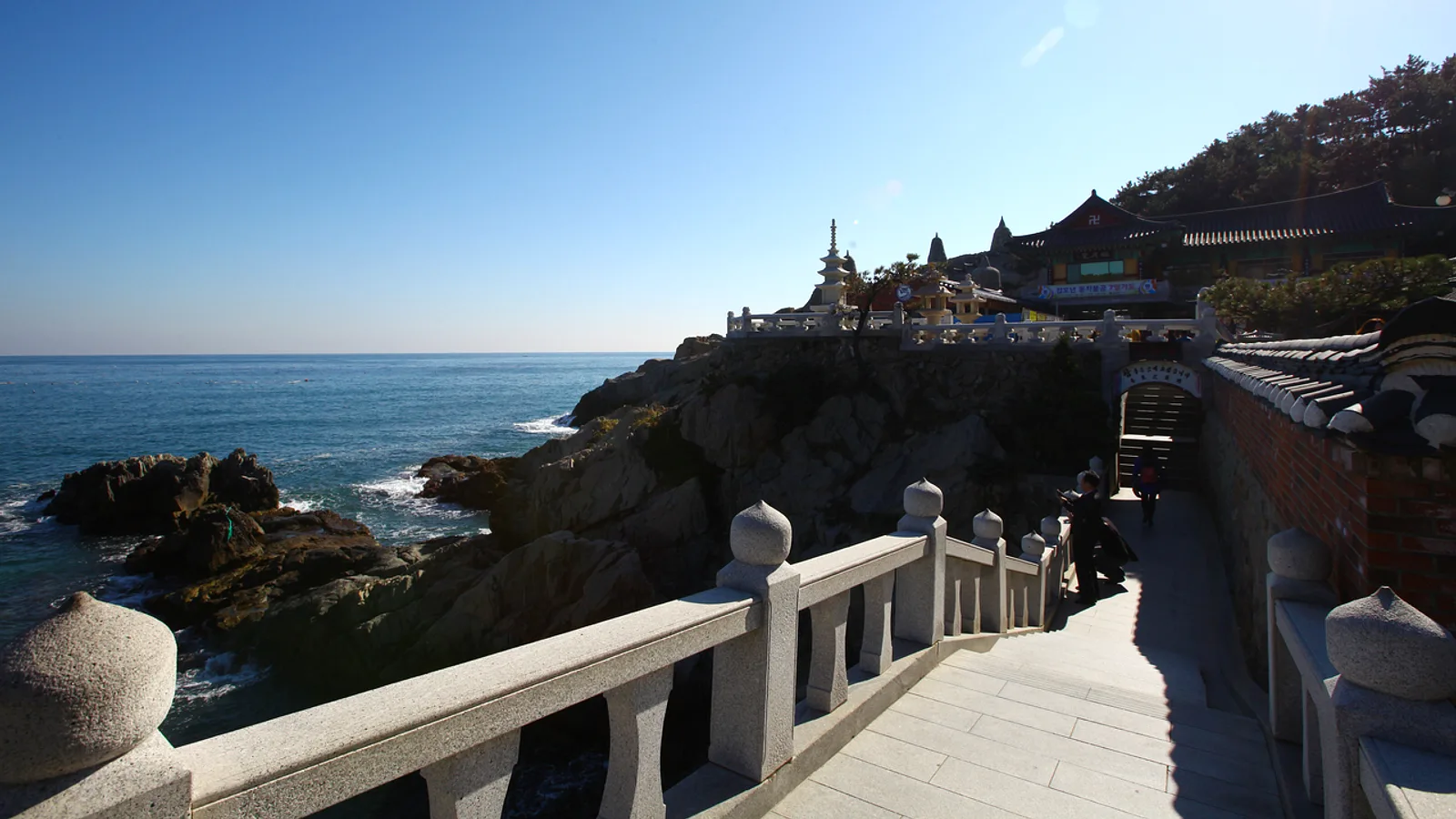
Gijang sits at the northern end of Busan, along the east coast, and has a different feel from the city center. It is known for snow crab restaurants, fishing-port scenery, and a well-known seaside temple. A day here works best as a loose loop: a coastal sightseeing stop, a long seafood meal, and some time by the water. This guide covers how the area fits together, how snow crab is usually ordered, and what to check before sitting down.
Getting Oriented
Gijang is a county-level district of Busan, so it is technically inside the city but far from the main tourist areas. The places most visitors care about are Jukseong, Daebyeon Port and Haedong Yonggungsa. They are spread along the coast rather than clustered in one walkable area.
- Plan on short bus or taxi hops between stops, not walking.
- Check routes and travel times on Naver Map or Kakao Map the day before, since the coastal roads can be slow on weekends.
- Allow a full day. Rushing the meal defeats the purpose of coming this far out.

Snow Crab: How It Works
Snow crab (daege in Korean, often written as "daegae" in English-language listings) is the main draw. Restaurants in the area typically sell crab by weight, and the crab is steamed whole at the table or in the kitchen.
- Prices are commonly set by weight, so the final bill depends on the size of the crab chosen.
- Confirm the total price before the crab goes into the steamer. Ask staff to show the weight and state the full amount, ideally by writing it on a phone calculator or the menu.
- Ask what is included in a set. Some places serve side dishes, soup or a rice finish; others charge separately.
- Many restaurants offer a rice-stir-fry finish using the crab shell and innards. This is a common way to end the meal.
Prices, set menus and seasonal availability change, so check current details on Naver Map or Kakao Map listings and recent reviews rather than relying on a fixed figure.
Daebyeon Port
Daebyeon Port is a working fishing harbor, and it gives the day a seafood-town atmosphere that the restaurant areas alone do not. It is a good stop for a walk before or after eating.
- Expect boats, nets and dockside activity rather than polished attractions.
- Wear shoes with grip, as harbor surfaces can be wet.
- If buying fresh seafood directly, ask for the price per weight and confirm the total first, the same as with crab.

Jukseong
Jukseong is another coastal area in Gijang and is part of the standard route for visitors exploring the district. It suits a slower stop: a walk along the shore, a break between meals, or time to digest before the next stop. Check Naver Map or Kakao Map for current conditions and what is open on the day of the visit.
Haedong Yonggungsa
Haedong Yonggungsa is a Buddhist temple built along the coast, and it is one of the best-known sights in Gijang. Unlike many Korean temples set in the mountains, this one sits beside the sea.
- Dress modestly and keep voices low, as it is an active place of worship.
- Expect stairs and uneven ground. Comfortable shoes matter more than usual.
- Visiting before the meal, rather than after, often works better because the walk is easier on an empty stomach.
- Confirm opening hours and any entry arrangements on the official site before leaving.
Dietary and Allergy Cautions
Shellfish is the center of this trip, which makes it hard for some visitors.
- Crab, shrimp and other shellfish are major allergens. Seafood restaurants often prepare many dishes in shared kitchens, so cross-contact is likely.
- Side dishes (banchan) may include shrimp paste, fish sauce, anchovy stock or raw seafood, even when they look vegetable-based.
- Soups and stews are often made with seafood broth. Vegetarians and vegans will find very few options at crab-focused restaurants.
- Learn or save a short phrase for your allergy in Korean, or show a translated allergy card on your phone. Staff may not be able to guarantee that a dish is free of an allergen.
- Raw or lightly prepared seafood carries a higher risk for pregnant visitors and people with weakened immune systems. Choose fully cooked dishes if this applies.
- Crab shell can be sharp. Take care with children.
Tips
- Go with at least two or three people if possible. Whole crab is usually more practical to share than to order alone, and solo diners may find options limited.
- Ask for the weight and total price before cooking begins, and keep the conversation friendly but clear.
- Decide on transport early. Taxis are convenient for the return trip after a large meal, and Kakao Map can show route options.
- Check weather. Coastal wind can make the temple and harbor feel much colder than central Busan.
- Carry some cash and a card, and confirm payment methods at the restaurant.
- Have wet wipes or tissues on hand. Eating crab by hand is messy, and most restaurants provide gloves and scissors, but extras are useful.
- Verify opening days on Naver Map or Kakao Map before leaving, since small restaurants may close on irregular days.