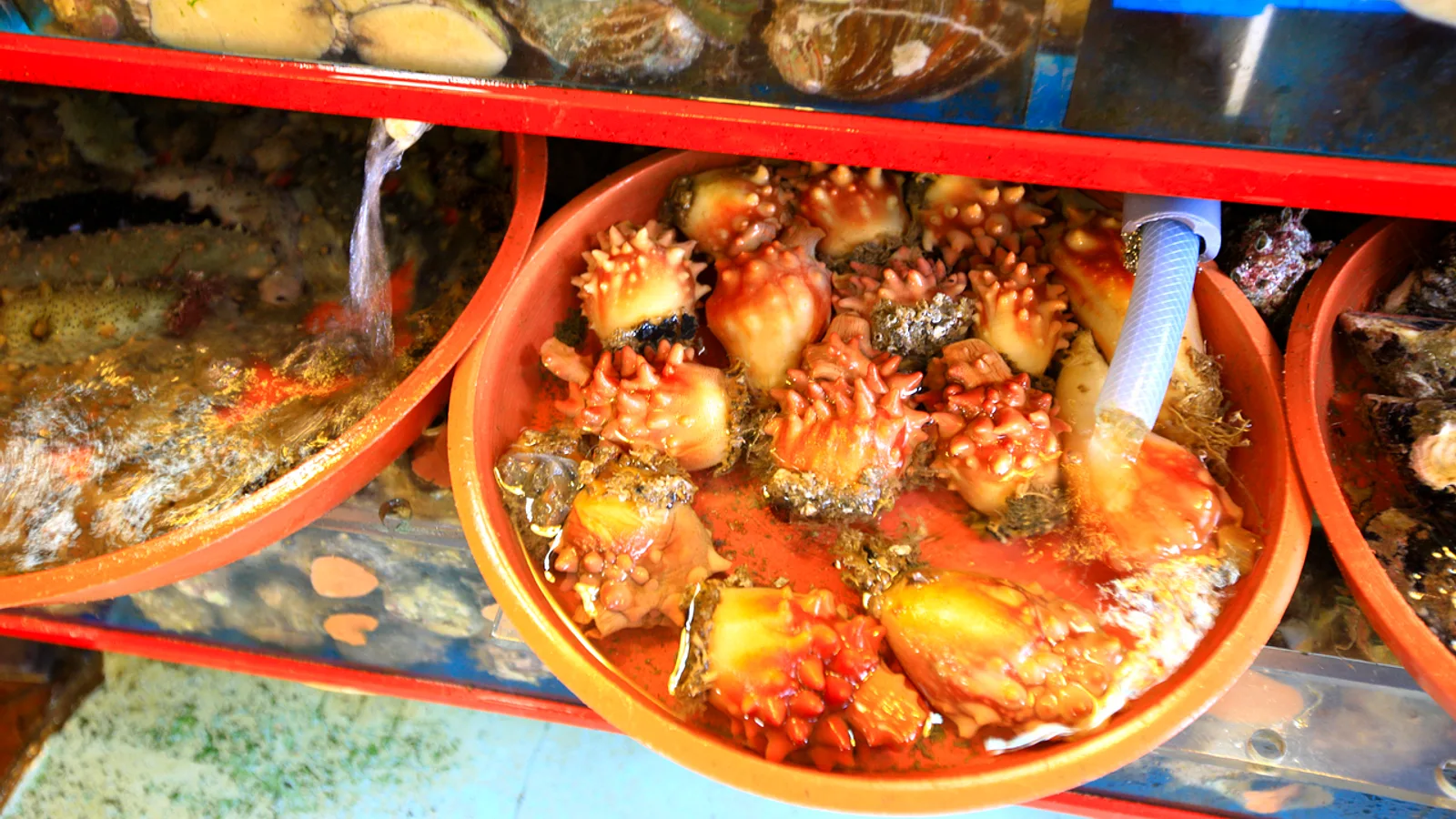
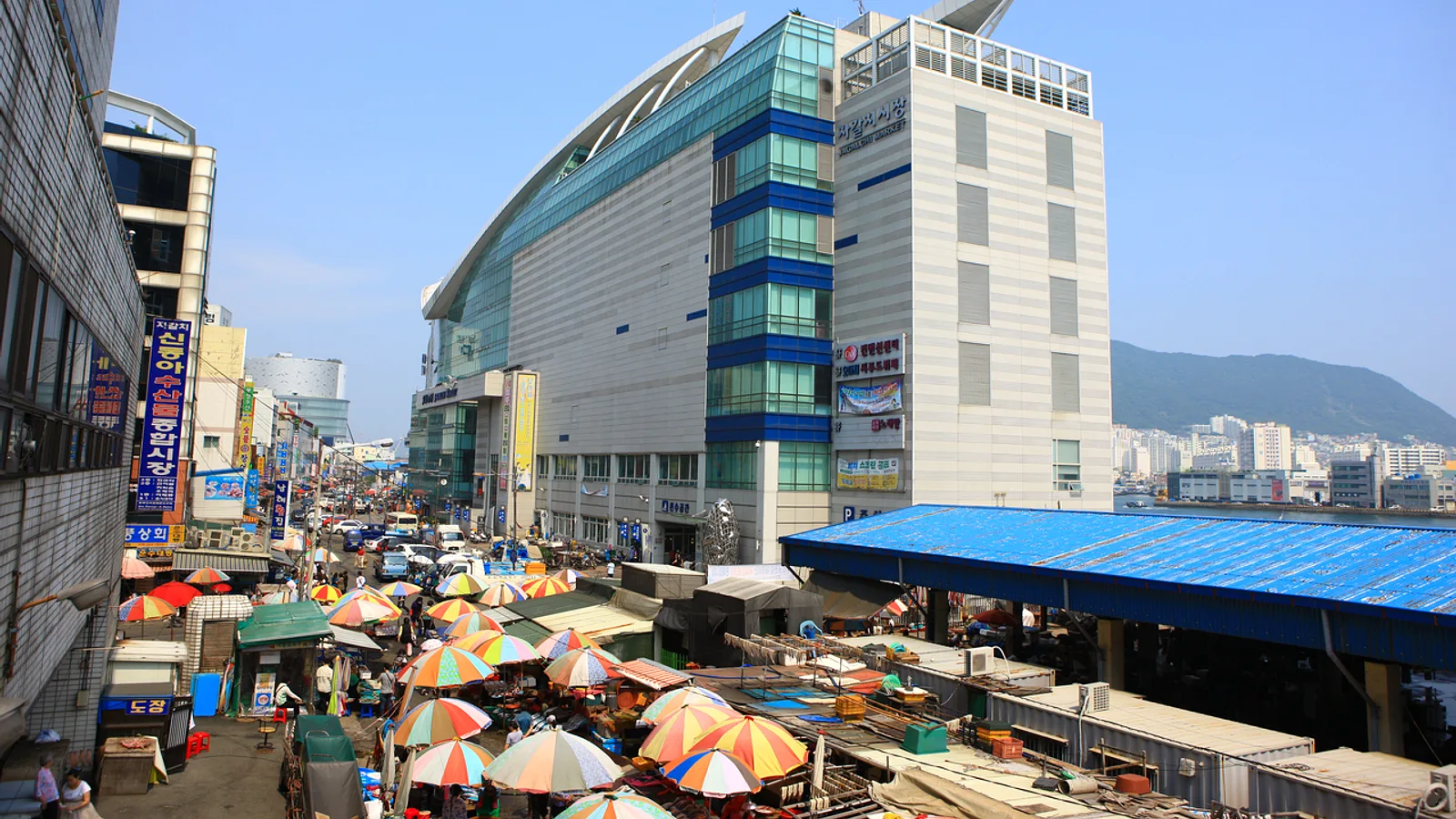
Jagalchi Fish Market is Korea's largest seafood market. It sits on the Nampo-dong waterfront in Busan. Much of the trade is run by women vendors known as Jagalchi ajimae, who handle the live catch, set the prices and talk visitors through the choices. The market is loud, wet and crowded, and it works by a system that is easy to follow once the steps are clear. This guide covers the layout, how to buy, where to eat and which cautions matter.
How the Market Is Laid Out
The main building has two working levels, and outdoor stalls line the street outside.
- Ground floor: rows of live seafood tanks. Fish, shellfish and other catch are sold here directly from the water.
- Upper floor of the main building: restaurants that cook or serve what has been bought downstairs, for a preparation fee.
- Outdoor stalls: vendors along the street outside sell fresh and prepared seafood. This is the easiest place to browse before committing to anything.
The floor is wet and often slippery, so closed shoes with grip are a better choice than sandals.
What You Will See and What to Buy
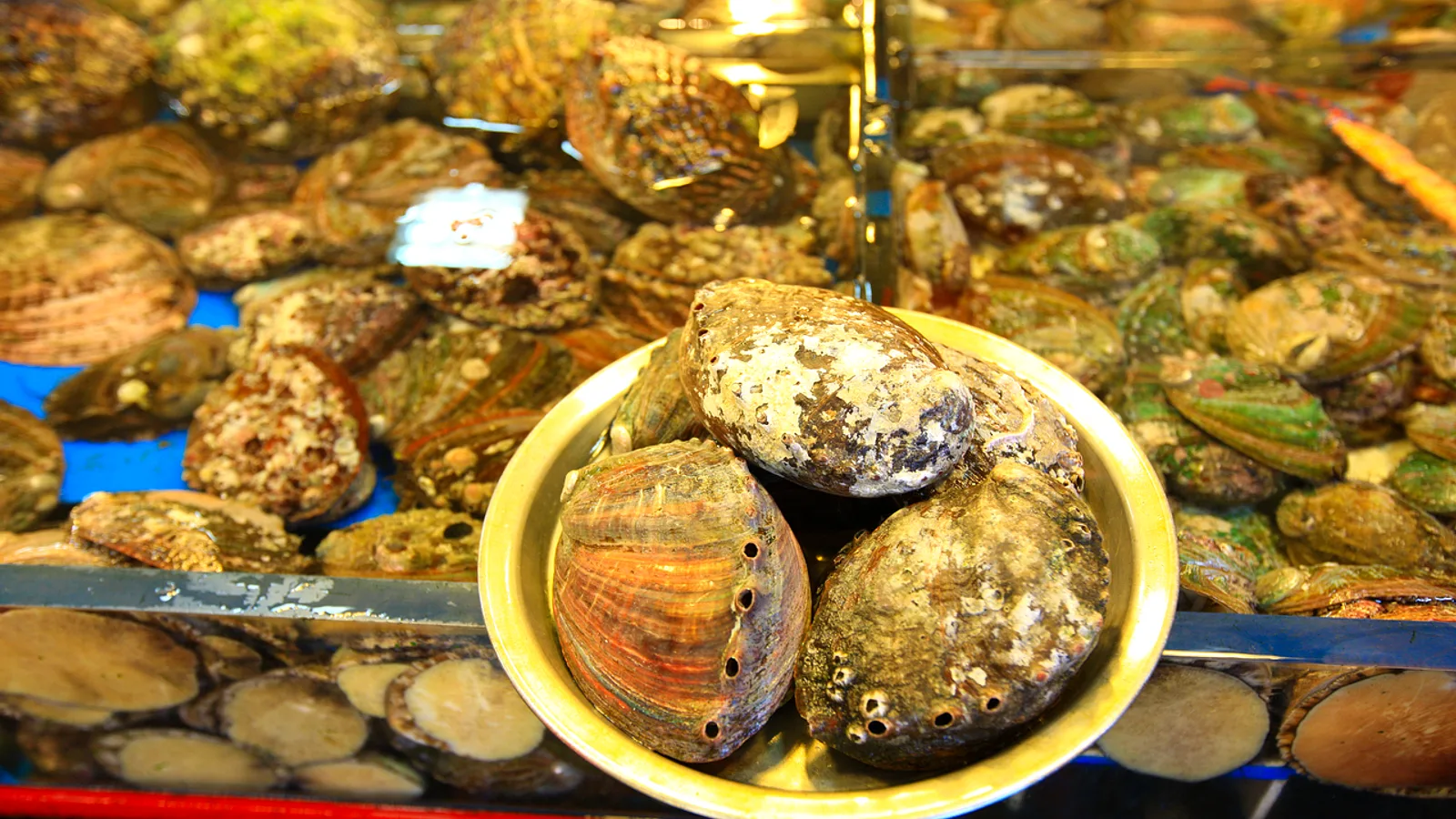
Common items include flatfish, sea squirt, abalone, octopus and crab. Each suits a different taste.
- Flatfish: a standard choice for raw fish (hoe). The flesh is firm and mild, which suits first-timers.
- Abalone: chewy and clean-tasting, usually served raw or lightly cooked.
- Octopus: may be served very fresh and still moving, or cooked. Ask which version is on offer.
- Crab: usually steamed or boiled, and a good option for people who prefer cooked seafood.
- Sea squirt: has a strong, briny, mineral flavor that many visitors find difficult. Try a small portion first.
How to Buy
The process is direct, and a few habits prevent most problems.
- Walk the full row before choosing. Vendors will call out and gesture, and no purchase is required to look.
- Point at the exact fish or shellfish you want. Do not rely on a general description.
- Confirm the total before anything is killed or cut. Use a translation app, a calculator screen or a written number, and make sure the amount covers the specific animal you pointed to.
- Ask whether the price is for the whole item or by weight, and check the unit before agreeing.
- Say up front if you plan to eat upstairs. The vendor will then prepare the fish for the restaurant and send it up, or tell you where to take it.
Some bargaining is common in markets of this type, but a polite, friendly manner works better than hard pushing. Check payment methods with the vendor, since small stalls may prefer certain forms of payment.
Where to Eat
There are two main routes.
- Upstairs restaurants: these cook or slice what you bought downstairs for a preparation fee. This is the most reliable option for a sit-down meal, with tables, side dishes and staff who handle the cooking. Ask the fee and what it includes before you sit down.
- Outdoor stalls: better for a quick, informal bite while walking the waterfront streets.
Specific restaurant names are best checked on Naver Map or Kakao Map, where recent reviews and current details are listed. Opening hours and closing days also vary, so confirm them on the official site or those map apps before traveling.
How to Eat Raw Fish
Raw fish (hoe) is eaten with a set of side items, and the combination matters.
- Dip a slice in ssamjang or chili paste.
- Wrap it in a lettuce leaf, adding any garlic or green chili that comes on the plate.
- Eat the wrap in one bite.
Fish bones, heads and trimmings are often cooked into a spicy fish stew (maeunthang) after the raw portion. Ask whether this is included or offered as an add-on.
Allergy and Food Safety Cautions
- Shellfish and fish allergies: the whole market is built around seafood, and cross-contact between stalls, cutting boards and tanks is normal. Anyone with a serious allergy should consider skipping it. Staff may not be able to guarantee separation.
- Raw seafood: pregnant visitors, young children, older adults and people with weakened immunity are generally advised to avoid raw fish. Choose cooked options instead, such as steamed crab or grilled fish.
- Sauces and sides: ssamjang and chili paste commonly contain soybean, and may contain other allergens. Ask before eating if this is a concern.
- Vegetarians and vegans: options are very limited, and broths and side dishes often contain seafood.
- Freshness: buy only from live tanks or clearly chilled displays, and avoid anything that looks dull, smells strong or has sat out of water.
Tips
- Go with a clear plan: choose one or two items, agree on the total, then move upstairs.
- Carry some cash alongside a card, as small stalls may differ in what they accept.
- Keep valuables secure in narrow, crowded aisles.
- Expect splashing water and strong smells. Avoid bringing a bag that cannot get wet.
- Plan around weather, since the outdoor sections are less comfortable in heavy rain or heat.
- Check market and restaurant hours on Naver Map or Kakao Map, because closing days vary.
- Ask for the final price in writing or on a screen whenever there is any doubt.
- After eating, a walk along the Nampo-dong waterfront is an easy way to finish the visit.