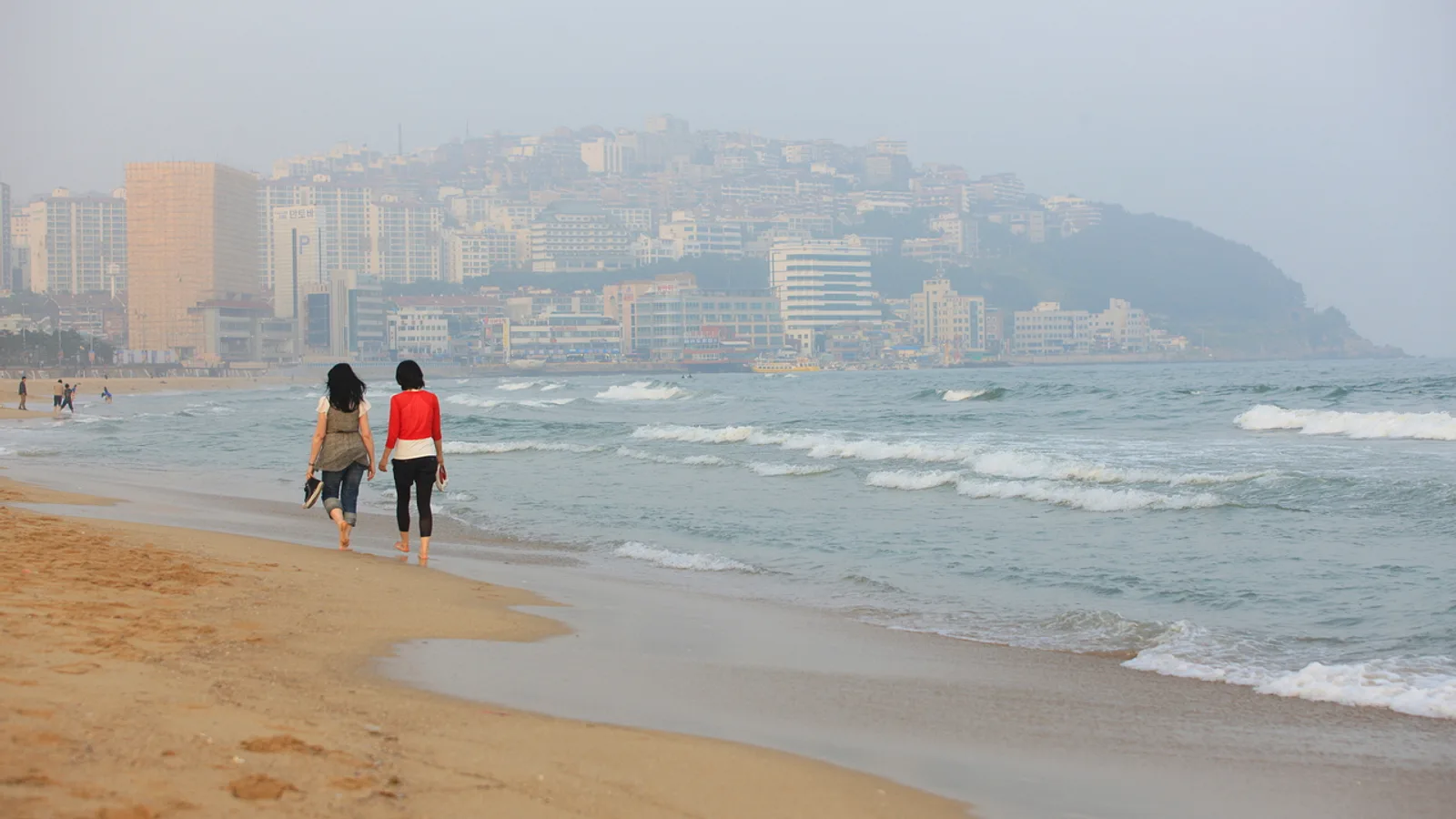
Haeundae is Busan's most famous beach, and the Marine City skyline rising behind the sand is what most visitors picture when they think of the city. A short walk away, Dongbaek Island offers a quieter contrast: a seaside path through camellia trees, a modern landmark building and a view of Gwangan Bridge. Together they make an easy half-day or full-day outing that mixes city atmosphere with coastal scenery. This guide explains what each area offers, how to link them, and what to confirm before leaving.
Haeundae Beach
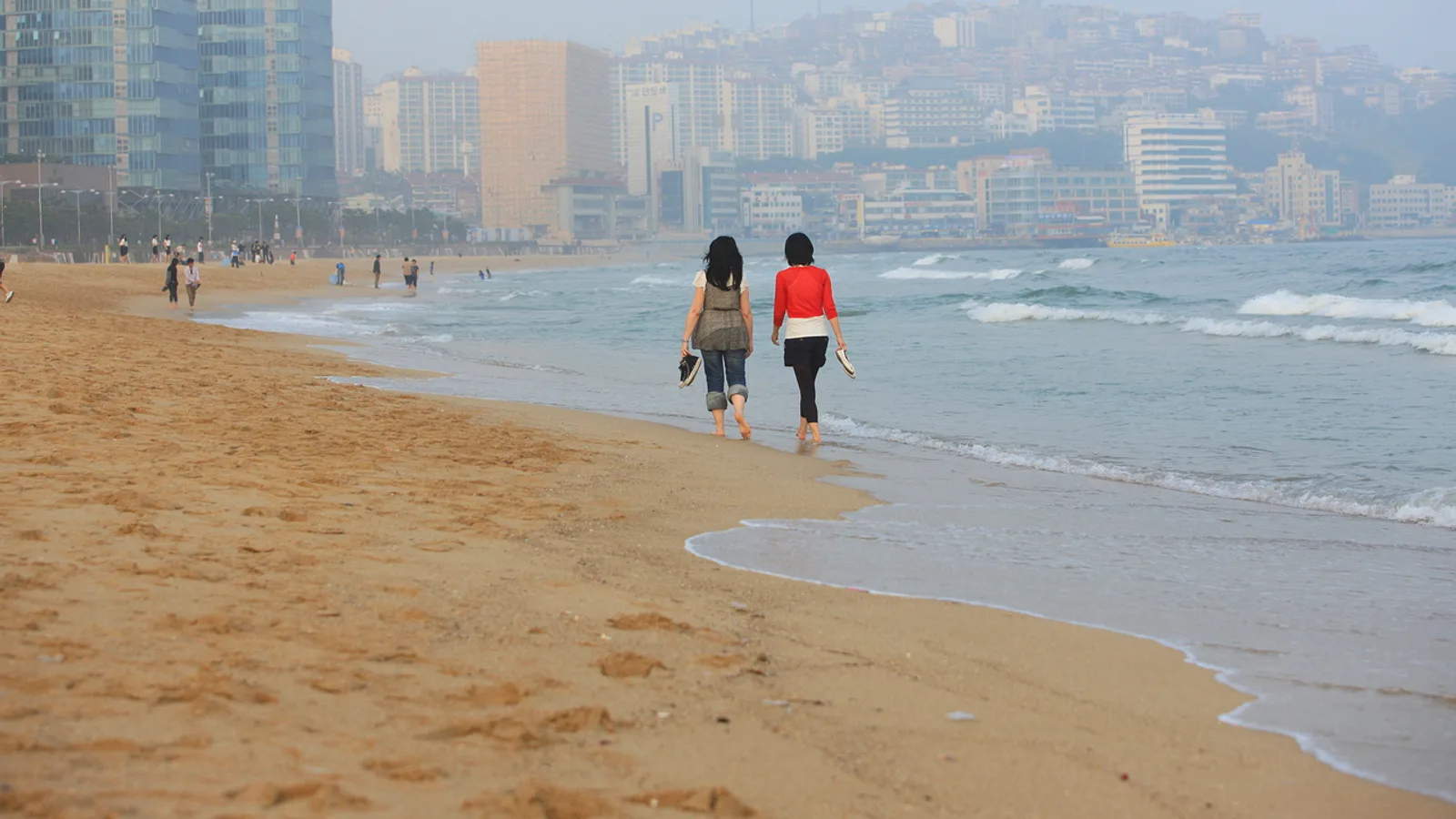
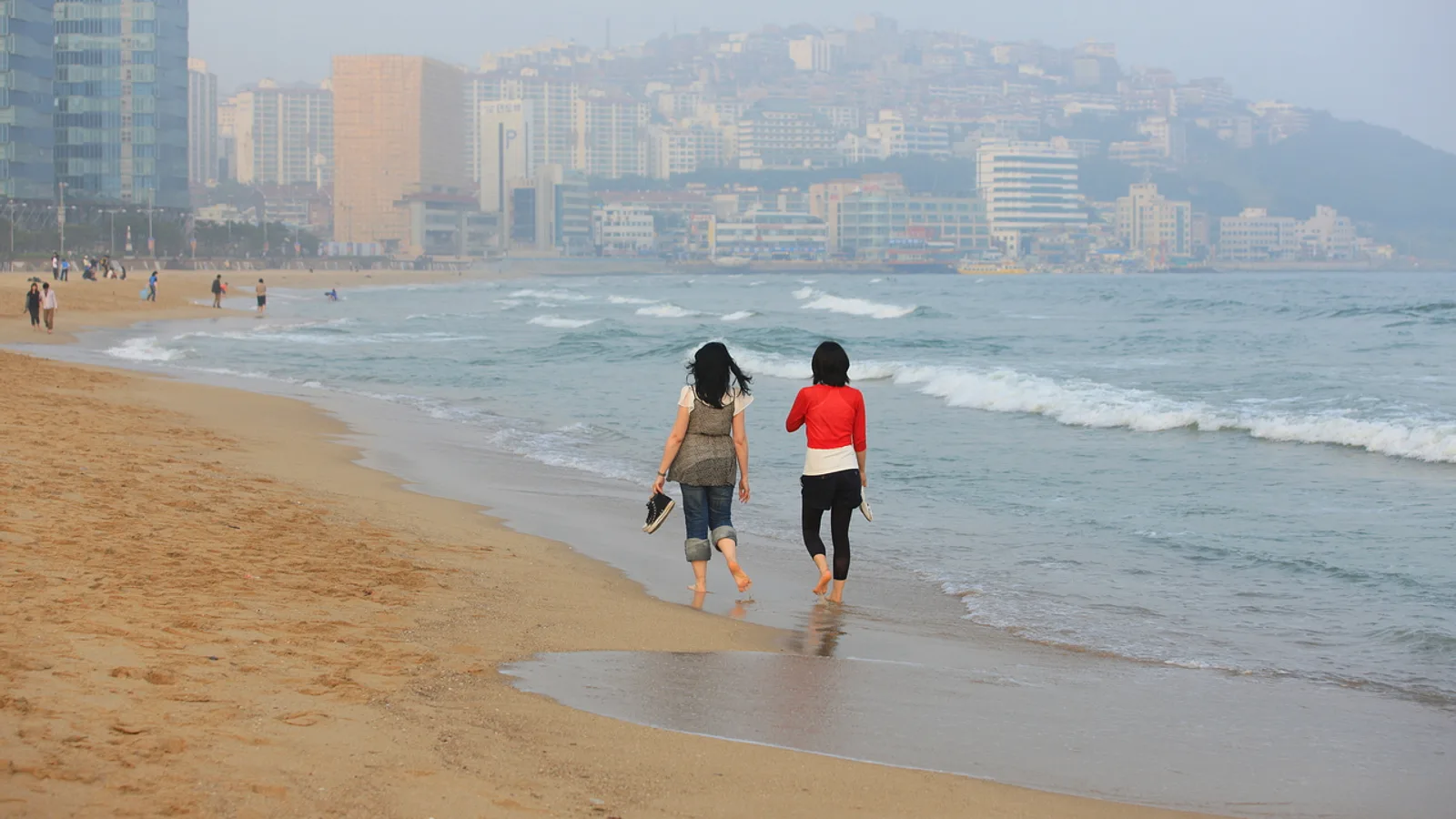
The beach is a long, wide stretch of sand with high-rise buildings directly behind it. That setting gives it a lively, urban feel rather than a remote one, and it is busiest in the warm season and on weekends.
- Walking along the waterline is the simplest way to take in the Marine City skyline.
- The beach suits a casual stroll, photos and watching the sea, even for visitors who do not plan to swim.
- Swimming areas, lifeguard coverage and seasonal rules vary. Check the official Busan tourism site or the local district notices before entering the water.
- Weather changes the experience a great deal. Strong wind, rain or rough surf can make the beach less pleasant, so look at the forecast first.
Seasonal Sand Sculptures and Festivals
Sand sculptures and festivals take place at certain times of year. They are not permanent, and their dates, locations and format can change from year to year.
- Search the official Busan or Haeundae tourism pages for the current event calendar before fixing your travel dates.
- Festival periods draw large crowds, so expect fuller paths, slower movement and more competition for space.
- If a quieter visit matters more than an event, consider going outside announced festival periods.
Dongbaek Island
Dongbaek Island is reached on foot from the Haeundae side and is best known for its seaside walking path. The route runs through camellia trees, with the sea alongside, and gives a calmer pace than the beach.
- The path is a walk, not a hike, but expect some uneven sections and slopes. Comfortable shoes are a better choice than sandals.
- Along the route you can see the Nurimaru APEC House, a landmark associated with the APEC meeting held in Busan.
- Views extend toward Gwangan Bridge, which is a good subject for photos, especially when the weather is clear.
- Camellias are an evergreen presence here, but flowering depends on the season. Do not plan the visit around a specific bloom without checking current conditions.
Haeundae Market
Haeundae Market is nearby and works well as a stop before or after the coast. It is a place to see everyday local commerce rather than a polished attraction.
- Food is a major reason to visit. Many stalls and shops prepare dishes with seafood, shellfish, wheat, soy, sesame and egg, so ask about ingredients before ordering if you have an allergy.
- Vendors may not speak much English. A translation app, a written note listing your allergies, or pointing to items can help.
- Check opening days and hours on Naver Map or Kakao Map, since markets often have irregular closing days.
Mipo
Mipo is also close and gives a different feel from the beach front. It is a reasonable add-on if you want a slightly less crowded area to walk or look for a meal.
- Treat it as a flexible extension of the day rather than a fixed stop.
- Use Naver Map or Kakao Map to confirm what is open and to plan the walking route from the beach or Dongbaek Island.
Suggested Way to Combine the Sights
A simple order is the beach first, then Dongbaek Island, then the market or Mipo for food.
- Start with the sand and skyline while you have energy for photos.
- Move to Dongbaek Island for the camellia path, the Nurimaru APEC House and the Gwangan Bridge view.
- Finish at Haeundae Market or Mipo and plan a meal there.
- Allow extra time for the Dongbaek walk if you like to stop for photos or rest.
Tips
- Check the weather, wind and sea conditions on the day. They affect both the beach and the coastal path.
- Confirm festival and sand sculpture dates on official sites before booking travel.
- Use Naver Map or Kakao Map for routes, opening information and closures. Google Maps is often less reliable for walking directions in Korea.
- Wear walking shoes, and bring sun protection in summer and a windproof layer in cooler months.
- If you have a food allergy, carry the names of your allergens in Korean and show them when ordering at the market or any restaurant.
- Take your rubbish with you or use the bins provided, and respect swimming and safety signs on the beach.
- Expect crowds on weekends, holidays and during festivals. Weekday visits are generally calmer.