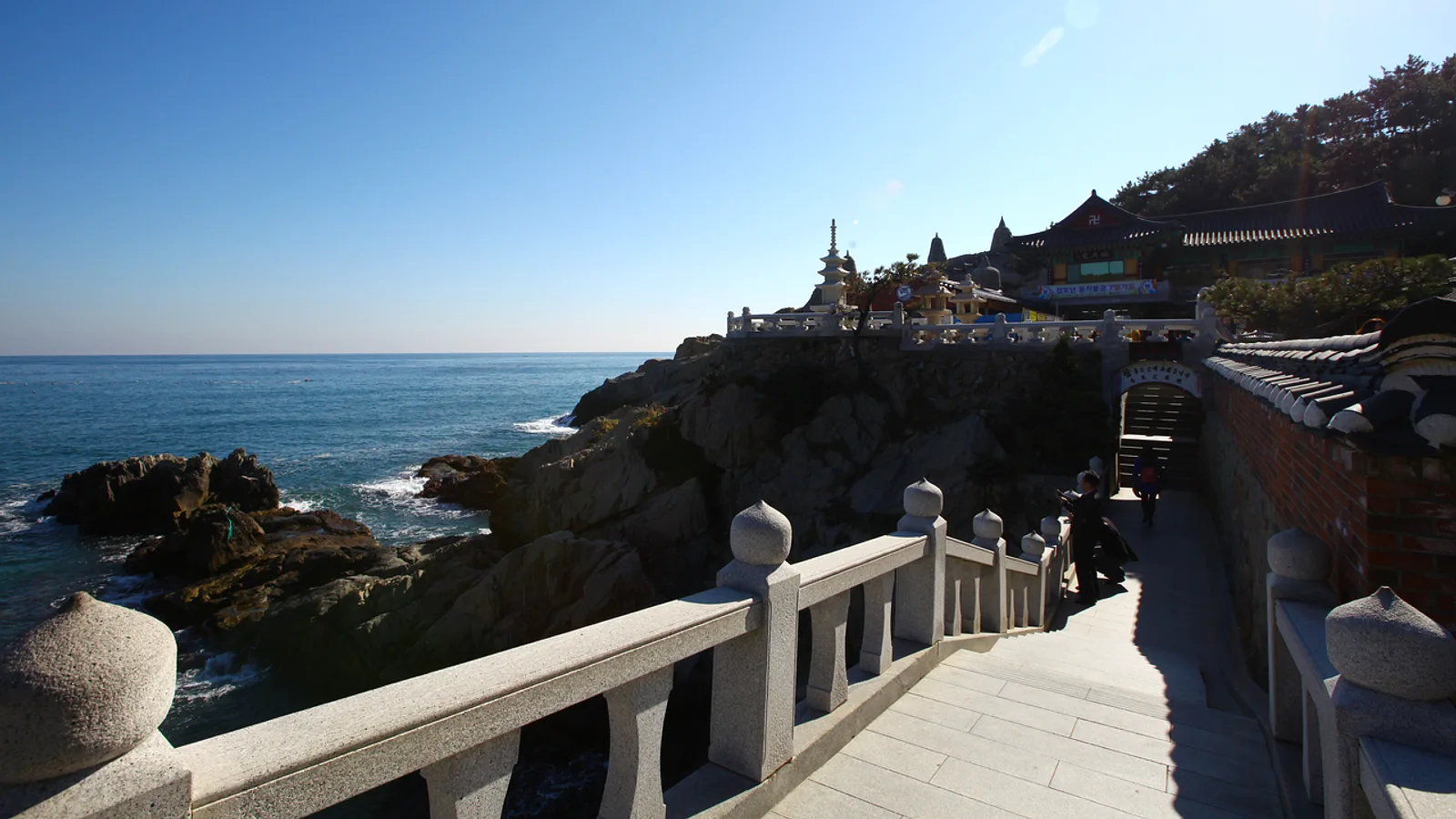
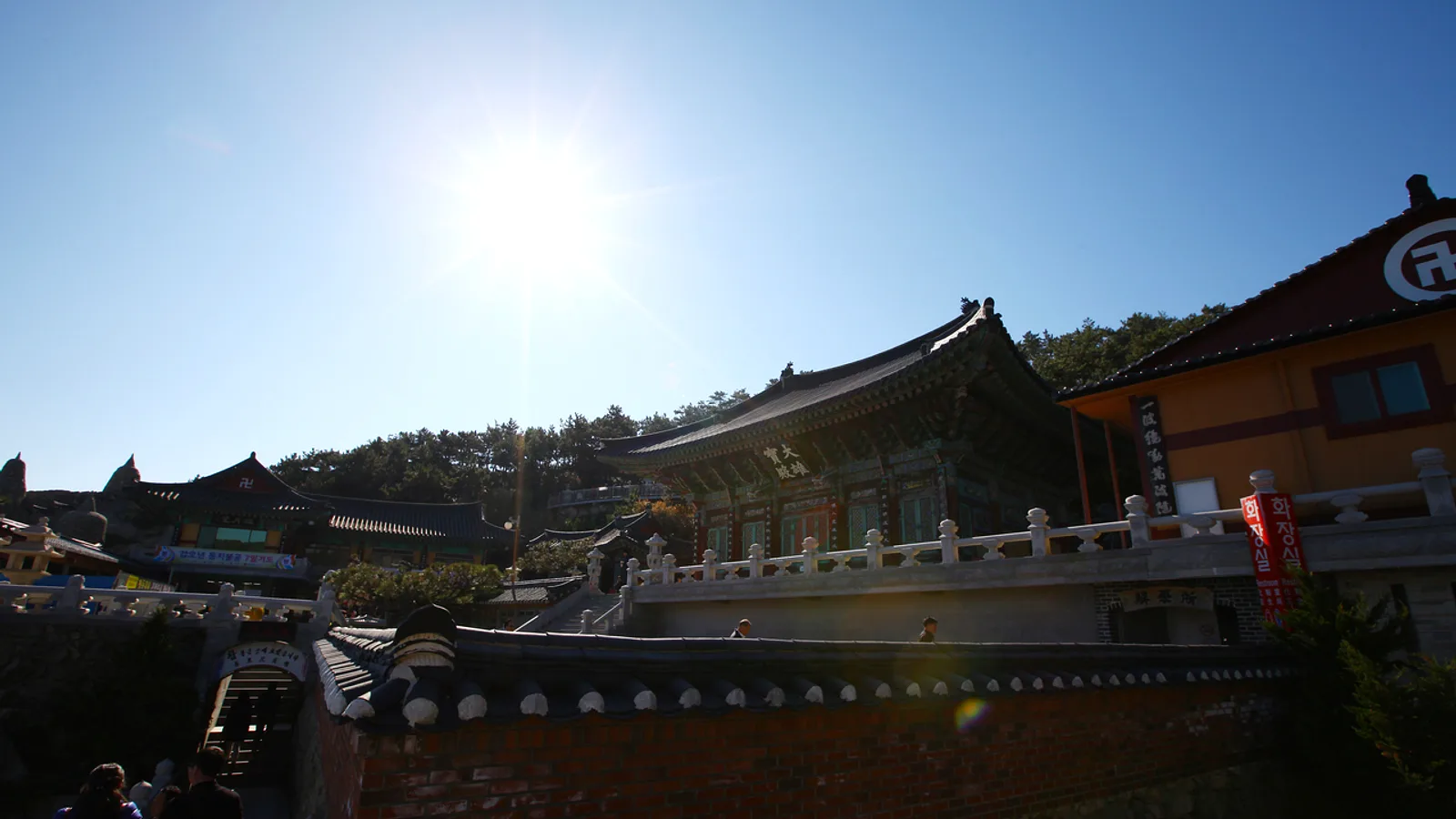
Haedong Yonggungsa is one of the few Korean temples built directly on the coast, with halls and pagodas set against the open sea. Founded in 1376 and rebuilt in the 1930s, it is an active Buddhist temple as well as a popular sight. Visitors come for the sea views, and many choose sunrise, when the light over the water is at its best and the grounds are usually less crowded than later in the day. This guide covers the location, getting there, the route through the grounds, etiquette, and planning around the nearby area.
Where It Is
The temple is in Gijang-gun, on the eastern edge of Busan and east of Haeundae. It sits well outside the central districts, so allow extra travel time compared with sights in the city center. Because the setting is the main attraction, the visit works best when the weather is clear. Check a forecast the day before, since sea haze or cloud can hide the sunrise.
Getting There
- By bus: Buses run from the Haeundae area. Confirm the current route number and the first departure on Naver Map or Kakao Map, as early services may not match what is needed for a sunrise arrival.
- By taxi: A taxi from Haeundae is the simpler option for a pre-dawn start. Show the driver the temple name in Korean (해동용궁사) on your phone.
- Plan the return trip before you go. Early in the morning, taxis at the temple may be harder to find than buses later in the day, so check options on a map app.
What to See on the Grounds
The path to the main area passes a row of twelve zodiac animal statues. Many visitors look for the statue matching their birth year, and it is a common photo stop.
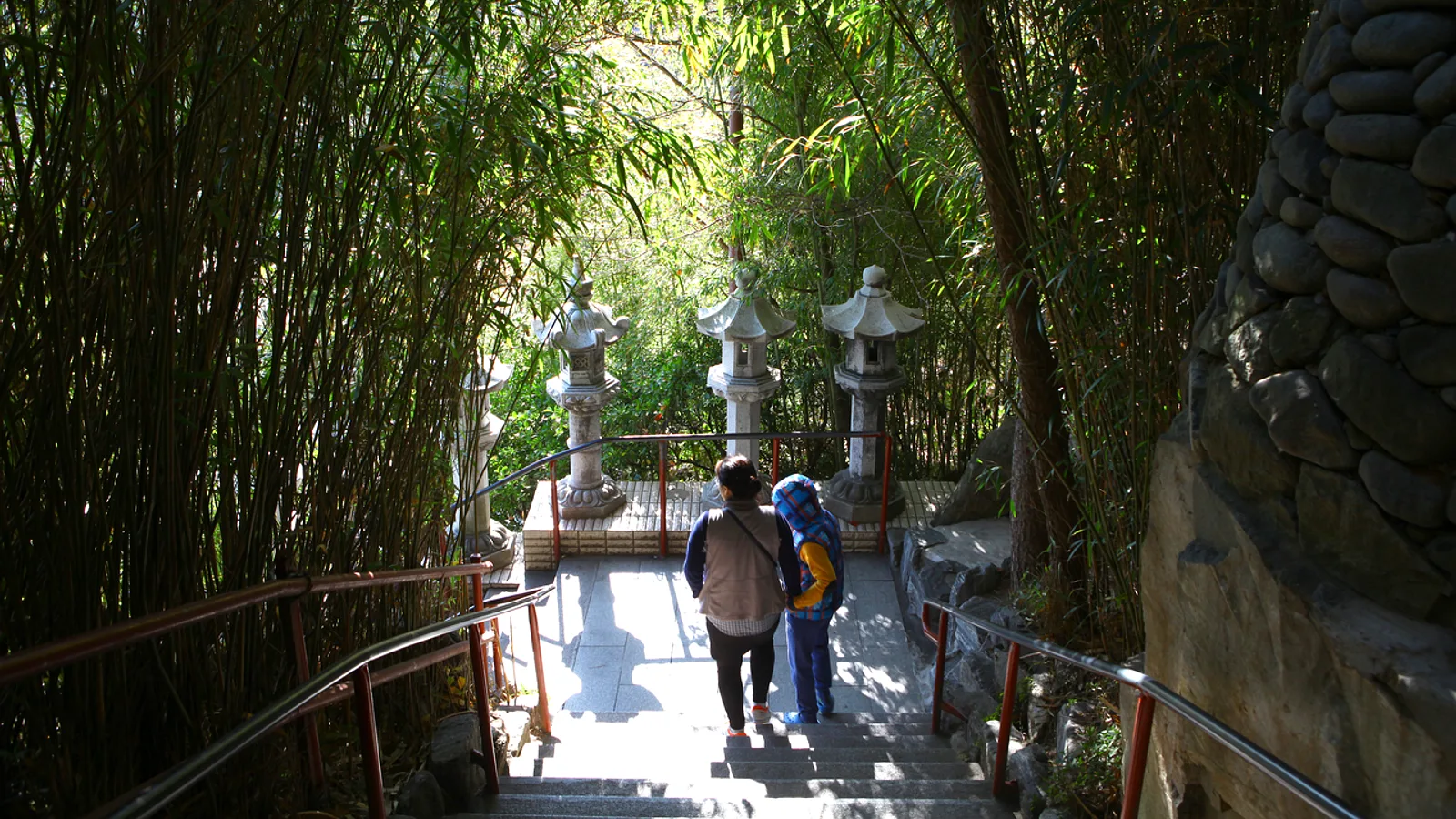
The route then descends by 108 stone steps. The number represents the 108 earthly desires in Buddhist tradition. Take the steps slowly, especially in the early morning when stone can be damp from sea air. Wear shoes with good grip.
Beyond the steps are the prayer halls, pagodas and the coastal viewpoints. The rocks and water are close to the walkways, so keep children close and stay on marked paths.
Why Sunrise
Sunrise is the most popular time for photographers and for people who want a quieter, more reflective visit. The temple also draws very large crowds on New Year's Day, when many people come to see the first sunrise of the year. If you want space to look around, avoid that date, or accept that movement through the steps and halls will be slow.
Official opening arrangements can change, so check the temple's official site or a map app for current access before planning an early arrival.
Temple Etiquette
This is a working place of worship, and monks and worshippers use the halls throughout the day. Basic courtesy goes a long way.
- Keep your voice low, including in groups.
- Do not photograph people who are praying. Photograph buildings, statues and scenery instead, and be aware of who is in the frame.
- Remove your hat before entering any hall.
- Follow signs about where shoes, photography or entry are restricted. If a sign is only in Korean, watch what others do or ask staff.
- Do not block doorways or paths for photos, particularly on the steps.
- Dress modestly: covered shoulders and knees are a sensible default for a religious site.
Combining with Nearby Places
Lotte Premium Outlet Dongbusan is close to the temple, which makes it a practical next stop for shopping or a break after an early start. Check the outlet's official site for its current hours and any transport links before you plan around it. If you are returning toward Haeundae, you can continue to the beach area for breakfast or rest.
Tips
- Arrive before sunrise so you can walk the steps and find a viewing spot without rushing. Look up the sunrise time for your date on a weather app.
- Bring a light jacket. The coast is often windier and cooler than the city, even in warmer months.
- Carry some water and a snack, since food options near the temple may be limited at very early hours. If you have allergies or dietary restrictions, bring your own food rather than relying on stalls being open.
- Wear comfortable, non-slip shoes for the stone steps.
- Use Naver Map or Kakao Map for live bus times, taxi options and current access information, as Google Maps can be less reliable for routes in Korea.
- Treat the visit as a temple visit first and a photo stop second.