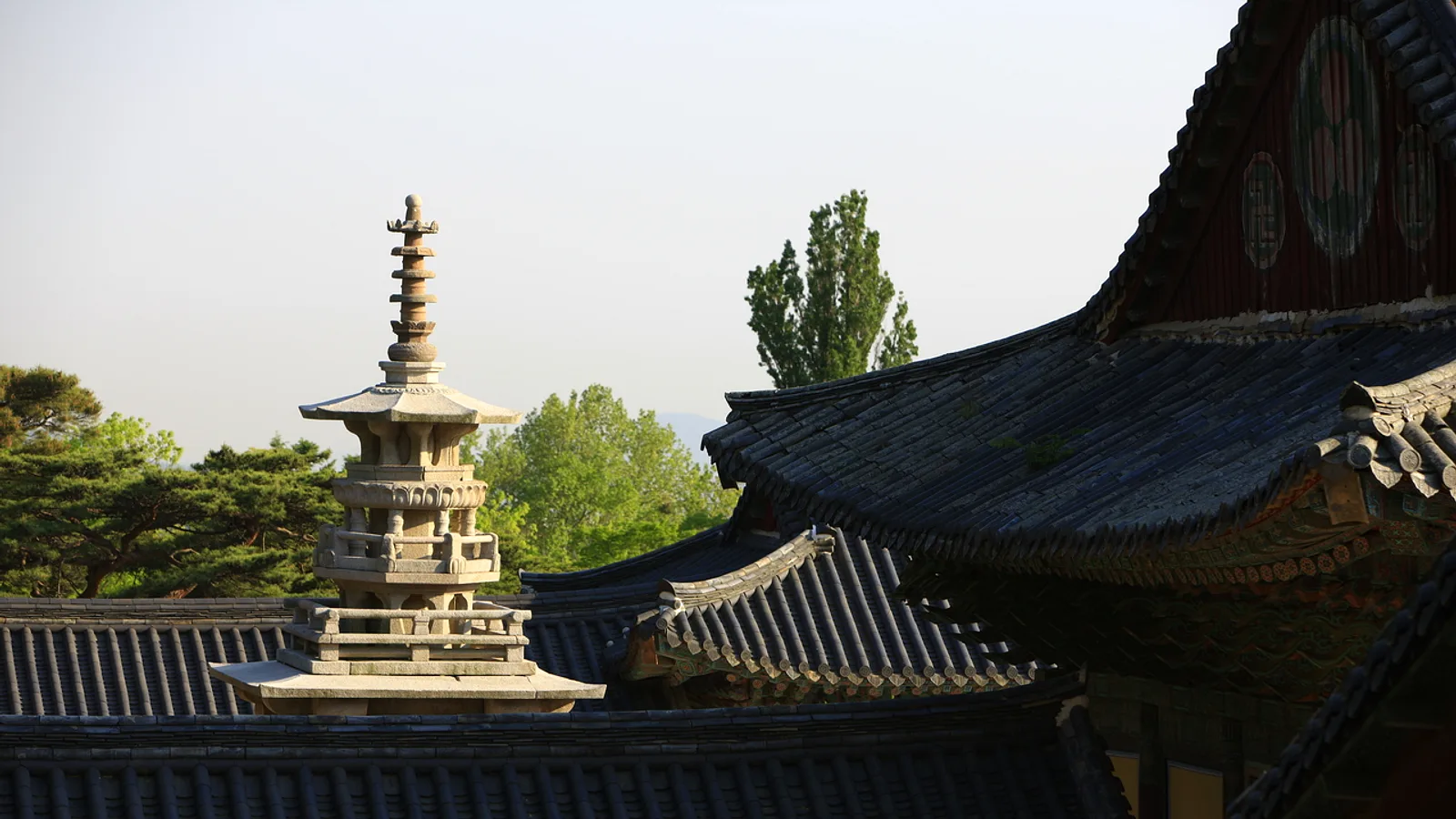
Bulguksa Temple and Seokguram Grotto were inscribed on the UNESCO World Heritage list in 1995. Both sit on Mount Tohamsan, a short drive from downtown Gyeongju, and both date from the Silla period (8th century). Bulguksa is the most-searched sight in Gyeongju, and local blogs treat the two as a pair.
Bulguksa: what to look at
- The stone bridges and stairways at the entrance, which symbolize the passage from the human world to the Buddha's realm.
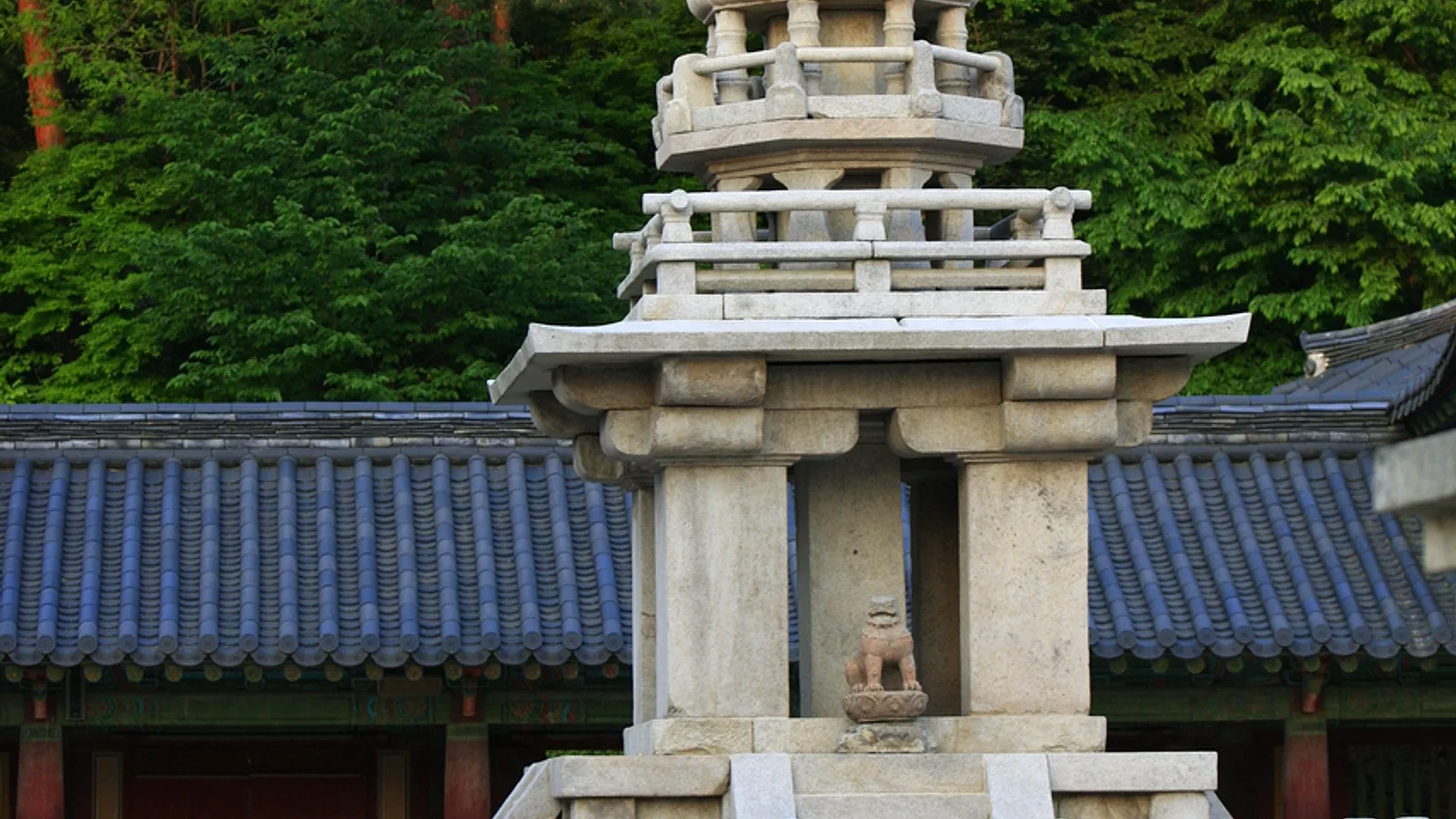
- Dabotap and Seokgatap, the two stone pagodas in the main courtyard. Dabotap is the ornate one and appears on the old ten-won coin.
- The wooden halls with painted eaves, and the gentle layout of the temple against the hillside.
- The grounds are most photogenic in the early morning. Cherry blossoms in early April and autumn leaves in November draw large crowds.
Seokguram Grotto
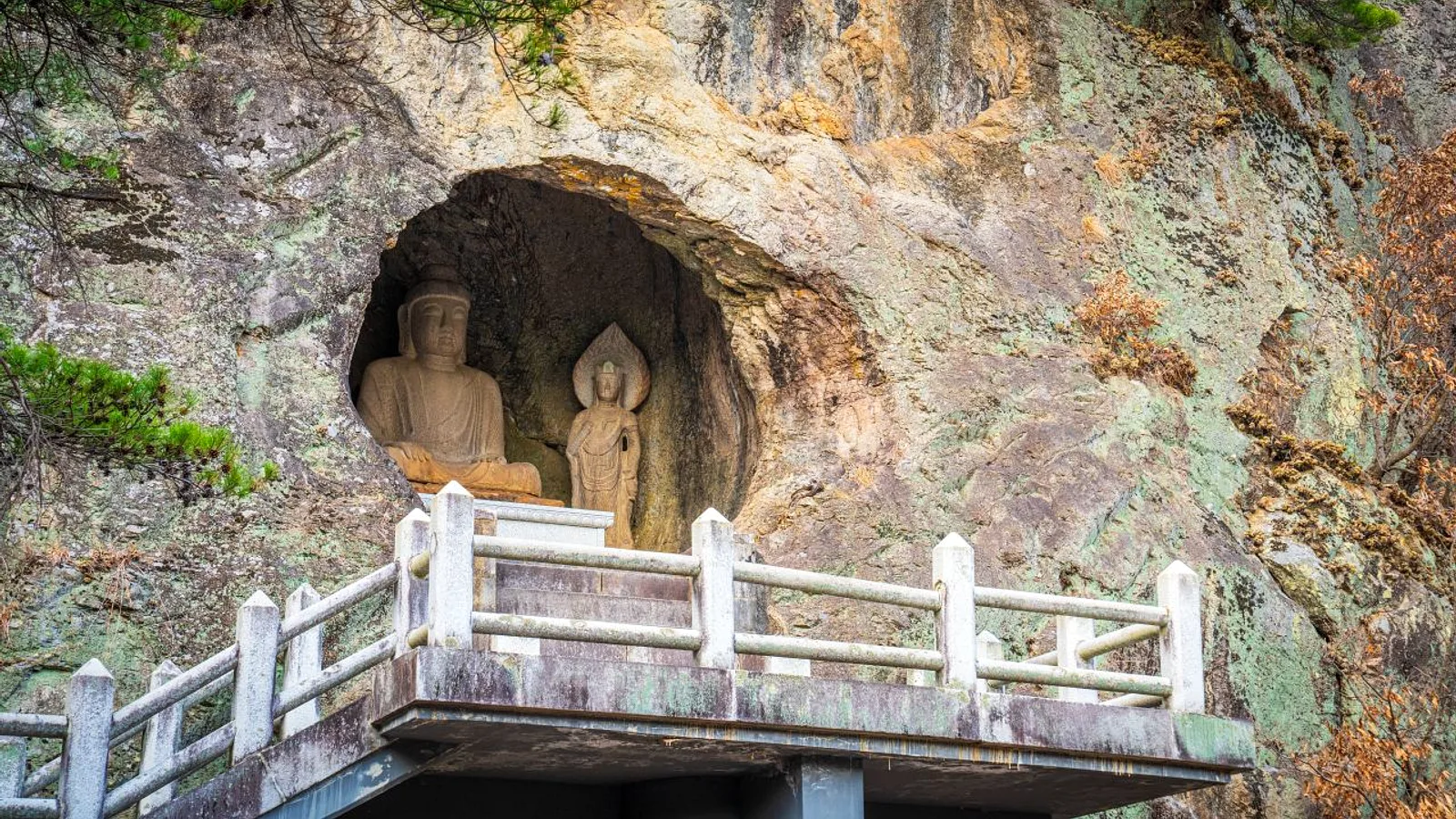
Higher up the mountain, a granite Buddha sits inside an artificial stone chamber facing the East Sea. The setting and carving are the point. Photography inside is not permitted, and visitors view it from a distance through a glass partition.
- A shuttle or taxi runs from Bulguksa's parking area. A walking trail exists but is long and steep.
- Reservations and entry rules can change, so check the official site before you go.
How to go
- From downtown Gyeongju, take a city bus or taxi; the ride takes roughly 20 to 40 minutes depending on traffic.
- Visit Seokguram first in the morning, then Bulguksa, or reverse the order if the day is clear and you want to see the view early.
- Allow two to three hours for both.
Video: Gyeongju, Korea's 1,000-year capital (Gamja in Seoul)
Tips
- Dress modestly, remove hats in halls, and keep voices low. Do not touch the pagodas.
- Spring and autumn weekends are very crowded. Weekday mornings are best.
- Admission fees and hours change; check official information.
- Combine with Gyeongju downtown for the night view at Donggung and Wolji.