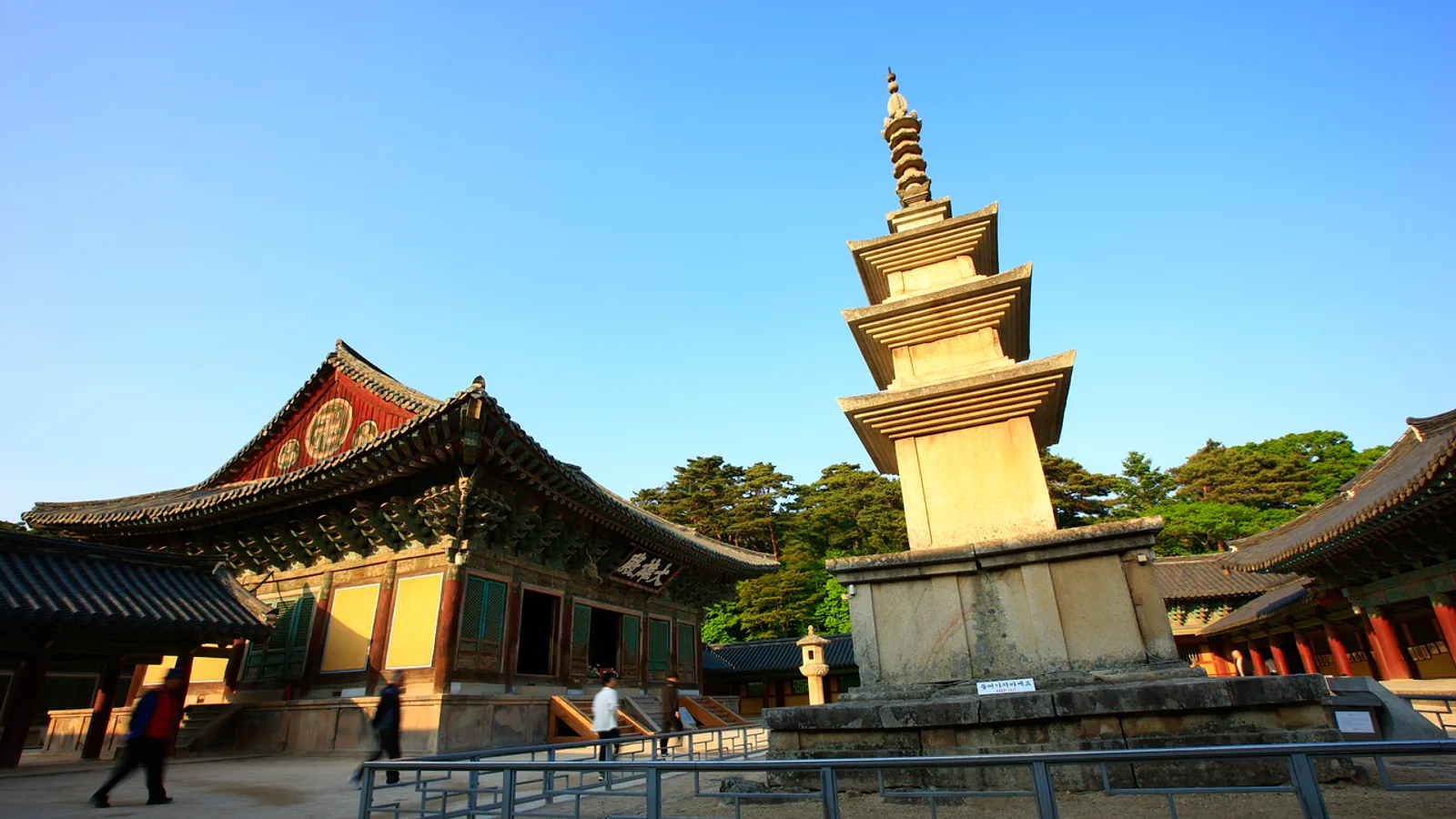
Gyeongju was the capital of Silla for nearly a thousand years, and Buddhism shaped much of its landscape. Two sites east of downtown show how different that heritage can look. Hwangnyongsa was once Silla's largest temple and is now an excavated site, where the scale is revealed by empty ground and foundation stones. Bunhwangsa, by contrast, still has a standing 7th-century pagoda built in a brick style. Visiting both gives a clear sense of what survives, what has vanished and how archaeologists fill in the gaps.
Why Visit Both
The two temples are in the same part of Gyeongju and fit easily into one outing. Hwangnyongsa is about absence and reconstruction. Bunhwangsa is about a physical object you can stand in front of. Seeing them together makes the history easier to follow than either site would alone.
- Hwangnyongsa shows the ambition of the Silla court.
- Bunhwangsa shows early Silla building techniques in a surviving structure.
- A history and culture museum near Hwangnyongsa connects the two with models, finds and explanations.
The Hwangnyongsa Site
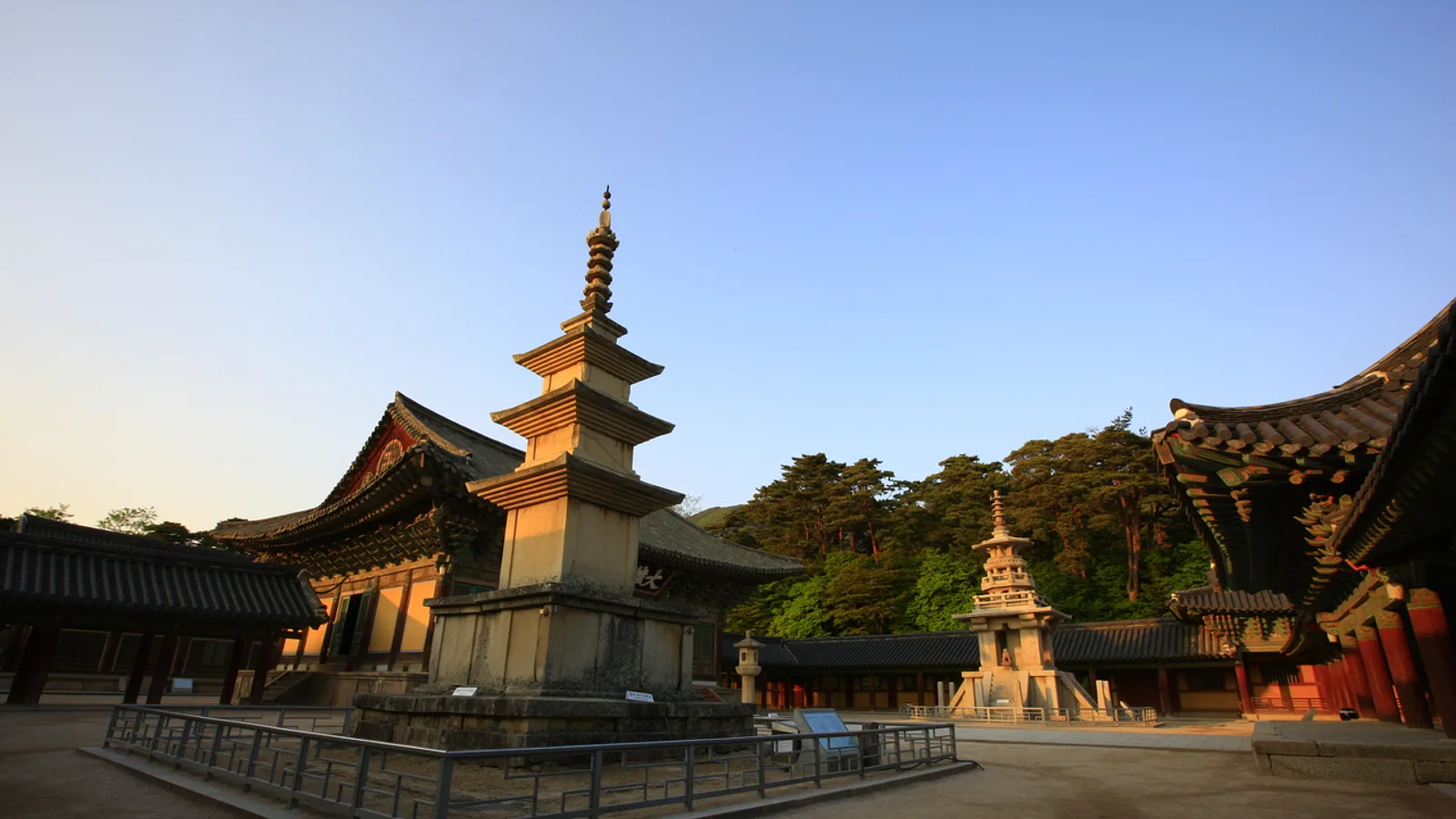
Hwangnyongsa was the largest temple in Silla, and the site reflects that. Little stands above ground today. What visitors see is a wide, open area with the layout of the temple marked by stone bases where halls, gates and a great pagoda once stood.
It is widely recorded that the temple was founded in the 6th century and that its nine-story wooden pagoda became a symbol of Silla. The temple was later destroyed during the Mongol invasions of the 13th century, and the site was left to be excavated much later.
Some visitors find the site underwhelming at first, so it helps to know what to look for:
- Walk the perimeter first to understand how large the compound was.
- Look at the arrangement of the stone bases, which indicates where the main structures sat.
- Compare the open space with the models and diagrams in the museum afterward.
The History and Culture Museum
A history and culture museum stands near the site. It is the best place to turn the empty field into something concrete, since it presents the temple's history through excavated objects and reconstructions.
Going to the museum before or after the site is a matter of preference. Many readers prefer to see the museum first, so the layout makes sense when they walk the grounds. Check the official website, Naver Map or Kakao Map for current opening days, hours and any admission rules, as these can change.
Bunhwangsa and Its Brick-Style Stone Pagoda
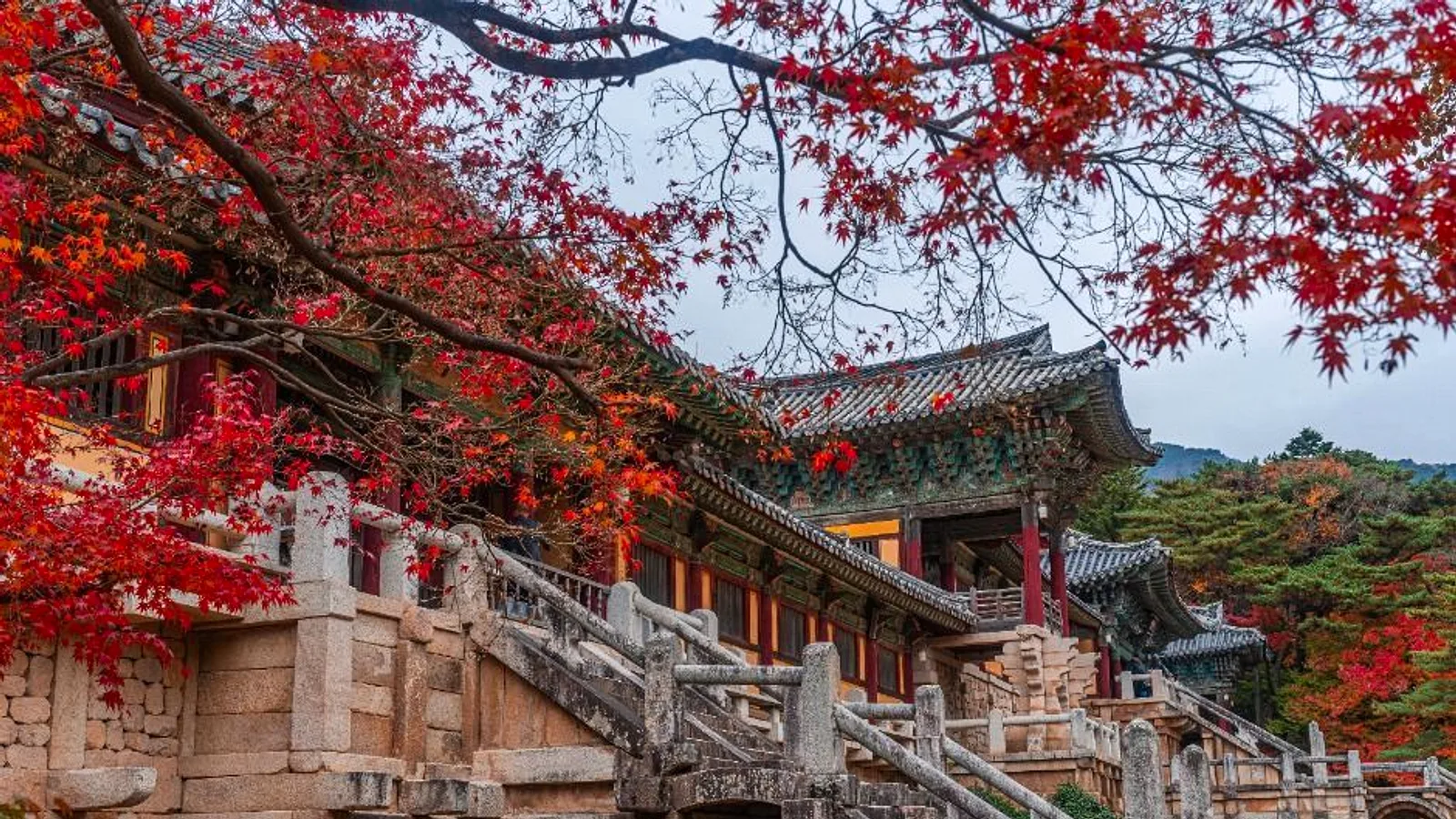
Bunhwangsa is smaller and more intimate than Hwangnyongsa. Its main attraction is a stone pagoda from the 7th century, built to imitate the look of a brick pagoda. Stone was cut into small units and stacked in a way that echoes brickwork, which is unusual among pagodas in Korea and worth a close look.
- Look at the surface texture. The small, regular units are the clearest sign of the brick-style design.
- Note that the pagoda is no longer at its original height. Early records and later accounts suggest it once had more levels, and what remains is a partial form.
- Take time with the grounds as well, since the temple is still an active place of worship. Keep voices low near the halls.
Getting There and Combining the Sites
Both sites lie east of downtown Gyeongju. Use Naver Map or Kakao Map to check current bus routes, taxi options and walking or cycling routes from where you are staying. The two temples are close enough that many visitors combine them in one half-day, but confirm the walking distance on the map instead of relying on a rough estimate.
A sensible order is:
- Start at the Hwangnyongsa Site and the museum to understand the scale of Silla temples.
- Continue to Bunhwangsa to see a surviving structure from the same broad era.
- Return toward downtown or continue to other sites in the area.
What to Expect
The Hwangnyongsa Site is open and exposed, with little shelter. In summer the ground can be hot and bright, and in winter it can be windy. Bunhwangsa is more enclosed, but there is not much to see beyond the pagoda and the temple grounds, so the visit can be short.
Neither site is a fast photo stop. They reward people who read the signs, look at the stonework and think about what once stood there. Visitors who prefer dramatic, intact buildings may enjoy the museum and Bunhwangsa more than the empty field.
Tips
- Check opening days and hours for the museum and temple on the official site, Naver Map or Kakao Map before going, because schedules can change.
- Visit the museum first if you want the open site to make sense.
- Wear comfortable shoes. Much of the Hwangnyongsa Site is uneven ground or gravel.
- Bring sun protection in summer and a windproof layer in colder months.
- Respect Bunhwangsa as a place of worship. Avoid blocking doorways or photographing worshippers.
- Take water with you, since facilities near the open site may be limited.
- If English, Japanese or Chinese signs or audio guides are offered, confirm availability on the official site or at the entrance.
- Allow extra time if you like to read interpretive panels, since both sites reward slow viewing.