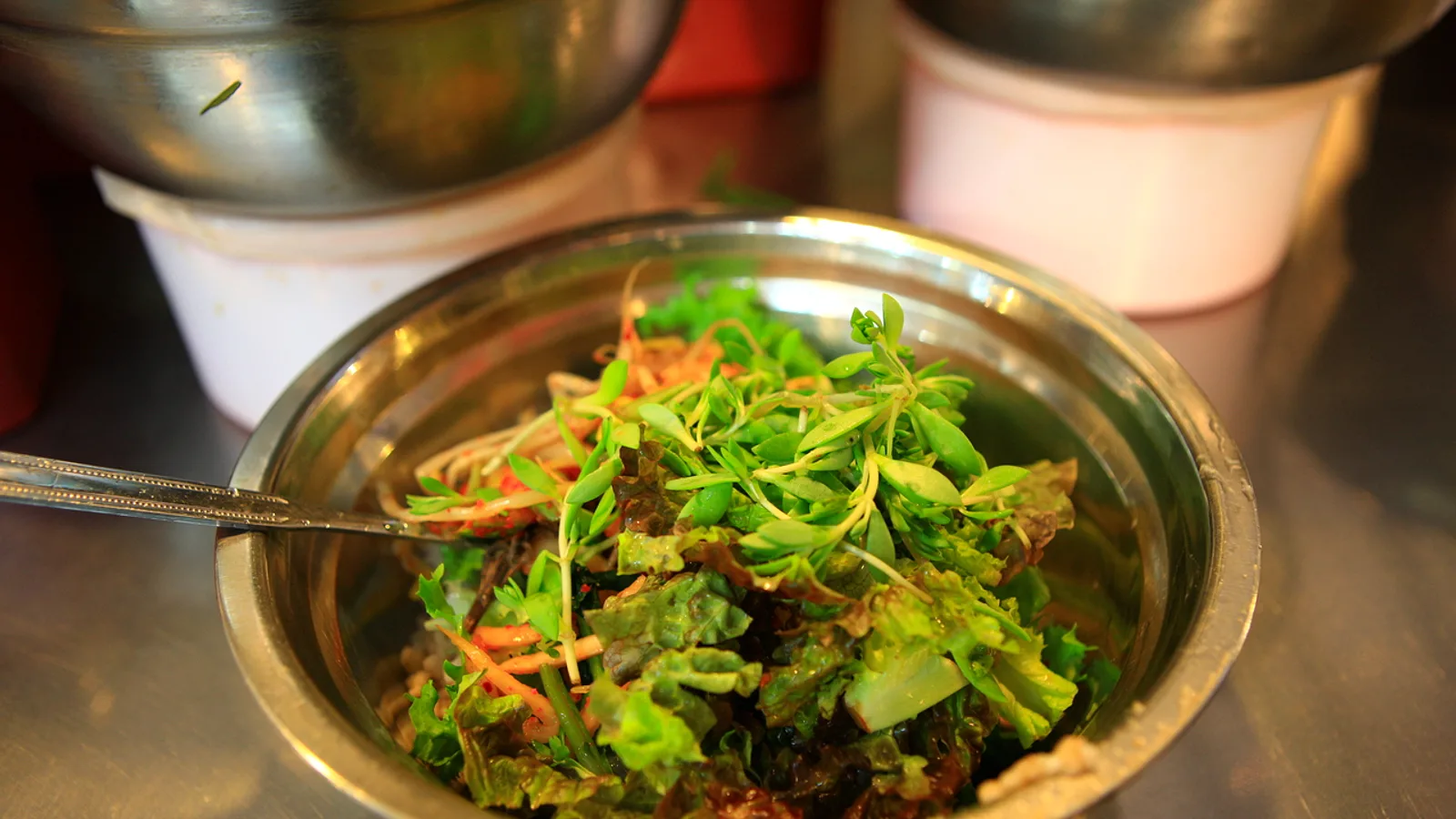
Gwangjang Market is one of Seoul's oldest and most famous traditional markets, and its food alleys are the main reason visitors come. Rows of stalls with counter seating serve a handful of classic dishes that you can try in a single evening.
What to eat
- Bindaetteok: a crisp pancake made from ground mung beans, often with pork or kimchi. Eat it hot.
- Mayak gimbap: small rolls dipped in a mustard-soy sauce; the name means addictive gimbap.
- Kalguksu: hand-cut wheat noodles in a clear, savory broth.
- Yukhoe (Korean beef tartare) and other raw beef dishes served in the market's dedicated alley.
- Sundae (blood sausage) and tteokbokki are also common.
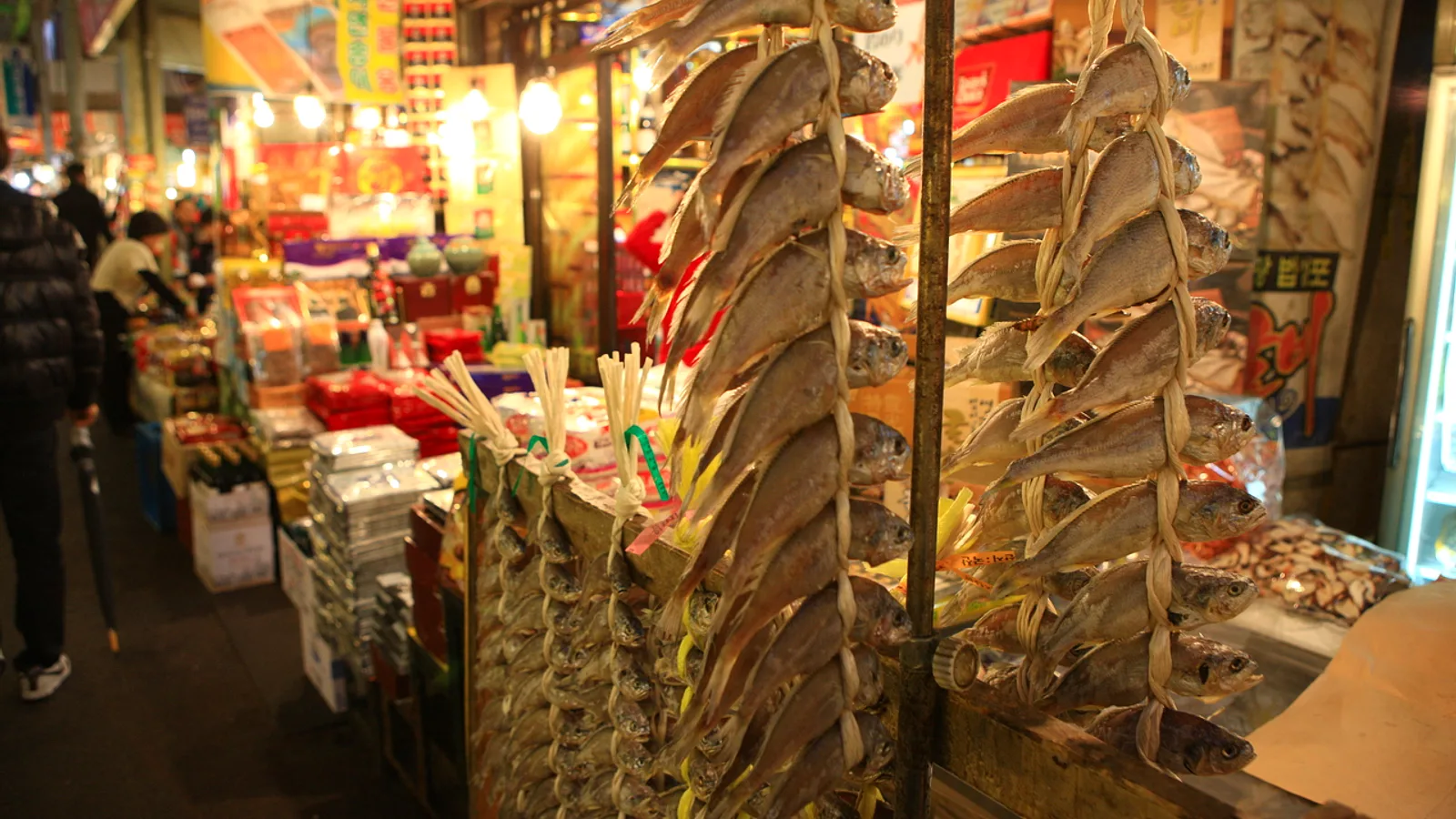
How to order
- Sit at a stall counter and tell the vendor what you want, or point at the dish. Many stalls have photo menus.
- Prices are usually per plate; check the sign before you order, as stalls may differ.
- Share dishes to try more. Portions are generous.
- Raw beef is best at stalls with a visible queue of locals; keep it cold and eat it promptly.
Video: first time at Gwangjang Market (Jimmy Visits World)
When to go
- Late afternoon through evening has the liveliest atmosphere.
- Weekends and the dinner hours are crowded. Weekday afternoons are calmer.
Tips
- Carry small cash and a card; some stalls prefer cash.
- Pork and shrimp are common ingredients. If you avoid pork or shellfish, or follow halal or vegetarian diets, ask before ordering.
- Combine with Dongdaemun, Cheonggyecheon Stream, or a walk to Bukchon and Insadong.
- Hours and closing days vary by stall; check Naver Map or Kakao Map.