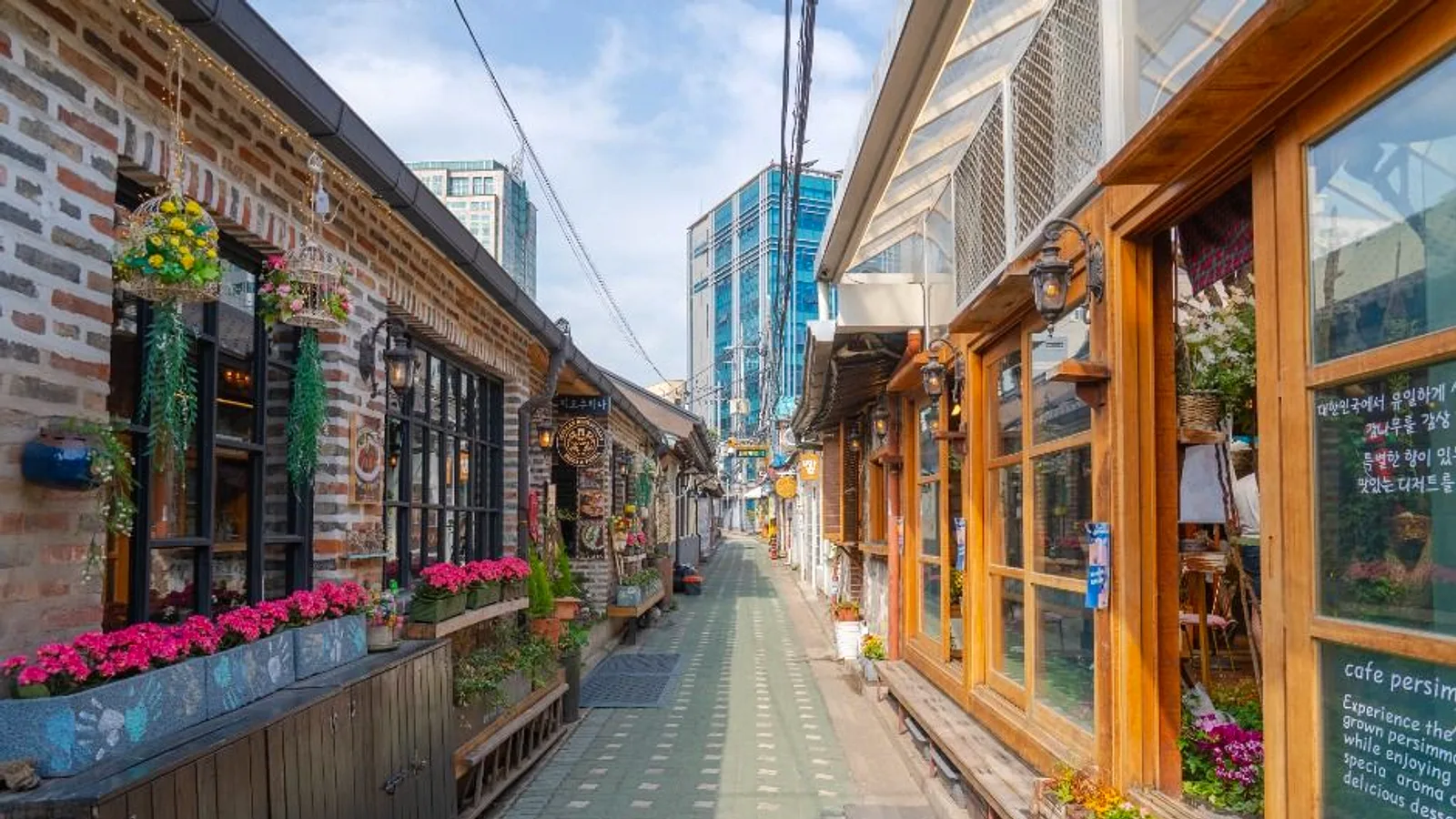
Ikseon-dong and Insa-dong sit close together in central Seoul's Jongno area, and they work well as a single half-day walk. Ikseon-dong is a district of 1920s hanok, traditional Korean houses, whose narrow alleys now hold cafes, bakeries, dessert shops and small boutiques inside restored buildings. Insa-dong, a few minutes to the west, is the traditional craft and antiques street, with tea houses, brush and paper shops and the Ssamziegil shopping complex. Jogyesa Temple, the head temple of the Jogye Order, stands next to Insa-dong. The two areas feel very different, so the order of the walk matters.
Getting There
- Jongno 3-ga Station (lines 1, 3 and 5) is the closest stop for Ikseon-dong, so it is the natural starting point.
- Anguk Station (line 3) is the other option and sits closer to the Insa-dong and Jogyesa side.
- A simple plan is to arrive at one station and leave from the other, which avoids backtracking.
- Check exit numbers on Naver Map or Kakao Map. Station exits in this area are numerous, and the wrong one adds a long detour.
Choosing the Order
Ikseon-dong is busiest on weekend afternoons, and its alleys are narrow enough that crowds slow everyone down. Starting there is the better choice, especially on a weekend. Weekday visits are generally calmer. Insa-dong has wider streets and more room to browse, so it handles crowds better and suits the second half of the outing.
Ikseon-dong: The Hanok Alleys
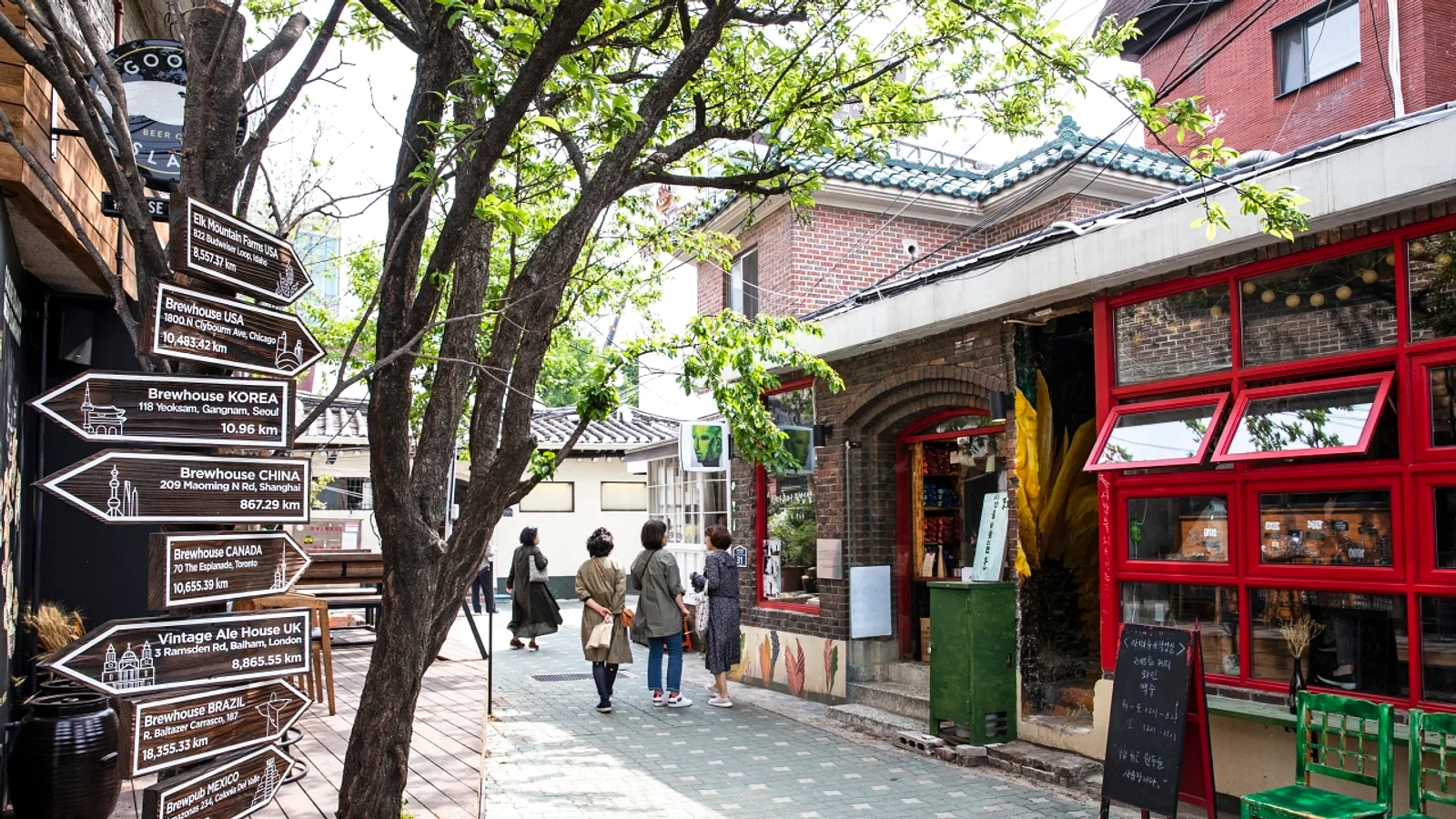
The appeal here is the scale. Low tiled roofs, small courtyards and tight lanes make it feel unlike the surrounding high-rise city. Many of the houses have been converted, so a cafe may be spread across several small rooms and a courtyard.
- Walk the side lanes as well as the main alley. The layout is a maze of short passages, and quieter corners are usually a turn or two away from the busiest stretch.
- Expect cafes, bakeries and dessert shops to be the main draw. Menus, hours and queues change often, so check recent listings on Naver Map or Kakao Map rather than relying on older articles.
- Boutiques are small and mostly sell accessories, stationery and gifts.
- Residents still live in parts of the district. Keep voices low, avoid blocking doorways and follow any signs asking visitors not to enter.
Insa-dong: Craft Street
Insa-dong is the older, more traditional of the two. The main street and its side alleys hold shops selling brushes, paper, ceramics and antiques, along with tea houses.
- Ssamziegil is a shopping complex built around an open courtyard, with craft and gift shops on several levels. It is a convenient place to see a wide range of work in one stop.
- Brush and paper shops are good places to look for small, light souvenirs that pack easily.
- Tea houses offer a slower break than the cafes in Ikseon-dong. Traditional teas are often served, and some contain ingredients such as nuts, so ask staff if allergies are a concern.
- For antiques and handmade items, compare a few shops before buying, and ask about export rules if an item is old or large.
Jogyesa Temple
Jogyesa is the head temple of the Jogye Order and is right beside Insa-dong, which makes it an easy addition. It is a working temple, not only a sightseeing stop.
- Dress modestly and keep noise down near the main hall.
- Ask before photographing worshippers or anyone inside a hall.
- Check the temple's official site or a map listing for current visiting conditions, since events and ceremonies can affect access.
Food and Dietary Notes
Much of what is on offer in this area is sweet: pastries, desserts and drinks. That suits a light snack stop but may not make a full meal, so plan a proper meal elsewhere if needed.
- Bakeries and dessert shops commonly use wheat, eggs, dairy and nuts. Ask staff about ingredients if you have an allergy, and consider writing the allergen in Korean on your phone to show them.
- Vegetarian and vegan visitors should confirm ingredients, as broths, sauces and some pastries may include meat, fish or animal products that are not obvious.
- Traditional teas and sweet snacks may contain nuts, seeds or honey.
Accessibility
Accessibility is limited in this area. Many hanok cafes have steps, raised thresholds or narrow doorways, and the alleys of Ikseon-dong are tight and uneven in places. Visitors who use wheelchairs or strollers, or who have trouble with stairs, should expect some places to be unreachable. Insa-dong's main street is easier to navigate than the Ikseon-dong lanes, but check individual venues in advance when step-free access matters.
Tips
- Start in Ikseon-dong, then move west to Insa-dong and finish at Jogyesa.
- Visit on a weekday if possible, since weekend afternoons in Ikseon-dong are the most crowded.
- Wear comfortable shoes with good grip. Alleys and courtyards can be uneven.
- Check opening hours, prices and closing days on the official sites, Naver Map or Kakao Map before going.
- Carry a small bag. Narrow shops and cafes are easier to move through without large luggage.
- Leave a little time unplanned. The best finds in both areas often come from following an unfamiliar side lane.