Jeju•Seogwipo•Nature•Mountain & Trail
Sanbangsan Mountain & Yongmeori Coast
산방산 및 용머리해안
Powered by Korea Tourism OrganizationAddress: Sanbangsan Mountain & Yongmeori Coast, Seogwipo, Jeju, South Korea (제주특별자치도 서귀포시 안덕면 사계리 112-3 (용머리해안 및 산방산))
Editorial review pending

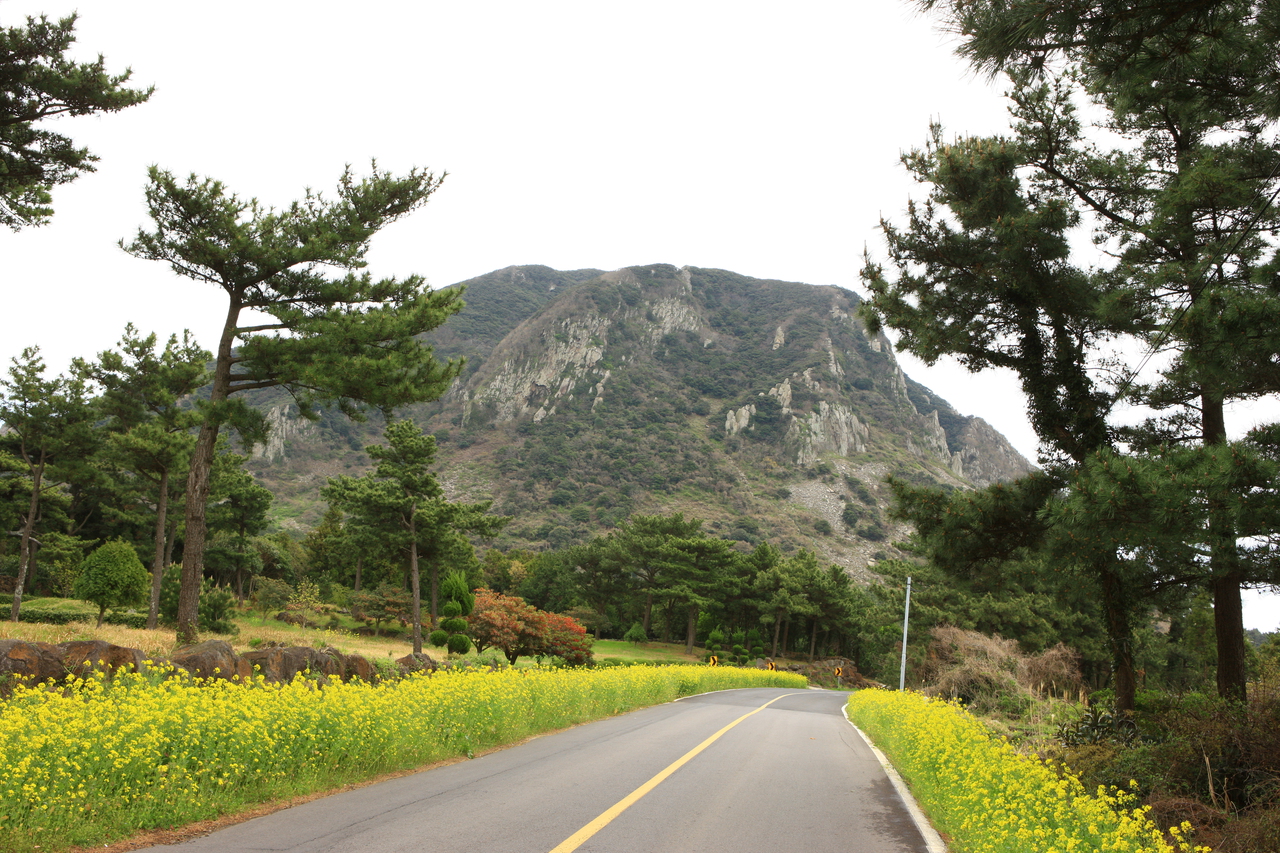
Sanbangsan Mountain & Yongmeori Coast representative scenic panoramaZoom


+1More
1 / 6
Sanbangsan Mountain & Yongmeori Coast representative scenic panorama
Curator's Guide & Overview
Comprehensive Guide1. Historical Origins & Cultural Background
Sanbangsan Mountain and Yongmeori Coast, dramatically towering over the southwestern coast of Sagye-ri in Seogwipo, represent one of the most astonishing geological duos on Earth. Formed approximately 800,000 to one million years ago—long before the central volcanic shield of Mount Hallasan emerged from the sea—these twin landmarks are designated as UNESCO Global Geoparks and Korean National Monuments (Natural Monument No. 185 for Sanbangsan and Natural Monument No. 526 for Yongmeori Coast). Together, they offer an unforgettable encounter between primeval volcanic majesty and dynamic marine erosion.
2. Architectural Highlights & Key Structures
Sanbangsan (395 meters above sea level) is a colossal, monolithic trachyte lava dome with sheer vertical cliff faces that plunge directly into the surrounding coastal plains without a summit crater. About midway up the southern face, ascending via 500 stone steps, lies Sanbanggulsa—a natural sea-cave grotto converted into a sacred Buddhist shrine during the Goryeo dynasty. From the arched mouth of the cave, pure, mineral-rich holy water drips steadily from the rock ceiling into a natural stone basin, reputed since ancient times to grant longevity. Down at sea level directly in front of Sanbangsan stretches Yongmeori Coast ('Dragon Head Coast'), named because the undulating, wave-carved sandstone cliffs resemble the head of an ancient dragon plunging into the Pacific Ocean. Formed by undersea explosive hydrovolcanic eruptions (phreatomagmatic eruptions), Yongmeori’s million-year-old stacked sedimentary layers feature swirling sandstone formations, scalloped wave-cut benches, tidal pools, and natural sea arches that mimic the Grand Canyon. At the coast entrance stands a full-scale replica of the Dutch merchant ship Sperwer, honoring Hendrick Hamel, who was shipwrecked here in 1653 and published the first Western account of Korea.
3. Four Seasons Landscape & Seasonal Visiting Charms
Sanbangsan and Yongmeori Coast are mesmerizing in all seasons. Spring (February to April) is world-famous: the entire foot of Sanbangsan Mountain transforms into an ocean of brilliant golden-yellow canola (rapeseed) blossoms, framing the towering grey volcanic cliffs against the blue sea. Summer (June to August) brings vivid turquoise ocean swells crashing against the multi-colored sedimentary rocks, with fresh coastal breezes and deep emerald sea foliage. Autumn (September to November) offers the most reliable walking weather, with low swells, mild sunny skies, and crystal-clear visibility stretching across the ocean to the outlying volcanic islet of Hyeongjeseom (Brother Island) and Songaksan. Winter (December to February) remains remarkably mild, with crisp sea winds and dramatic winter sunsets illuminating the volcanic cliffs in deep amber hues.
4. Operating Hours & Peak Viewing Times
Sanbanggulsa Grotto is open daily year-round from 09:00 to 18:00. In contrast, access to Yongmeori Coast is strictly controlled by tides and wave safety: because the walking trail traverses natural wave-cut rocky shelves right at sea level, the trail is completely submerged during high tide and closed during rough seas or swells. On days with favorable weather, it typically opens during low-tide windows between 09:00 and 17:00. It is mandatory to check opening status by calling the ticket office (064-794-2940) or checking the Seogwipo City Instagram account on the morning of your visit. Plan 2 to 3 hours to hike up to Sanbanggulsa and walk the complete 1-kilometer coastal loop of Yongmeori.
5. Admission Fees & Concessions (Youth/Foreigner Discounts)
A combined ticket for both Sanbanggulsa and Yongmeori Coast costs 2,500 KRW for adults and 1,500 KRW for youth and children. Individual tickets cost 1,000 KRW for Sanbanggulsa and 2,000 KRW for Yongmeori Coast (free for infants under 6 and seniors aged 65+). Public municipal parking lots near the entrance are free; smaller private commercial lots cost approximately 2,000 KRW.
6. Public Transit & Subway Exit Directions
From Jeju International Airport, take Express Bus 151 or 152 to the Daejeong / Unjin Port junction (approx. 50 minutes), then transfer to Coastal Trunk Bus 202 or Feeder Bus 752-1 and alight directly at the Sanbangsan bus stop (approx. 10 minutes). Taxis from Jeju Airport take approximately 45 minutes along Route 1135 (approx. 30,000 to 35,000 KRW). Driving a rental car takes roughly 40 minutes from Jeju City and 25 minutes from Seogwipo downtown.
7. Barrier-Free Accessibility & Visitor Amenities
Accessibility varies distinctly between the two sites due to natural terrain. The base plaza, Hendrick Hamel replica ship plaza, ticket pavilion, and coastal viewing lookouts are paved and accessible to manual wheelchairs and strollers. However, ascending to Sanbanggulsa Grotto requires climbing approximately 500 steep, uneven stone steps without elevator access. Similarly, walking the Yongmeori Coast trail requires stepping across natural volcanic sandstone ledges, slippery tidal rocks, and uneven rock crevices, making it strictly inaccessible to wheelchairs, strollers, and travelers with significant mobility limitations. Accessible restrooms and disabled parking bays are located at the lower entrance plaza.
8. Recommended Walking Route & Highlights Tour
Recommended 2.5-Hour Geological Wonder & Cliff Sanctuary Trail: Arrive at Sanbangsan lower plaza and marvel at the colossal vertical lava cliffs towering overhead → Ascend the stone stairway through the twin temples of Sanbangsa and Bomunsa, pausing at the stone terraces to admire the panoramic ocean view of Sagye Beach and Brother Island → Enter the sacred vaulted grotto of Sanbanggulsa, bowing before the seated stone Buddha and tasting a sip of the miraculous holy water dripping into the natural stone basin → Descend back to the plaza and walk past the Hendrick Hamel Dutch Shipwreck monument → Check tide status and step down onto the sweeping sedimentary sandstone terraces of Yongmeori Coast → Walk along the 1-kilometer wave-sculpted coastal ledge, marveling at the swirling multi-layered sandstones, sea-caves, and sea arches shaped by a million years of wave action → Encounter friendly local Haenyeo (female divers) selling freshly harvested abalone and sea cucumber on the rocky benches → Complete the loop exiting through the eastern dragon-tail path → Relax at a seaside cafe in Sagye-ri with an iced Hallabong tea.
9. Local Food Specialties & Regional Flavors
Sagye-ri dining around Sanbangsan is renowned for fresh deep-sea seafood, native Jeju pork, and hearty countryside cuisine. At traditional seaside restaurants, order fresh Galchi Jorim (spicy braised silver hairtail fish), whole salt-grilled hairtail, and sizzling Jeju Black Pork Barbecue grilled with meljeot (anchovy dip). Along the rocky shelves of Yongmeori Coast, elderly Haenyeo divers serve freshly harvested raw abalone (Jeonbok), sea cucumbers (Haesam), and turban shells (Sora) sliced to order on red plastic trays with gochujang. Enjoy warm bowls of Bomal Kalguksu (sea snail noodles) and hearty Haemul Ddukbaegi (seafood earthenware hot pot).
10. Dietary Options (Vegetarian, Halal & Allergen Guide)
Vegetarians can find satisfying options in Sagye-ri and nearby Andeok: traditional eateries serve mountain herb bibimbap, crispy potato pancakes (Gamjajeon), bubbling soft tofu stews, and acorn jelly salads. Coastal bakeries offer fresh artisanal sourdough, red bean breads, and seasonal citrus pastries. Halal and pescatarian visitors will find Sagye-ri exceptional: order grilled tilefish, fresh abalone porridge, grilled mackerel, and seafood earthenware stews made strictly with fresh marine catch and zero pork broths.
11. Signature Photo Spots & Golden Hour Lighting
Signature photographic perspectives: looking through the blooming golden-yellow canola flower fields in spring with the sheer vertical volcanic rock face of Sanbangsan towering dramatically in the background (one of Jeju’s top 3 iconic postcard landscapes); standing inside the swirling, wave-carved sandstone amphitheater of Yongmeori Coast with the emerald Pacific swells crashing behind you; capturing the view from inside Sanbanggulsa grotto looking out through the cave mouth toward the endless blue ocean and Brother Island; and posing in front of the full-scale replica of Hendrick Hamel’s wooden Dutch sailing ship.
12. Visitor Etiquette & Cultural Property Regulations
Safety and conservation regulations: Yongmeori Coast is a designated Natural Monument. Do not chisel, carve, or damage the delicate million-year-old sandstone strata. Wear sturdy rubber-soled sneakers or hiking shoes; never attempt the coastal walk in high heels, flip-flops, or dress shoes, as the wave-cut basalt benches are slick with wet sea algae. Strictly obey safety barricades and warning whistles from park rangers when waves rise. Do not venture close to the water’s edge during high swells. Drone flights are restricted around the cliffs. Smoking is strictly prohibited throughout the sanctuary.
13. Safety Precautions & 1330 Tourism Hotline Support
Bring a lightweight windbreaker, as coastal ocean winds at Yongmeori can be fierce. Always verify low-tide opening hours before traveling to avoid disappointment (call 064-794-2940). For guided geopark commentary and inquiries, contact the Sanbangsan Geopark Center or call the 1330 Korea Travel Hotline.
14. Nearby Connected Attractions & Walking Links
Nearby attractions: visit the floral trails of Camellia Hill (PLACE-JEJU-008) 15 minutes north; walk the emerald plantations of Osulloc Tea Museum (PLACE-JEJU-010); explore the coastal cliffs of Songaksan Mountain; or unwind at the grand hall of Yakcheonsa Temple (PLACE-JEJU-015).
15. Frequently Asked Questions (FAQ)
Q: Why is Yongmeori Coast closed so frequently? A: Yongmeori Coast is an authentic, raw natural sea shelf located right at sea level without artificial barriers; twice each day, ocean tides submerge significant portions of the walking trail, while even modest offshore swells can send massive waves crashing over the rocks, posing severe danger to visitors; park authorities prioritize visitor safety above all else, closing access during high tide, high winds, or heavy rain. Q: What is the legend of Sanbangsan and Hallasan? A: According to famous Jeju mythology, an ancient hunter on Hallasan accidentally struck the Heavenly Emperor with his bow while hunting deer; in his divine anger, the Emperor ripped off the summit peak of Mount Hallasan and flung it southwest across the island—the hurled rock landed in Sagye-ri to become Sanbangsan, while the hollow depression left on Hallasan’s summit became Baekrokdam crater lake, whose circular dimensions remarkably match the circumference of Sanbangsan.
16. Regional Extended Day Trip Itinerary
Sanbangsan & Southwestern Jeju Geological Heritage Day Tour: Morning drive from Jeju City along Pyeonghwa-ro to Sagye-ri → Check tide opening status and arrive at Yongmeori Coast to walk the million-year-old wave-carved sandstone cliffs → Savor fresh abalone sliced by local Haenyeo divers on the rocks → Ascend 500 stone steps up Sanbangsan to visit the sacred cave shrine of Sanbanggulsa and drink holy spring water → Photograph the yellow canola fields framing the mountain cliffs → Savor fresh grilled hairtail or black pork barbecue in Sagye-ri for lunch → Afternoon visit to Osulloc Tea Museum for green tea ice cream → Sunset coastal walk along Songaksan looking back at Sanbangsan before returning.
Essential Visitor Facts
Operating Hours
Sanbanggulsa Grotto: open daily year-round 09:00 - 18:00; Yongmeori Coast: strictly tide- and wave-dependent (typically open 09:00 - 17:00 when low tide permits; closed during high tide or rough swell; phone confirmation 064-794-2940 essential on morning of visit).
Admission / Price
Combined Ticket (Sanbanggulsa + Yongmeori Coast): Adults 2,500 KRW, Youth/Children 1,500 KRW; Individual Tickets: Sanbanggulsa Adults 1,000 KRW, Yongmeori Coast Adults 2,000 KRW (free for under 6 and 65+); Large parking lot is free or nominal 2,000 KRW private.
Closed Days
Open 365 Days
Best Time to Visit
Morning (around 09:30-10:00)
Transit & Access Directions
From Jeju International Airport, take Express Bus 151 or 152 to Unjin Port (approx. 50 minutes), then transfer to Coastal Feeder Bus 202 or 752-1 directly to the Sanbangsan stop (approx. 10 minutes).
Accessibility & Special Amenities
Wheelchair ramps, tactile paving, accessible restrooms
Location Coordinates
Latitude: 33.2365
Longitude: 126.3135
Discover Themes & Highlights
Key interest areas and cultural highlights:
#sanbangsan-mountain-yongmeori#VisitJeju#KoreaTravelAtlas
Community Traveler Reviews0 Reviews
Visitor tips, feedback, and questions submitted by real travelers.
No community reviews submitted yet. Be the first traveler to share your experience!
Connected Cultural Destinations
Handpicked nearby attractions and regional cultural highlights.

Daepo Jusangjeolli Hexagonal Lava Cliffs
대포 주상절리대Daepo Jusangjeolli Hexagonal Lava Cliffs, Seogwipo, Jeju, South Korea
Daepo Jusangjeolli is a UNESCO Global Geopark marvel and Natural Monument No. 443, featuring colossal hexagonal and polygonal columnar basalt sea cliffs towering 20 to 30 meters above the roaring s...
Morning (around 09:30-10:00)
Details→
Camellia Hill Arboretum
카멜리아힐Camellia Hill Arboretum, Seogwipo, Jeju, South Korea
Camellia Hill is East Asia’s largest botanical camellia paradise, spanning 200,000 square meters of tranquil Jeju volcanic forest adorned with 6,000 camellia trees of 500 varieties from 80 countrie...
Morning (around 09:30-10:00)
Details→
Osulloc Tea Museum & Seogwang Tea Fields
오설록 티뮤지엄Osulloc Tea Museum & Seogwang Tea Fields, Seogwipo, Jeju, South Korea
Osulloc Tea Museum is South Korea’s premier tea cultural sanctuary and lush organic oasis in Seogwipo, showcasing endless emerald green tea plantations, traditional tea roasting pavilions, the mini...
Morning (around 09:30-10:00)
Details→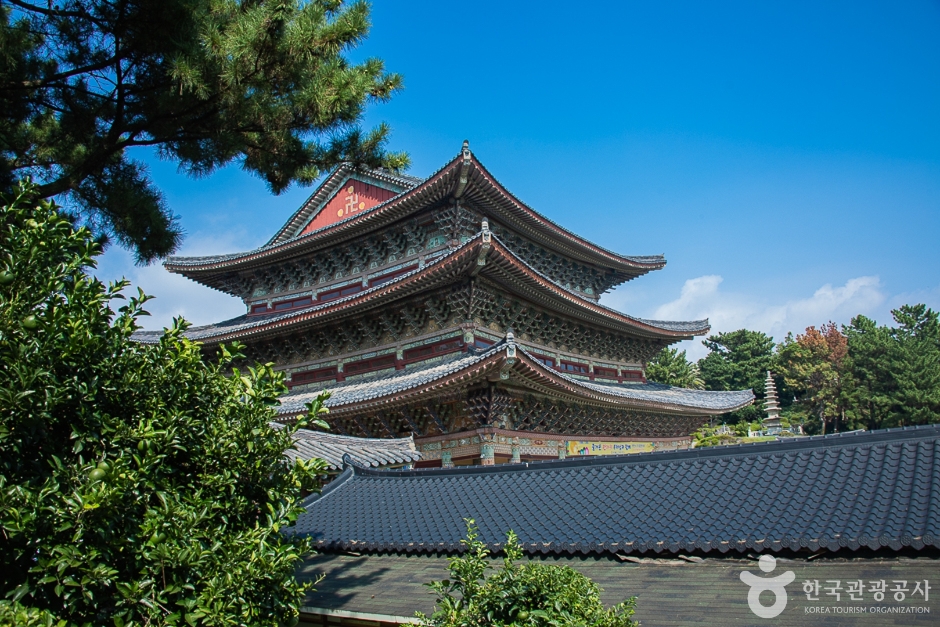
Yakcheonsa Ocean Temple
약천사Yakcheonsa Ocean Temple, Seogwipo, Jeju, South Korea
Yakcheonsa Ocean Temple in Seogwipo is an awe-inspiring architectural wonder, home to the single largest Buddhist temple hall in East Asia (Jeokgwangjeon, rising 30 meters high), enshrining three c...
Morning (around 09:30-10:00)
Details→