Jeju•Seogwipo•Nature•Mountain & Trail
Daepo Jusangjeolli Hexagonal Lava Cliffs
대포 주상절리대
Powered by Korea Tourism OrganizationAddress: Daepo Jusangjeolli Hexagonal Lava Cliffs, Seogwipo, Jeju, South Korea (제주특별자치도 서귀포시 이어도로 272 (중문·대포 주상절리대))
Editorial review pending

Daepo Jusangjeolli Hexagonal Lava Cliffs representative scenic panoramaZoom
+1More
1 / 6
Daepo Jusangjeolli Hexagonal Lava Cliffs representative scenic panorama
Curator's Guide & Overview
Comprehensive Guide1. Historical Origins & Cultural Background
Daepo Jusangjeolli Hexagonal Lava Cliffs, located along the southern coast of Seogwipo City within the Jungmun Tourist Complex, is South Korea’s most magnificent coastal volcanic formation. Designated Natural Monument No. 443 and certified as a key site of the UNESCO Global Geopark, this dramatic geological wonder stretches for approximately 2 kilometers along the rocky coastline between the villages of Daepo and Jungmun. The cliffs comprise tens of thousands of towering, geometric stone columns rising vertically 20 to 30 meters (65 to 100 feet) above the roaring sapphire waters of the East China Sea, resembling a monumental Greek temple or giant's palisade chiseled by divine sculptors.
2. Architectural Highlights & Key Structures
The scientific genesis of the Daepo columnar jointing dates back roughly 250,000 to 140,000 years ago during the Pleistocene epoch. A massive river of incandescent trachybasaltic lava erupted from Mount Hallasan's southern craters (such as Nokgome Oreum) and flowed inexorably down into the frigid coastal waters of Daepo. As the molten lava (exceeding 1,000°C) plunged into the sea, its exterior rapidly cooled and contracted inward toward localized cooling centers. According to the laws of physical cooling dynamics, this uniform thermal contraction generated tensile stress cracks that propagated vertically down through the rock, fracturing the solidifying basalt into near-perfect hexagonal, pentagonal, and octagonal vertical stone prisms. Today, the cliff resembles tightly clustered charcoal briquettes or giant stone pencils standing side-by-side against the relentless surf.
3. Four Seasons Landscape & Seasonal Visiting Charms
Daepo Jusangjeolli displays dynamic, awe-inspiring coastal beauty across all four seasons. Summer (June to August) brings the most thrilling visual spectacle: during high tide and summer swells, thunderous blue waves crash violently against the geometric stone columns, exploding into white foam curtains that shoot over 20 meters high into the air. Spring (March to May) frames the dark basalt cliffs in vibrant yellow rape flowers and deep pink coastal azaleas blooming along the upper cliff parks. Autumn (September to November) offers warm, golden afternoon sunlight and glass-calm cobalt waters, allowing visitors to see the underwater portions of the submerged hexagonal pillars descending into the deep sea. Winter (December to February) brings crisp, clean horizons where the deep indigo ocean contrasts against the dark volcanic stone beneath warm southern sunshine.
4. Operating Hours & Peak Viewing Times
The attraction is open daily year-round from 09:00 to 18:00 (last entry tickets sold at 17:30). During typhoon warnings or extreme high-surf advisories, outdoor wooden viewing decks may be temporarily closed for visitor safety. The optimal visiting time is during high tide (when breaking waves crash most dramatically against the cliffs) and late afternoon between 16:30 and 17:30, when the setting sun bathes the vertical hexagonal stone columns in warm amber and bronze hues. Plan roughly 1 to 1.5 hours to leisurely walk the coastal pine boardwalk, observe the geological formations from multiple viewing decks, and explore the surrounding park gardens.
5. Admission Fees & Concessions (Youth/Foreigner Discounts)
Admission is 2,000 KRW for adults, 1,000 KRW for teenagers, and 1,000 KRW for children aged 7 to 12 (free for children under 6 and seniors aged 65+). Paved municipal parking at the entrance costs approximately 1,000 to 2,000 KRW per passenger vehicle.
6. Public Transit & Subway Exit Directions
From Jeju International Airport, board Airport Limousine Bus 600, which departs every 15 to 20 minutes directly to the International Convention Center (ICC Jeju) bus stop in approximately 50 minutes. From the ICC Jeju stop, a pleasant 5-minute walk along a palm-tree-lined promenade leads directly to the Jusangjeolli ticket office and park entrance. From Seogwipo downtown, City Bus 510 or 520 reaches the Daepo Jusangjeolli entrance in about 20 minutes.
7. Barrier-Free Accessibility & Visitor Amenities
Following extensive modern renovations, Daepo Jusangjeolli features an exemplary barrier-free viewing infrastructure. A wide, smoothly paved wooden boardwalk and gentle ramp system connects the park entrance directly to the multi-level cliff observation decks, completely avoiding stairs and allowing manual wheelchairs, motorized carts, and strollers to access the prime panoramic viewpoints overlooking the hexagonal columns. The upper park features flat stone plazas, shaded resting gazebos, and barrier-free restrooms equipped with emergency bells and automated doors. Free manual wheelchairs are available for loan at the ticket office.
8. Recommended Walking Route & Highlights Tour
Recommended 1-Hour Volcanic Hexagon & Coastal Boardwalk Circuit: Arrive at the Jusangjeolli park plaza and photograph the colossal outdoor stone sculpture of a conch shell and traditional wooden raft (Teu) → Walk down the gently sloping wooden boardwalk lined with swaying subtropical palm trees → Step onto the first elevated observation deck to look straight down at the miraculous hexagonal mosaic of basalt columns kissing the churning turquoise sea → Move to the western panoramic platform to observe the full 2-kilometer cliff face stretching toward Jungmun Beach, watching giant sea swells crash against the stone pillars and send geysers of white spray into the sky → Inspect the detailed educational plaques explaining the volcanic thermal contraction process → Stroll through the lush coastal park gardens, admiring the black volcanic rock walls and subtropical foliage → Walk 5 minutes west to explore the oceanfront terrace of ICC Jeju or relax at a nearby seaside cafe overlooking the Pacific horizon.
9. Local Food Specialties & Regional Flavors
Dining around the Jungmun Tourist Complex and Daepo Port offers a tantalizing array of fresh Jeju coastal cuisine. At Daepo Port, feast on freshly sliced Hwangdom (red sea bream sashimi), live abalone, and sea urchin. Savor authentic Jeju Heuk-dwaeji (charcoal-grilled native black pork) served with rich soybean paste stew, or enjoy Galchi Jorim (spicy braised silver hairtail fish simmered in rich red pepper broth with giant white radishes). Cool off with refreshing Hallabong citrus sorbet or sweet green tea ice cream.
10. Dietary Options (Vegetarian, Halal & Allergen Guide)
Vegetarians can find delicious options in Jungmun: enjoy fresh vegetable bibimbap, crispy potato pancakes, acorn jelly salad, and soft tofu stews at traditional Korean restaurants near the resort complex. Sweet treats include Hallabong citrus bread, roasted sweet potatoes, and organic Jeju green tea desserts. Halal and pescatarian travelers will find abundant options: grilled hairtail fish, spicy braised fish platters, abalone porridge, and fresh sashimi at Daepo Port are prepared completely free of meat and pork broths.
11. Signature Photo Spots & Golden Hour Lighting
Signature photographic perspectives: a vertical telephoto shot looking straight down onto the tightly packed hexagonal and pentagonal tops of the basalt columns with turquoise waves swirling between them; a dramatic action shot capturing a 20-meter wave crashing against the vertical stone cliff face and exploding into blinding white spray; panoramic wide-angle shots framing the wooden observation deck, the geometric cliffs, and the sparkling blue horizon of the East China Sea; and warm golden-hour portraits as the setting sun illuminates the dark volcanic prisms.
12. Visitor Etiquette & Cultural Property Regulations
Conservation and safety guidelines: Daepo Jusangjeolli is a designated National Natural Monument. Never climb over safety railings or attempt to step onto the wet basalt cliffs (the rocks are extremely steep, jagged, and slippery, with violent unexpected rogue waves). Throwing coins, trash, or stones onto the basalt columns is strictly prohibited and subject to severe fines under the Cultural Heritage Protection Act. Drones cannot be operated without prior cultural heritage authorization. Smoking is strictly prohibited throughout the park.
13. Safety Precautions & 1330 Tourism Hotline Support
Wear comfortable walking shoes with good traction. In sunny weather, bring a sun hat and sunglasses, as the coastal boardwalk is exposed to open ocean glare. If visiting on windy days, be prepared for light sea spray drifting up from the waves. For park hours, storm closure notices, and cultural commentary bookings, contact the Seogwipo City Tourism Management Office at 064-738-1521 or dial 1330.
14. Nearby Connected Attractions & Walking Links
Nearby attractions: visit the dramatic 3-tier waterfall of Cheonjeyeon Falls (located 5 minutes west in Jungmun); relax on the golden sands of Jungmun Saekdal Beach (PLACE-JEJU-016); visit the magnificent ocean temple of Yakcheonsa (PLACE-JEJU-015); or explore the dramatic sea cave trails of Sanbangsan and Yongmeori Coast (PLACE-JEJU-014).
15. Frequently Asked Questions (FAQ)
Q: Why did the lava crack into hexagonal shapes rather than squares? A: In physics and geometry, when a uniform hot liquid sheet contracts equally in all directions upon cooling, the hexagonal prism is nature's most mathematically efficient geometrical structure—it releases maximum thermal contraction tension while expending the minimum amount of boundary cracking energy (the same physical principle that creates hexagonal honeycombs and drying mud cracks). Q: How tall are the stone columns? A: The vertical basalt pillars at Daepo rise between 20 and 30 meters (up to 100 feet) above sea level, and geological sonar soundings reveal that they extend several meters further beneath the ocean surface, creating a colossal subterranean volcanic palisade.
16. Regional Extended Day Trip Itinerary
Jungmun Volcanic Coast & Jusangjeolli Half-Day Tour: Morning limousine bus from Jeju Airport to ICC Jeju → 5-minute walk to Daepo Jusangjeolli Hexagonal Lava Cliffs → Stroll the wooden boardwalks to marvel at the 30-meter geometric stone pillars and crashing waves → Photograph the waves exploding against the hexagonal columns → Lunch in Jungmun savoring spicy braised Jeju hairtail fish (Galchi Jorim) and abalone porridge → Afternoon visit to nearby Cheonjeyeon 3-tier Waterfall → Sunset coffee overlooking the surf at Jungmun Saekdal Beach.
Essential Visitor Facts
Operating Hours
Open daily year-round 09:00 - 18:00 (last entry 17:30); Subject to temporary viewing restrictions during typhoons or severe coastal weather for safety.
Admission / Price
Admission: Adults 2,000 KRW, Youth/Children 1,000 KRW (free for children under 6 and seniors aged 65+); Municipal parking fee: approx. 1,000 to 2,000 KRW.
Closed Days
Open 365 Days
Best Time to Visit
Morning (around 09:30-10:00)
Transit & Access Directions
From Jeju International Airport, take Airport Limousine Bus 600 directly to the International Convention Center (ICC Jeju) stop (approx. 50 minutes). From ICC Jeju, walk just 5 minutes along the palm tree promenade to the Jusangjeolli ticket office.
Accessibility & Special Amenities
Wheelchair ramps, tactile paving, accessible restrooms
Location Coordinates
Latitude: 33.2375
Longitude: 126.4252
Discover Themes & Highlights
Key interest areas and cultural highlights:
#jusangjeolli-cliff-seogwipo#VisitJeju#KoreaTravelAtlas
Community Traveler Reviews0 Reviews
Visitor tips, feedback, and questions submitted by real travelers.
No community reviews submitted yet. Be the first traveler to share your experience!
Connected Cultural Destinations
Handpicked nearby attractions and regional cultural highlights.
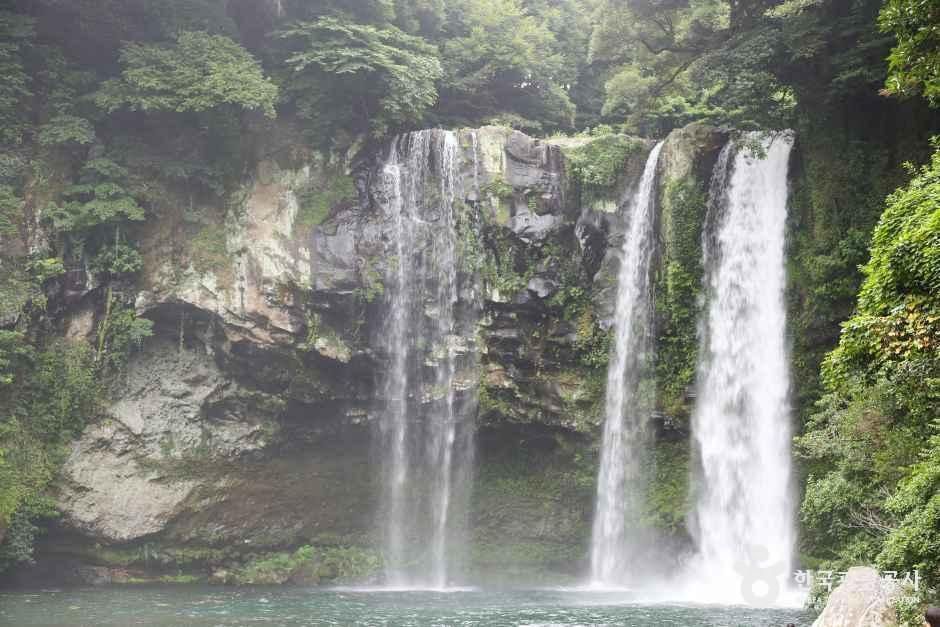
Cheonjiyeon Waterfall
천지연폭포Cheonjiyeon Waterfall, Seogwipo, Jeju, South Korea
Cheonjiyeon Waterfall is Seogwipo’s legendary nocturnal paradise and Natural Monument No. 163, where a 22-meter volcanic cascade tumbles into an emerald 20-meter-deep lagoon framed by primeval subt...
Morning (around 09:30-10:00)
Details→
Sanbangsan Mountain & Yongmeori Coast
산방산 및 용머리해안Sanbangsan Mountain & Yongmeori Coast, Seogwipo, Jeju, South Korea
Sanbangsan Mountain & Yongmeori Coast in southwestern Seogwipo form a million-year-old geological wonder, pairing a colossal 395-meter bell-shaped volcanic dome containing the sacred Sanbanggulsa c...
Morning (around 09:30-10:00)
Details→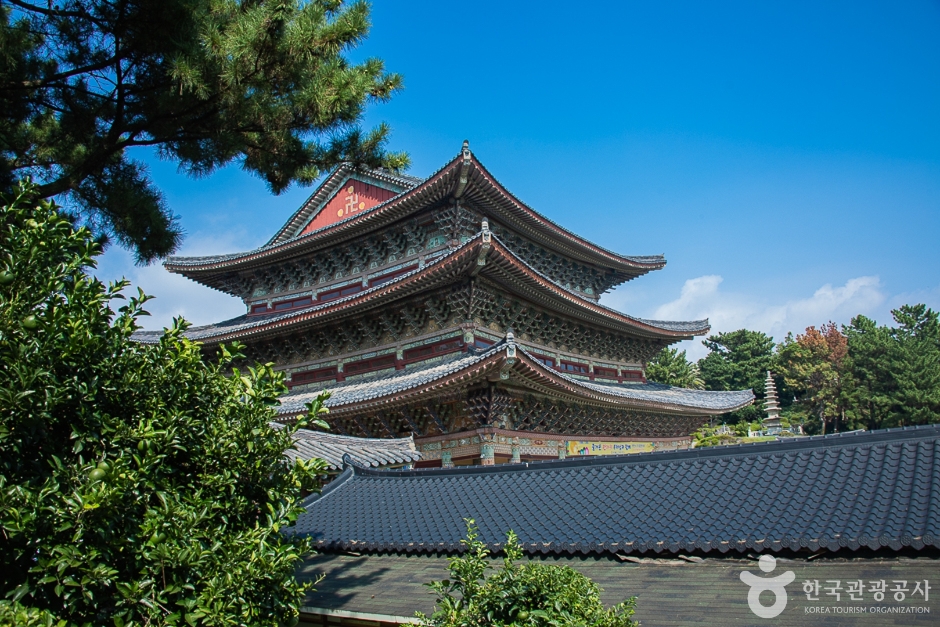
Yakcheonsa Ocean Temple
약천사Yakcheonsa Ocean Temple, Seogwipo, Jeju, South Korea
Yakcheonsa Ocean Temple in Seogwipo is an awe-inspiring architectural wonder, home to the single largest Buddhist temple hall in East Asia (Jeokgwangjeon, rising 30 meters high), enshrining three c...
Morning (around 09:30-10:00)
Details→
Jungmun Saekdal Beach
중문색달해수욕장Jungmun Saekdal Beach, Seogwipo, Jeju, South Korea
Jungmun Saekdal Beach is South Korea’s premier surfing mecca and dramatic coastal jewel within Jungmun Resort, Seogwipo, boasting rare 4-colored sands (Jinmol), roaring barrel waves framed by volca...
Morning (around 09:30-10:00)
Details→