Jeju•Seogwipo•Heritage•Buddhist Temple
Yakcheonsa Ocean Temple
약천사
Powered by Korea Tourism OrganizationAddress: Yakcheonsa Ocean Temple, Seogwipo, Jeju, South Korea (제주특별자치도 서귀포시 이어도로 293-28 (약천사))
Editorial review pending
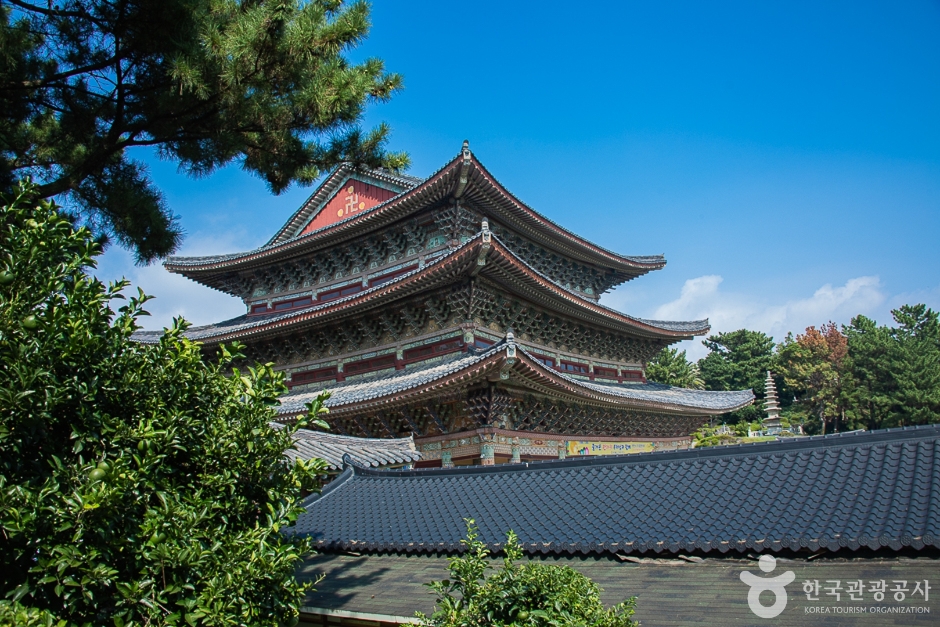
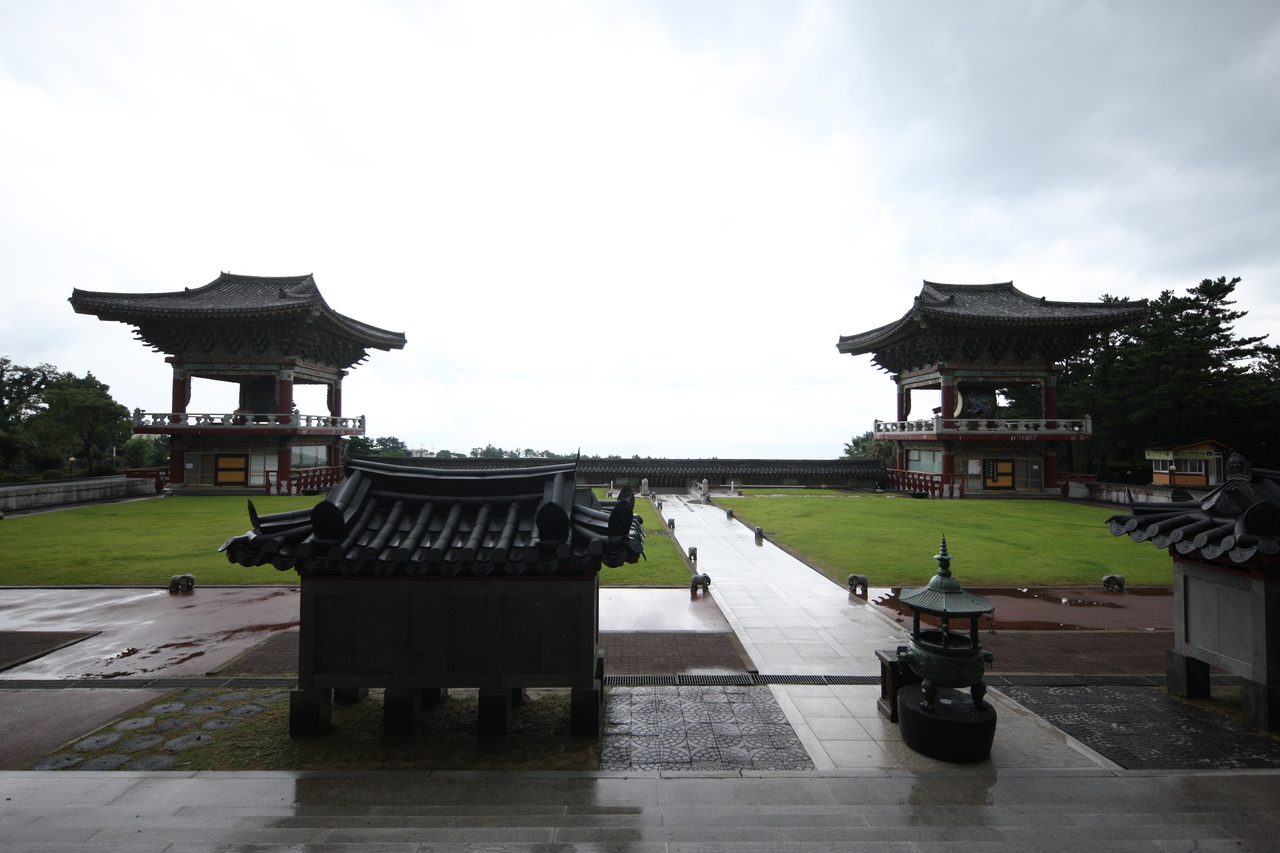
Yakcheonsa Ocean Temple representative scenic panoramaZoom
+1More
1 / 6
Yakcheonsa Ocean Temple representative scenic panorama
Curator's Guide & Overview
Comprehensive Guide1. Historical Origins & Cultural Background
Yakcheonsa, serenely situated on a palm-fringed coastal hillside in Daepo-dong, Seogwipo, overlooking the cobalt-blue expanses of the Pacific Ocean, is an architectural marvel and the grandest modern Buddhist sanctuary on Jeju Island. The temple takes its evocative name—literally 'Temple of the Medicinal Spring'—from a legendary volcanic mineral aquifer that has bubbled continuously from the subterranean rock layers since time immemorial, famous for its sweet taste and reputed restorative healing powers. Founded in 1981 by the revered Buddhist master Ven. Hye-in and completed in 1996, the temple seamlessly fuses the palatial architectural majesty of the early Joseon dynasty with sweeping oceanic grandeur.
2. Architectural Highlights & Key Structures
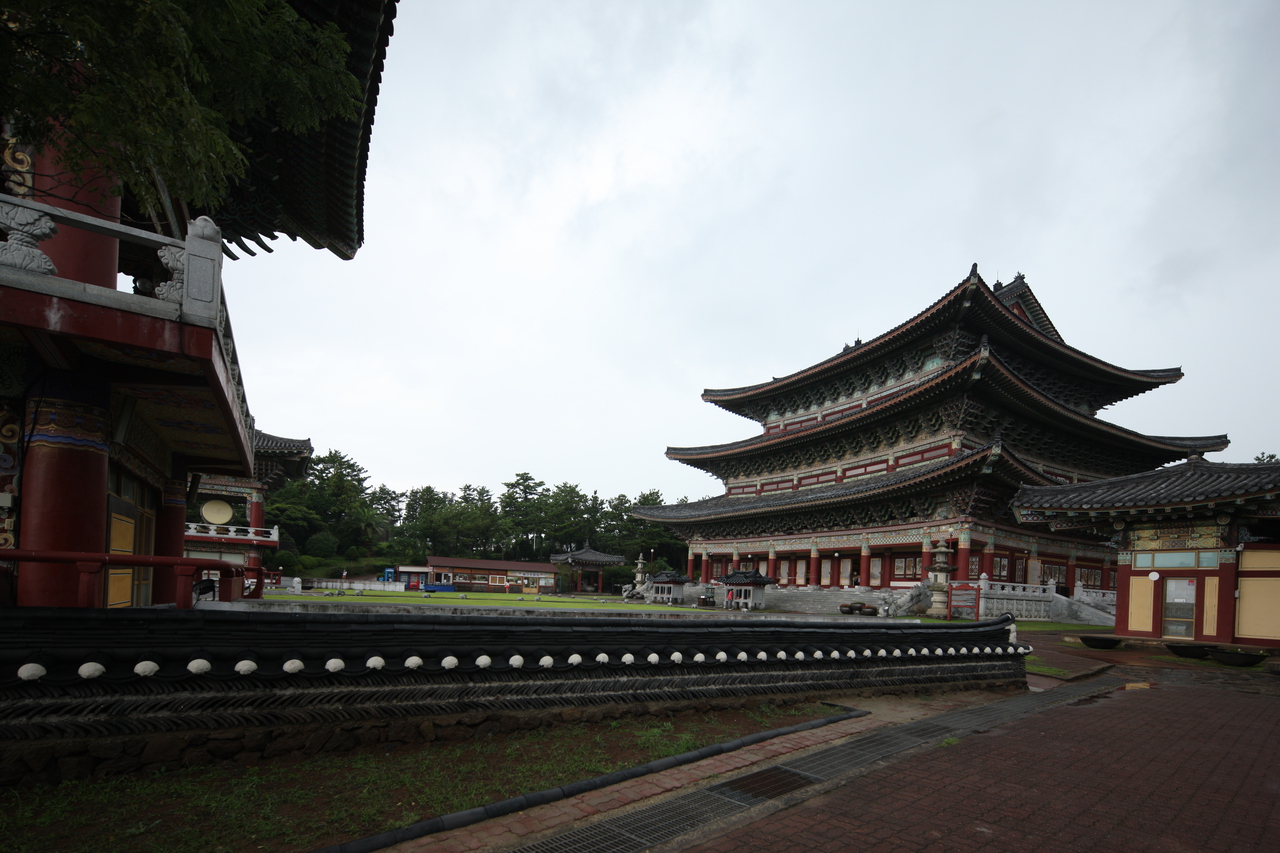
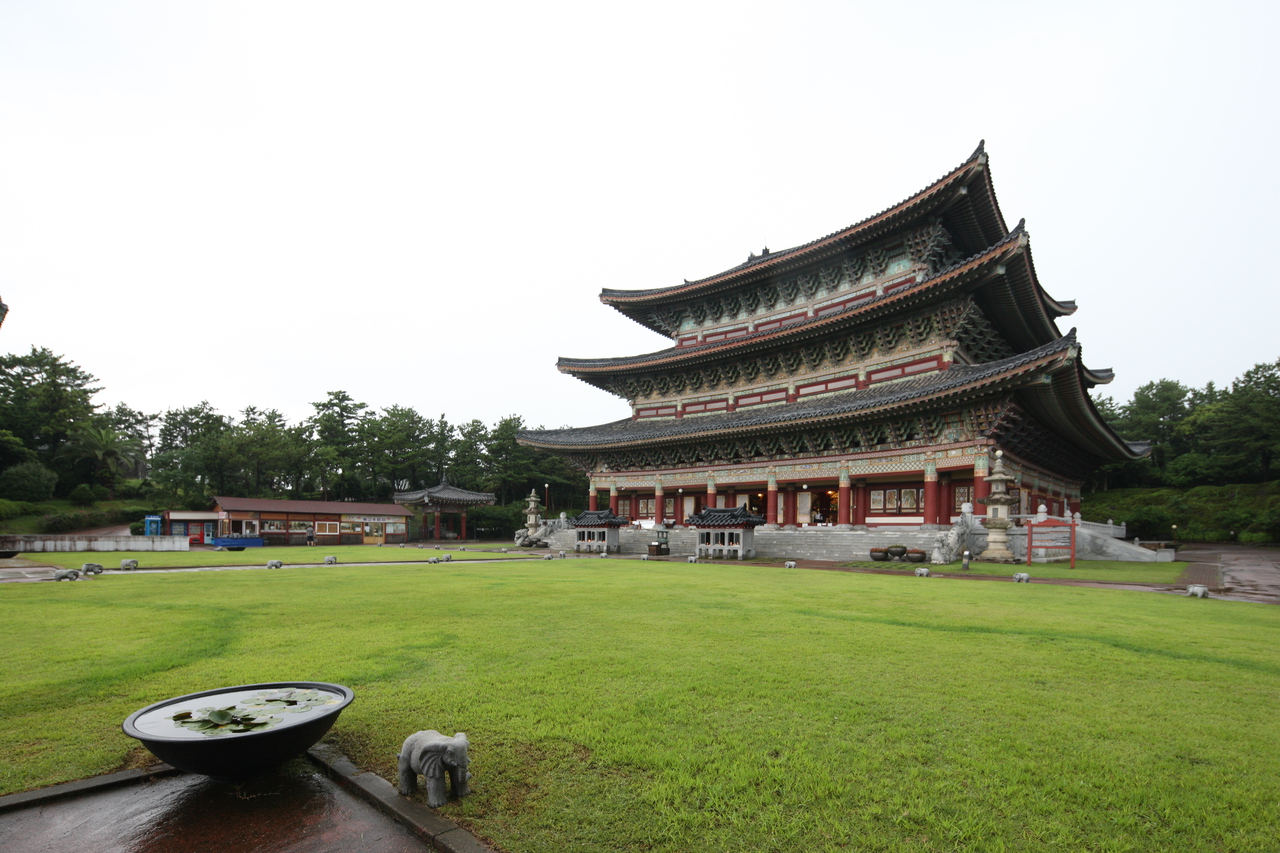
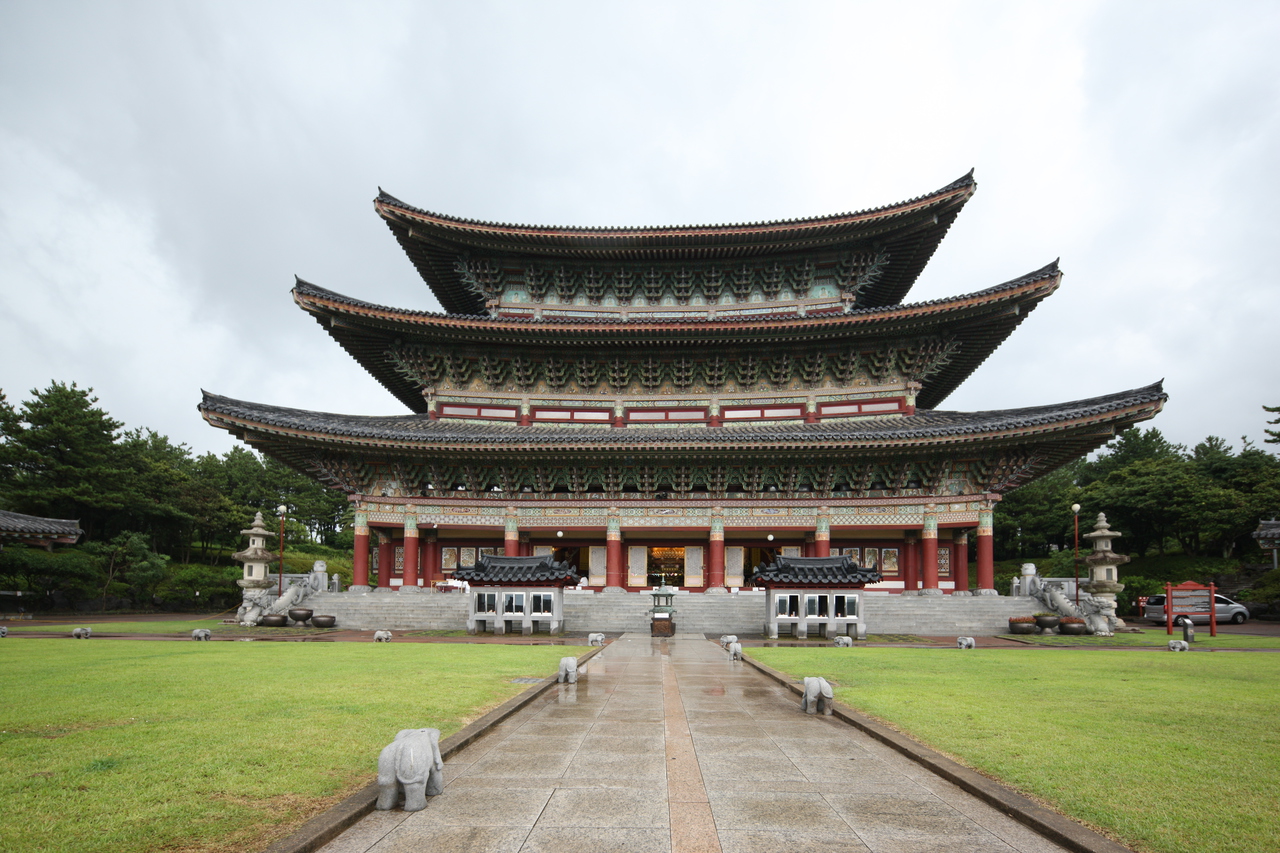
At the heart of the sanctuary stands Jeokgwangjeon (Grand Hall of Enlightenment)—revered as the single largest Buddhist temple hall in the Orient (East Asia). Rising an astonishing 30 meters into the sky (equivalent to an 8-story modern apartment building) across 3,384 square meters of floor space, the monumental hall is crowned with majestic tiled hipped-and-gabled roofs and intricately hand-painted polychrome dancheong patterns. Inside, visitors step into a soaring, open-atrium wooden sanctuary. Enshrined on the main altar are three monumental 5-meter-tall golden Buddha statues carved from sacred Mokpo wood: the central Vairocana Buddha (Cosmic Buddha), flanked by Bhaisajyaguru (Medicine Buddha) and Amitabha (Buddha of Infinite Light). Surrounding the central atrium rise four tiers of ornate interior balconies lined with 18,000 miniature gilded Bodhisattvas, 500 Arhat carvings, and a colossal 18-ton Dharma Bell suspended in the bell pavilion.
3. Four Seasons Landscape & Seasonal Visiting Charms
Yakcheonsa provides a deeply restorative and tranquil atmosphere across all four seasons. Spring (March to May) fills the temple grounds with fragrant cherry blossoms, royal azaleas, and delicate magnolia petals drifting across stone courtyards. Summer (June to August) brings vivid tropical contrast, where towering palm trees, blooming orange cannas, and lush Gotjawal greenery frame the sweeping Pacific ocean horizons against deep blue skies. Autumn (September to November) cloaks the temple gardens in sweet-scented golden Hallabong oranges, ripening persimmons, and mild breezes. Winter (December to February) remains remarkably balmy in southern Seogwipo, with brilliant red camellia blossoms blooming along temple walkways while crisp ocean air carries the deep, resonant chime of the evening temple bell.
4. Operating Hours & Peak Viewing Times
The temple grounds and surrounding outdoor botanical gardens are open 24 hours daily year-round with free public access. Jeokgwangjeon Grand Hall is open for prayer, meditation, and quiet viewing from 06:00 to 18:30. Visitors are welcome to observe traditional morning chanting (Yebul) around 05:00 and evening chanting around 18:00, when resident monks strike the giant Dharma Drum and 18-ton bell. Plan roughly 1 to 1.5 hours to tour the Grand Hall, drink from the sacred medicinal spring, stroll through the tangerine orchards, and absorb the oceanic vistas.
5. Admission Fees & Concessions (Youth/Foreigner Discounts)
Admission to Yakcheonsa Temple and its grounds is completely FREE. Visitors may make voluntary donations in the prayer hall or light candle offerings for 3,000 to 5,000 KRW. Yakcheonsa also hosts an acclaimed traditional Temple Stay program (1-night/2-day experiential or recuperative stays, including temple vegetarian meals, meditation, and tea ceremonies with monks) starting at approximately 70,000 to 100,000 KRW per person (advance reservation via the official Korea Temple Stay portal). The sprawling paved parking lot is completely free.
6. Public Transit & Subway Exit Directions
From Jeju International Airport, board Airport Limousine Bus 600 directly to the Yakcheonsa bus stop in approximately 50 minutes (no transfers required). From Seogwipo downtown or Jungmun Resort, take Coastal Trunk Bus 510 or 600 (approx. 10 to 15 minutes). Taxis from Jeju Airport take approximately 45 minutes along Route 1139 (1100 Road) or Pyeonghwa-ro (approx. 30,000 to 35,000 KRW). Driving a rental car takes roughly 45 minutes from Jeju City.
7. Barrier-Free Accessibility & Visitor Amenities
Yakcheonsa features thoughtful barrier-free design across its main grounds. Wide, smoothly paved stone walkways and gently graded ramps connect the lower parking plaza to the central courtyards, offering barrier-free access for wheelchairs and strollers. The lower ground floor of Jeokgwangjeon can be entered step-free. To access the main prayer hall level without climbing the grand stone stairs, visitors can use dedicated paved side ramps. Wheelchair-accessible public restrooms with emergency bells and support bars are situated adjacent to the temple administration office and parking lot.
8. Recommended Walking Route & Highlights Tour
Recommended 1.5-Hour Ocean Temple Sanctuary & Healing Walk: Arrive at Yakcheonsa lower parking plaza and walk through the entrance gate flanked by towering subtropical palm trees and stone guardian lions → Stop at the natural volcanic stone spring pavilion to drink a cup of the pure, sweet subterranean medicinal water ('Yakcheon') from a bamboo ladle → Ascend the gentle slope toward the central courtyard, pausing to marvel at the sheer 30-meter vertical scale of Jeokgwangjeon rising against the blue sky → Walk over to the Bell Pavilion to admire the colossal 18-ton cast-bronze Dharma Bell and giant Dharma Drum → Remove your shoes and step reverently inside the Grand Hall, gazing up into the breathtaking 4-story open timber ceiling → Walk softly around the perimeter of the hall, admiring the three 5-meter golden Buddha statues and thousands of miniature golden Bodhisattvas shining along the upper balconies → Step out onto the second-story exterior wooden balcony for a sensational panoramic vista of the temple roofs framing the blue Pacific Ocean → Conclude with a peaceful stroll through the temple’s private tangerine and Hallabong orchards before departing.
9. Local Food Specialties & Regional Flavors
Dining near Yakcheonsa celebrates fresh ocean seafood and peaceful Buddhist temple cuisine. Participants in the Yakcheonsa Temple Stay experience traditional Temple Food (Baru Gongyang)—mindfully prepared vegan meals featuring seasonal mountain herbs, braised lotus root, tofu pancakes, fermented soybean paste stew (Doenjang-jjigae), and wild sea greens, prepared without garlic, onions, scallions, chives, or leeks (the five pungent roots, or O-shin-chae). In neighboring Daepo port and Jungmun Resort, savor charcoal-grilled Jeju Black Pork, abalone porridge, fresh sea urchin seaweed soup (Seongge Miyeok-guk), and spicy braised hairtail fish.
10. Dietary Options (Vegetarian, Halal & Allergen Guide)
Vegetarians will find Yakcheonsa a true haven: the temple’s own dining hall offers temple vegetarian meals (during lunch hours or special events), while nearby cafes serve organic avocado toast, grain bowls, and freshly squeezed Jeju citrus juices. In Jungmun Resort, enjoy vegetarian bibimbap, pure handmade tofu stews, and acorn jelly noodles. Halal and pescatarian travelers can savor meat-free temple dishes as well as fresh grilled mackerel, abalone rice bowls, and seafood earthenware hot pots at neighboring oceanfront restaurants in Daepo-hang.
11. Signature Photo Spots & Golden Hour Lighting
Signature photographic perspectives: standing in the central courtyard looking directly up at the awe-inspiring 30-meter three-tiered facade of Jeokgwangjeon framed by palm trees (the defining Yakcheonsa photograph); gazing up inside the Grand Hall at the three colossal golden Buddhas and the multi-tiered balconies; standing on the elevated outer temple pavilion terrace looking down across the sweeping curved tiled roofs toward the azure Pacific Ocean; and a serene composition of a bamboo ladle pouring crystalline spring water at the stone Yakcheon fountain.
12. Visitor Etiquette & Cultural Property Regulations
Temple etiquette and solemnity: Yakcheonsa is an active, holy Buddhist monastery and place of living worship. When entering Jeokgwangjeon Grand Hall, remove your shoes and place them neatly in the shoe racks provided. Dress modestly; avoid sleeveless tops, short shorts, or revealing beachwear. Inside the hall, walk quietly, speak in hushed whispers, and do not walk between the altar and worshippers who are prostrating in prayer. Flash photography is strictly forbidden inside the prayer halls. Do not ring the Dharma Bell or beat the temple drums. Smoking and alcoholic beverages are strictly banned throughout the temple grounds.
13. Safety Precautions & 1330 Tourism Hotline Support
Wear comfortable slip-on shoes or sneakers for easy removal when entering temple halls. In summer, the coastal grounds are breezy and warm, making early morning or late afternoon the most peaceful times to visit. For temple stay inquiries and facility reservations, contact the Yakcheonsa Temple Stay Office at 064-738-5000 or dial 1330.
14. Nearby Connected Attractions & Walking Links
Nearby attractions: visit the dramatic volcanic coastal columns of Jusangjeolli Cliff (PLACE-JEJU-005) located just 5 minutes east; relax at the surfing paradise of Jungmun Saekdal Beach (PLACE-JEJU-016); or explore the volcanic dome of Sanbangsan (PLACE-JEJU-014).
15. Frequently Asked Questions (FAQ)
Q: Why is the Grand Hall built so extraordinarily large? A: The founder, Master Hye-in, envisioned Yakcheonsa not merely as a traditional secluded mountain hermitage, but as a universal sanctuary where tens of thousands of worshippers and international travelers could gather in a single sacred space to contemplate peace; rising 30 meters high across 3,384 square meters without internal dividing walls, Jeokgwangjeon was engineered to embody the vast, boundless nature of enlightenment in Buddhist cosmology. Q: Can visitors drink the temple spring water? A: Yes; the temple’s namesake mineral spring ('Yakcheon') gushes directly from pristine volcanic bedrock aquifers deep beneath Mount Hallasan; rigorous water testing confirms it is completely sterile, exceptionally pure, and naturally mineral-rich, making it safe and refreshing for visitors to drink from the clean stone fountain.
16. Regional Extended Day Trip Itinerary
Yakcheonsa Temple & Southern Seogwipo Coastal Day Tour: Morning departure from Jeju City or Seogwipo → Arrive at Yakcheonsa Temple and drink sacred volcanic spring water at the fountain → Tour the monumental 30-meter Jeokgwangjeon Grand Hall and marvel at the colossal golden Buddhas → Walk the temple balcony admiring the ocean panorama over the Pacific → Stroll through the temple tangerine grove → Drive 5 minutes east to Jusangjeolli Cliff to marvel at the volcanic hexagonal basalt columns → Lunch in Jungmun savoring Jeju black pork barbecue or abalone porridge → Afternoon surfing or relaxing at Jungmun Saekdal Beach → Sunset coffee at The Cliff lounge overlooking the sea before returning.
Essential Visitor Facts
Operating Hours
Open daily year-round 06:00 - 18:30 (temple grounds freely accessible 24/7; Jeokgwangjeon Grand Hall open for prayer 06:00 - 18:00).
Admission / Price
FREE PUBLIC ADMISSION to Yakcheonsa Temple and grounds; Temple Stay programs available with advance booking (approx. 70,000 to 100,000 KRW); Large parking lot is completely free.
Closed Days
Closed on Mondays/Tuesdays
Best Time to Visit
Morning (around 09:30-10:00)
Transit & Access Directions
From Jeju International Airport, take Airport Limousine Bus 600 directly to Yakcheonsa stop (approx. 50 minutes).
Accessibility & Special Amenities
Wheelchair ramps, tactile paving, accessible restrooms
Location Coordinates
Latitude: 33.2442
Longitude: 126.4495
Discover Themes & Highlights
Key interest areas and cultural highlights:
#yakcheonsa-temple-jeju#VisitJeju#KoreaTravelAtlas
Community Traveler Reviews0 Reviews
Visitor tips, feedback, and questions submitted by real travelers.
No community reviews submitted yet. Be the first traveler to share your experience!
Connected Cultural Destinations
Handpicked nearby attractions and regional cultural highlights.
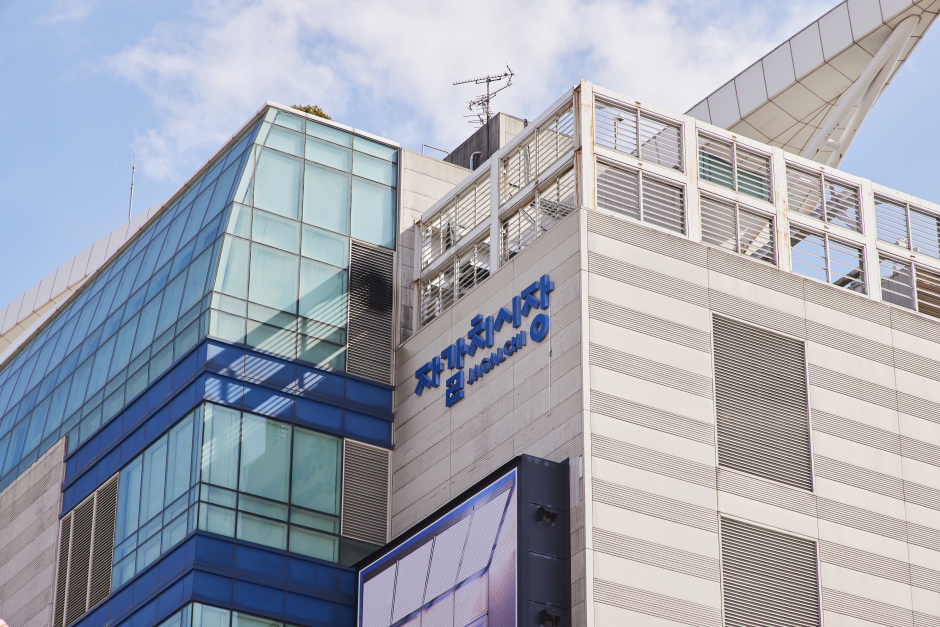
Jagalchi Fish Market
자갈치시장Jagalchi Fish Market, Busan, South Korea
Jagalchi Fish Market is Korea’s largest seafood bazaar on the Busan waterfront, renowned for vibrant fishmonger stalls, live king crab tanks, and fresh second-floor sashimi dining.
HalalMorning (around 09:30-10:00)
Details→
Daepo Jusangjeolli Hexagonal Lava Cliffs
대포 주상절리대Daepo Jusangjeolli Hexagonal Lava Cliffs, Seogwipo, Jeju, South Korea
Daepo Jusangjeolli is a UNESCO Global Geopark marvel and Natural Monument No. 443, featuring colossal hexagonal and polygonal columnar basalt sea cliffs towering 20 to 30 meters above the roaring s...
Morning (around 09:30-10:00)
Details→
Sanbangsan Mountain & Yongmeori Coast
산방산 및 용머리해안Sanbangsan Mountain & Yongmeori Coast, Seogwipo, Jeju, South Korea
Sanbangsan Mountain & Yongmeori Coast in southwestern Seogwipo form a million-year-old geological wonder, pairing a colossal 395-meter bell-shaped volcanic dome containing the sacred Sanbanggulsa c...
Morning (around 09:30-10:00)
Details→
Jungmun Saekdal Beach
중문색달해수욕장Jungmun Saekdal Beach, Seogwipo, Jeju, South Korea
Jungmun Saekdal Beach is South Korea’s premier surfing mecca and dramatic coastal jewel within Jungmun Resort, Seogwipo, boasting rare 4-colored sands (Jinmol), roaring barrel waves framed by volca...
Morning (around 09:30-10:00)
Details→