Jeonbuk•Iksan•Heritage•Buddhist Temple
Iksan Mireuksaji Temple Site & Museum (UNESCO)
익산 미륵사지 석탑
Powered by Korea Tourism OrganizationAddress: Iksan Mireuksaji Temple Site & Museum (UNESCO), Iksan, Jeonbuk, South Korea (전북특별자치도 익산시 금마면 미륵사지로 362 (국립익산박물관))
Editorial review pending

Iksan Mireuksaji Temple Site & Museum (UNESCO) representative scenic panoramaZoom


+1More
1 / 6
Iksan Mireuksaji Temple Site & Museum (UNESCO) representative scenic panorama
Curator's Guide & Overview
Comprehensive Guide1. Historical Origins & Cultural Background
Inscribed on the UNESCO World Heritage List in 2015 as an integral anchor of the Baekje Historic Areas, Iksan Mireuksaji Temple Site is the sprawling archaeological ground of the largest Buddhist temple ever constructed in the ancient Kingdom of Baekje. Founded in the early 7th century during the reign of King Mu (the famed protagonist of the Seodong and Princess Seonhwa legend), Mireuksaji was designed according to a visionary 'Three Pagodas and Three Prayer Halls' layout (Samwon-style), representing the three assemblies of Maitreya Buddha coming down to save humanity. Today, its wide grassy precinct beneath Mount Yonghwasan exudes timeless imperial grandeur.
2. Architectural Highlights & Key Structures
The crowning jewel of Mireuksaji is the West Stone Pagoda (National Treasure No. 11), South Korea’s oldest and largest surviving stone pagoda. Originally standing at nine stories, it represents the pivotal evolutionary turning point where ancient Korean artisans transitioned from perishable timber construction to monumental granite architecture, replicating wooden post-and-lintel brackets and wide curved eaves in solid stone. After a 1915 Japanese concrete patch degraded, the Korean government undertook an unprecedented 20-year scientific deconstruction and restoration project (completed in 2019), meticulously reconstructing six stories (14.5 meters) using 3,000 historic and new granite blocks. During the 2009 deconstruction, archaeologists made the discovery of the century: the intact golden Sarira Reliquary Casket and gold leaf dedication plaque proving the temple was founded by King Mu’s royal queen.
3. Four Seasons Landscape & Seasonal Visiting Charms
Spring brings delicate wild cherry blossoms framing the reflective waters of the ancient twin temple lotus ponds, while fresh green grass spreads across the vast temple foundations. Summer offers dramatic blue skies and puffy white cumulus clouds towering behind the granite pagodas, accompanied by cool indoor exploration inside the subterranean National Museum of Iksan. Autumn envelops the site in serene gold, with Mount Yonghwasan’s foliage turning crimson behind the twin pagodas and historic Dangganjiju (flagpole supports, Treasure No. 236). Winter presents an ethereal, snow-covered monastery plateau, where pure white drifts outline the geometric stone foundations and ancient granite pagodas against the winter sun.
4. Operating Hours & Peak Viewing Times
The outdoor archaeological site is accessible 24 hours a day. The National Museum of Iksan is open Tuesday through Sunday from 09:00 to 18:00 (last entry at 17:30) and closed on Mondays and New Year’s Day. The best hours to experience magical photographic lighting are from 15:30 to 18:00, when warm late-afternoon sunlight bathes the granite faces of the West Pagoda in brilliant amber.
5. Admission Fees & Concessions (Youth/Foreigner Discounts)
Admission to both the UNESCO World Heritage Mireuksaji temple grounds and the National Museum of Iksan is completely free. The expansive on-site parking lot is also free of charge.
6. Public Transit & Subway Exit Directions
From Seoul, board the high-speed KTX or SRT from Yongsan or Suseo Station directly to KTX Iksan Station (approx. 1 hour 10 to 20 minutes), South Korea’s key rail crossroads. Directly outside Iksan Station Exit 1, board local City Bus 41, 60, or 60-3, which travels directly to the Mireuksaji / National Museum stop (approx. 35 minutes, departing every 20-30 minutes). A taxi from Iksan Station takes about 20 minutes and costs roughly 14,000 to 16,000 KRW.
7. Barrier-Free Accessibility & Visitor Amenities
The entire archaeological precinct and the National Museum of Iksan represent a pinnacle of barrier-free design. The museum is intentionally constructed as a 'subterranean landscape museum' whose low roof blends into the park horizon, featuring gentle interior ramps, broad elevators, and wide entrances accessible for all wheelchairs and strollers. The outdoor temple paths are broad, level, and packed with smooth decomposed granite that permits seamless wheelchair navigation straight up to the base of both pagodas. Accessible restrooms and free loaner wheelchairs are located at both the museum lobby and the visitor guidance pavilion.
8. Recommended Walking Route & Highlights Tour
Recommended 2.5-Hour Baekje Imperial Circuit: Stroll past the ancient south lotus ponds to capture the iconic twin reflection of the pagodas → Walk between the 1,300-year-old stone Dangganjiju (flagpole supports) → Stand beneath the monumental 14.5-meter West Stone Pagoda (National Treasure No. 11) and examine the intricate granite carpentry brackets → Visit the reconstructed 9-story East Pagoda to view its wind bells → Enter the National Museum of Iksan to view the dazzling 7th-century Golden Sarira Reliquary Casket and royal glass beads → Finish with an authentic Hwangdeung Yukhoe Bibimbap lunch in neighboring Hwangdeung-myeon.
9. Local Food Specialties & Regional Flavors
Iksan boasts rich agricultural and culinary traditions. Just 10 minutes from Mireuksaji is Hwangdeung Market, birthplace of the nationally renowned 'Hwangdeung Yukhoe Bibimbap' (spicy rice precooked in beef-bone broth, tossed with seasonal greens, and topped with succulent seasoned beef tartare). Savor rich Seonji Gukbap (blood-curd ox-bone soup), tender grilled short-rib patties (Tteokgalbi), and Iksan sweet potato confections.
10. Dietary Options (Vegetarian, Halal & Allergen Guide)
Vegetarians can request Hwangdeung Bibimbap without raw beef (Yukhoe) to enjoy a hearty stone bowl filled with mountain vegetables, bean sprouts, and aromatic perilla oil. The museum cafe offers plant-based oat milk drinks, red bean porridge (Danpatjuk), and traditional Korean sweet potato snacks. Halal diners can comfortably enjoy vegetarian bibimbap, grilled tofu dishes, mushroom stews, and traditional teas.
11. Signature Photo Spots & Golden Hour Lighting
Top photo spots: standing at the edge of the southern lotus pond capturing the reflection of the ancient West Pagoda and East Pagoda against Mount Yonghwasan, dramatic low-angle shot beneath the massive carved granite eaves of the West Pagoda looking straight up at the sky, framing the ancient Dangganjiju stone pillars against the sunset, and close-ups of the glittering pure-gold Sarira reliquary inside the darkened museum gallery.
12. Visitor Etiquette & Cultural Property Regulations
Mireuksaji is a revered UNESCO World Heritage sacred site. Never climb, lean on, or touch the 1,400-year-old granite stones of the West Pagoda or temple foundations. Keep to designated pathways across the grassy ruins. Flash photography and tripods are strictly prohibited inside the museum. The entire complex is a non-smoking preservation zone.
13. Safety Precautions & 1330 Tourism Hotline Support
The park grounds are vast with little shade, so carry a parasol or sun hat in summer and stay hydrated. Comfortable walking shoes are recommended. For guided historical tours and museum education programs, contact the National Museum of Iksan at 063-830-0900 or call 1330.
14. Nearby Connected Attractions & Walking Links
Combine your visit with other UNESCO Baekje landmarks in Iksan: the historic Wanggung-ri Historic Palace Site (featuring its own 5-story stone pagoda) is just a 7-minute drive away, while the Royal Tomb of King Mu (Ssangneung) lies 5 minutes to the south.
15. Frequently Asked Questions (FAQ)
Q: Why took 20 years to restore the West Stone Pagoda? A: It was the longest and most scientifically meticulous cultural heritage restoration in Korean history: engineers carefully dismantled over 3,000 individual stones, removed 185 tons of degrading 1915 Japanese concrete by hand, ultrasonically cleaned and consolidated every original block, and reassembled six stories using traditional lime mortar. Q: What was found inside the pagoda? A: In 2009, archaeologists discovered an untouched golden Sarira reliquary containing a pure gold jar, gold tweezers, glass beads, and a gold leaf dedication record proving the pagoda was commissioned in 639 AD by the Baekje Queen.
16. Regional Extended Day Trip Itinerary
UNESCO Iksan Baekje Royal Heritage Day Tour: Morning KTX from Seoul Yongsan to Iksan Station (1 hr 10 mins) → City bus or taxi to Mireuksaji Temple Site → Marvel at the 1,400-year-old West Stone Pagoda and twin ponds → Explore the subterranean National Museum of Iksan and view the Golden Sarira Reliquary → Short drive to Hwangdeung Market for legendary Hwangdeung Yukhoe Bibimbap lunch → Afternoon visit to Wanggung-ri Palace Site & 5-story Pagoda → Browse Iksan Jewelry Museum → Return to Seoul via evening KTX.
Essential Visitor Facts
Operating Hours
Outdoor Temple Site open daily 24/7; National Museum of Iksan: Daily 09:00 - 18:00 (Entry closes 17:30; Closed Mondays and Jan 1)
Admission / Price
Free admission to both Mireuksaji Temple Site and National Museum of Iksan; Parking Free
Closed Days
Closed on Mondays/Tuesdays
Best Time to Visit
Morning (around 09:30-10:00)
Transit & Access Directions
From KTX/SRT Iksan Station, take City Bus 41, 60, or 60-3 directly to Mireuksaji / National Museum stop (approx. 35 mins, buses run every 20-30 mins)
Accessibility & Special Amenities
Wheelchair ramps, tactile paving, accessible restrooms
Location Coordinates
Latitude: 36.0125
Longitude: 127.0285
Discover Themes & Highlights
Key interest areas and cultural highlights:
#iksan-mireuksaji-stone-pagoda#VisitJeonbuk#KoreaTravelAtlas
Community Traveler Reviews0 Reviews
Visitor tips, feedback, and questions submitted by real travelers.
No community reviews submitted yet. Be the first traveler to share your experience!
Connected Cultural Destinations
Handpicked nearby attractions and regional cultural highlights.
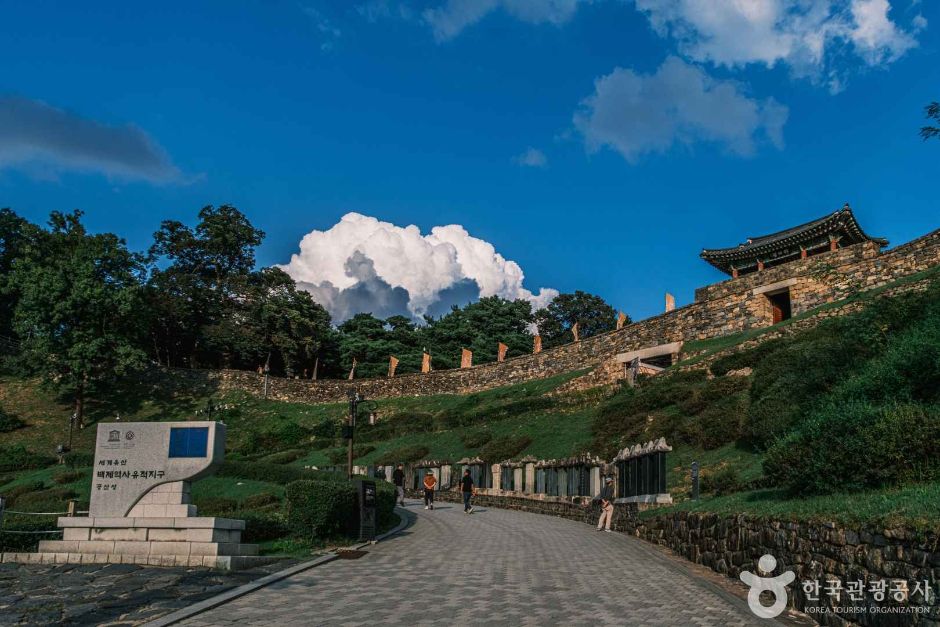
Gongju Gongsanseong Fortress (UNESCO)
공주 공산성Gongju Gongsanseong Fortress (UNESCO), Gongju, Chungnam, South Korea
Gongju Gongsanseong Fortress is a UNESCO World Heritage mountain rampart overlooking the Geumgang River, serving as the royal capital fortress of the ancient Baekje Kingdom (475–538 AD) during the ...
Morning (around 09:30-10:00)
Details→
Buyeo Busosanseong & Nakhwaam Rock
부여 부소산성 낙화암Buyeo Busosanseong & Nakhwaam Rock, Buyeo, Chungnam, South Korea
Buyeo Busosanseong Fortress and Nakhwaam Rock is a UNESCO World Heritage sanctuary along the Baengmagang River, famed for Nakhwaam ("The Rock of Falling Flowers"), the legendary rejuvenating spring...
Morning (around 09:30-10:00)
Details→
Jeonju Hanok Village
전주한옥마을Jeonju Hanok Village, Jeonju, Jeonbuk, South Korea
Jeonju Hanok Village encompasses over 700 traditional Korean tiled homes nestled within the historic downtown core of Jeonju. Designated as an International Slow City, the village preserves authent...
Morning (around 09:30-10:00)
Details→
Seokguram Grotto (UNESCO)
석굴암Seokguram Grotto (UNESCO), Gyeongju, Gyeongbuk, South Korea
Seokguram Grotto is a supreme masterpiece of East Asian Buddhist art and a UNESCO World Heritage treasure, enshrining a monumental white granite Sakyamuni Buddha carved in 751 AD within a sublime s...
Morning (around 09:30-10:00)
Details→