Chungnam•Gongju•Heritage•Historic Fortress
Gongju Gongsanseong Fortress (UNESCO)
공주 공산성
Powered by Korea Tourism OrganizationAddress: Gongju Gongsanseong Fortress (UNESCO), Gongju, Chungnam, South Korea (충청남도 공주시 웅진로 280 (금성동))
Editorial review pending
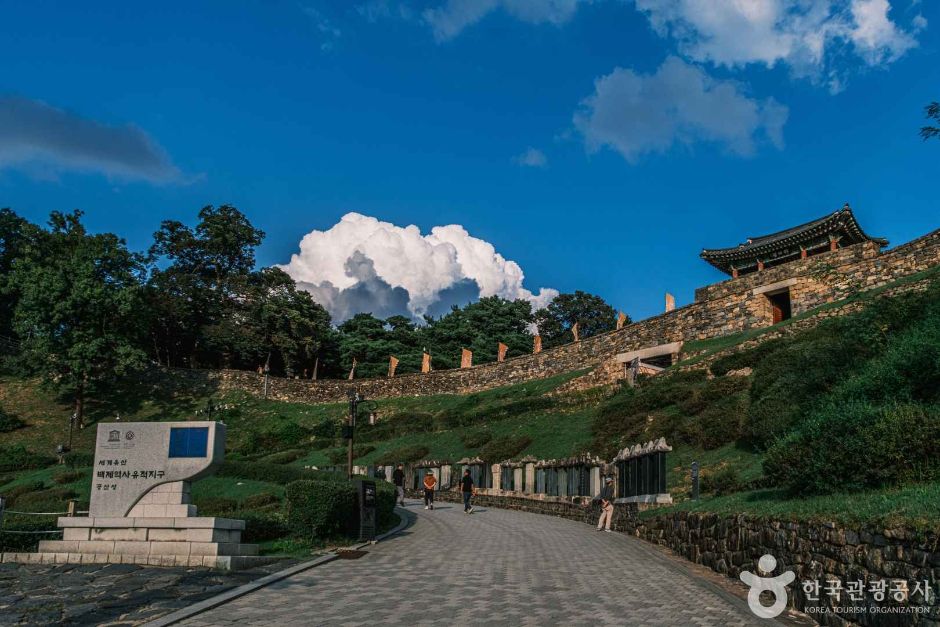
Gongju Gongsanseong Fortress (UNESCO) representative scenic panoramaZoom


+1More
1 / 6
Gongju Gongsanseong Fortress (UNESCO) representative scenic panorama
Curator's Guide & Overview
Comprehensive Guide1. Historical Origins & Cultural Background
Designated as a UNESCO World Heritage site under the inscription "Baekje Historic Areas" in 2015, Gongju Gongsanseong Fortress was established in 475 AD when King Munju relocated the Baekje Kingdom's capital from Hanseong (modern-day Seoul) southward to Ungjin (modern-day Gongju). Built on a commanding 110-meter ridge overlooking the Geumgang River, Gongsanseong served as the royal palace fortress during 64 critical years spanning five monarchs, before the capital moved again to Sabi (Buyeo) in 538 AD.
2. Architectural Highlights & Key Structures
The fortress spans an outer perimeter of 2,660 meters, originally built as rammed earthen ramparts during the Baekje era and subsequently refortified with dressed stone walls during the early Joseon Dynasty. Architectural highlights include the restored West Gate Geumseoru, the magnificent river-facing Gongbukru Pavilion, the southern Jinnamru Gate, and Ssangsujeong Pavilion—where King Injo took refuge in 1624 during the Yi Gwal Rebellion. Ongoing archaeological excavations inside the fortress have unearthed Baekje royal palace foundations, lacquered leather armor, and deep water reservoir storage pits.
3. Four Seasons Landscape & Seasonal Visiting Charms
Spring brings bright yellow forsythia and cherry blossoms blanketing the fortress ramparts with views of the glistening Geumgang River. Summer offers evening walks when artistic architectural illumination bathes the fortress walls in gold against the dark river currents. Autumn is celebrated during the grand Baekje Cultural Festival in late September and October, when hundreds of illuminated lanterns, floating dragon boats, and historic battle reenactments light up the river below the fortress. Winter presents serene, quiet ramparts coated in white snow, with the frozen river below resembling a traditional scroll painting.
4. Operating Hours & Peak Viewing Times
The ticketing pavilion and heritage exhibition centers operate daily from 09:00 to 18:00 (last entry at 17:30). The outdoor rampart walking paths remain accessible 24 hours a day, with atmospheric floodlighting illuminating the battlements until 23:00. The best visiting timeframe is late afternoon (16:30 to 19:30), allowing travelers to complete the 2.66-kilometer rampart circuit in daylight and watch the sunset over the Geumgang River transition into golden nighttime illumination.
5. Admission Fees & Concessions (Youth/Foreigner Discounts)
Admission is 3,000 KRW for adults, 2,000 KRW for youth (ages 13-18), and 1,000 KRW for children (ages 7-12). An Integrated Baekje Ticket (6,000 KRW) grants combined entry to Gongsanseong, the Royal Tomb of King Muryeong, and the Seokjang-ni Paleolithic Museum. Spacious public parking directly opposite the Geumseoru Gate entrance is provided free of charge.
6. Public Transit & Subway Exit Directions
From Seoul Station or Suseo, take the KTX-Honam or SRT high-speed train to KTX Gongju Station (approx. 50 minutes to 1 hour). From Gongju Station bus plaza, board local City Bus route 200 or 250 directly to Gongsanseong (approx. 35 minutes). If arriving by express bus at Gongju Comprehensive Bus Terminal, visitors can enjoy a picturesque flat 15-minute walk across the historic Geumgang Iron Bridge straight to the fortress entrance.
7. Barrier-Free Accessibility & Visitor Amenities
The entrance plaza, ticketing area, and the central royal palace excavation meadow are connected by gentle paved pathways accessible to wheelchairs and strollers. However, walking the high perimeter stone ramparts involves steep natural gradients, uneven historical stones, and safety stairs; the full rampart circuit is not wheelchair accessible. Wheelchairs and strollers are available for complimentary loan at the visitor information booth.
8. Recommended Walking Route & Highlights Tour
Recommended 2.5-Hour Royal Rampart Circuit: Start at the West Gate Geumseoru → Walk up the southern stone ramparts toward Jinnamru Gate → Ascend to Gwangbokru Pavilion at the fortress's highest vantage point → Follow the pine-shaded river ramparts to Gongbukru Pavilion overlooking the Geumgang River → Walk across the historic Manharu Pavilion and Yeonji Pond (ancient stone reservoir with stepped lotus platforms) → Tour the Baekje Royal Palace excavation site → Return to Geumseoru Gate for sunset photos.
9. Local Food Specialties & Regional Flavors
Gongju is nationally renowned as the capital of Korean chestnuts (Gongju Bam). Don't miss Gongju Bam-madang Tteok (sweet steamed rice cakes filled with whole chestnuts), Gongju Chestnut Makgeolli, and Gongju Kalguksu (spicy seafood hand-cut noodle soup). Across the street from Gongsanseong lies a celebrated cafe alley serving Chestnut Bread (Bampan), chestnut lattes, and Gongju Gukbap (hearty beef and leek soup simmered in a deep, spicy bone broth).
10. Dietary Options (Vegetarian, Halal & Allergen Guide)
Vegetarian diners will find delightful treats: Chestnut Rice sets (Bambap), fragrant Sanchae Bibimbap, pan-fried acorn jelly (Dotorimuk-muchim), and sweet chestnut pastries. Local bakeries in front of Geumseoru bake fresh vegan-friendly chestnut bread with local flour. Halal diners will find seafood-based kalguksu, vegetable bibimbap, and chestnut confections fully compliant.
11. Signature Photo Spots & Golden Hour Lighting
Premier photo spots include: standing beneath the grand arched portal of Geumseoru Gate as historical Baekje flags flutter in the wind, a panoramic shot from the northern ramparts framing Gongbukru Pavilion against the sweeping bend of the Geumgang River, framing the dramatic subterranean stone steps of Yeonji Pond, and long-exposure evening shots from across the river capturing the entire 2.6-kilometer stone wall illuminated like a glowing golden dragon.
12. Visitor Etiquette & Cultural Property Regulations
The stone ramparts are elevated with steep drops down to the river; maintain caution, stay within the designated walking stone path, and supervise children closely. Do not sit on or lean over the outer battlement stones. Drones require military and cultural property authorization before flight. Smoking is strictly prohibited within all UNESCO World Heritage boundaries.
13. Safety Precautions & 1330 Tourism Hotline Support
The rampart loop requires moderate stamina and good footwear; wear supportive sneakers or walking shoes. In summer, carry a sun hat and drinking water as sections of the high river ramparts are exposed. For guided tours and inquiries, visit the Gongsanseong Tourist Information Center at the main gate or call the 1330 Korea Travel Hotline.
14. Nearby Connected Attractions & Walking Links
A 5-minute drive (or 20-minute walk) west leads to the Royal Tomb of King Muryeong and the Royal Tombs of Baekje (Songsan-ri), featuring the intact brick burial chamber of King Muryeong and exquisite gold crowns. Directly across the river lies the Gongju National Museum, housing over 4,600 unearthed Baekje treasures.
15. Frequently Asked Questions (FAQ)
Q: How long does it take to walk the full rampart wall? A: The complete 2.66km perimeter circuit takes approximately 1 hour to 1 hour and 30 minutes at a comfortable walking pace with elevation changes. Q: Can I visit the fortress at night? A: Yes, while museum pavilions close at 18:00, the outdoor stone ramparts remain open 24 hours a day with romantic floodlights turned on until 23:00.
16. Regional Extended Day Trip Itinerary
Gongju Baekje UNESCO Heritage Day Tour: Morning KTX from Seoul to Gongju Station → scenic walk around Gongsanseong Fortress ramparts → Gongju Gukbap and chestnut bread lunch in front of Geumseoru → afternoon exploration of the Royal Tomb of King Muryeong → visit the Gongju National Museum to view royal gold crowns → evening stroll across the historic Geumgang Bridge → KTX return to Seoul.
Essential Visitor Facts
Operating Hours
Open daily year-round from 09:00 to 18:00 (Ramparts open 24/7 with evening illumination until 23:00)
Admission / Price
Adults 3,000 KRW, Youth 2,000 KRW, Children 1,000 KRW (Integrated Baekje Pass: 6,000 KRW includes King Muryeong’s Tomb)
Closed Days
Closed on Mondays/Tuesdays
Best Time to Visit
Morning (around 09:30-10:00)
Transit & Access Directions
From KTX Gongju Station, take City Bus 200 or 250 to Gongsanseong stop (approx. 35 mins); or from Gongju Intercity Bus Terminal walk 15 mins across the Geumgang Bridge
Accessibility & Special Amenities
Wheelchair ramps, tactile paving, accessible restrooms
Location Coordinates
Latitude: 36.4612
Longitude: 127.1265
Discover Themes & Highlights
Key interest areas and cultural highlights:
#gongju-gongsanseong-fortress#VisitChungnam#KoreaTravelAtlas
Community Traveler Reviews0 Reviews
Visitor tips, feedback, and questions submitted by real travelers.
No community reviews submitted yet. Be the first traveler to share your experience!
Connected Cultural Destinations
Handpicked nearby attractions and regional cultural highlights.

Sejong National Arboretum
국립세종수목원Sejong National Arboretum, Sejong, South Korea
Sejong National Arboretum is South Korea’s first urban-style national arboretum, spanning 65 hectares with a massive lotus-flower-shaped Four Seasons Glass Greenhouse, traditional palace gardens, a...
Morning (around 09:30-10:00)
Details→
Cheongnamdae Presidential Villa
청남대Cheongnamdae Presidential Villa, Cheongju, Chungbuk, South Korea
Cheongnamdae is South Korea’s storied former presidential lakeside retreat, dubbed the "Blue House of the South," set across 1.8 square kilometers of pristine Daecheongho Lake shoreline, featuring ...
Morning (around 09:30-10:00)
Details→
Buyeo Busosanseong & Nakhwaam Rock
부여 부소산성 낙화암Buyeo Busosanseong & Nakhwaam Rock, Buyeo, Chungnam, South Korea
Buyeo Busosanseong Fortress and Nakhwaam Rock is a UNESCO World Heritage sanctuary along the Baengmagang River, famed for Nakhwaam ("The Rock of Falling Flowers"), the legendary rejuvenating spring...
Morning (around 09:30-10:00)
Details→
Baekje Cultural Land & Royal Palace
백제문화단지Baekje Cultural Land & Royal Palace, Buyeo, Chungnam, South Korea
Baekje Cultural Land is South Korea’s largest historical theme park, spanning 3.3 million square meters in Buyeo, painstakingly reconstructing the royal Sabi Palace, Neungsa five-story wooden pagod...
Morning (around 09:30-10:00)
Details→