Chungbuk•Cheongju•Heritage•Historic Site
Cheongnamdae Presidential Villa
청남대
Powered by Korea Tourism OrganizationAddress: Cheongnamdae Presidential Villa, Cheongju, Chungbuk, South Korea (충청북도 청주시 상당구 문의면 청남대길 646 (신대리))
Editorial review pending

Cheongnamdae Presidential Villa representative scenic panoramaZoom


+1More
1 / 6
Cheongnamdae Presidential Villa representative scenic panorama
Curator's Guide & Overview
Comprehensive Guide1. Historical Origins & Cultural Background
Nestled along the serpentine, forested shores of Daecheongho Lake, Cheongnamdae (literally 'The Blue House of the Warm South') was constructed in 1983 during the Fifth Republic under President Chun Doo-hwan as an official secured retreat for the Head of State. Over two decades, five South Korean presidents (Chun Doo-hwan, Roh Tae-woo, Kim Young-sam, Kim Dae-jung, and Roh Moo-hyun) visited 88 times, spending 472 days here conducting statecraft, hosting foreign summits, and making historic political decisions. In April 2003, fulfilling a campaign pledge, President Roh Moo-hyun returned the complex to the Korean public.
2. Architectural Highlights & Key Structures
Spanning 1.84 million square meters of pristine, secured lakeside woodland, the estate centers on the Main Presidential Residence (Bongwan), an elegant two-story tiled estate containing meeting chambers, royal banquet rooms, bedrooms, and the private study preserved exactly as used by former leaders. The grounds feature the Presidential History Memorial Hall, the Metasequoia Forest Pond (with dancing musical fountains), an 18-hole golf course transformed into an eco-lawn park, helicopter landing pads, and six themed forest walking trails named after each former president.
3. Four Seasons Landscape & Seasonal Visiting Charms
Spring brings the renowned Cheongnamdae Spring Flower Festival in April, when hundreds of thousands of wild azaleas, tulips, and cherry blossoms blanket the grounds. Summer offers refreshing breezes off Daecheongho Lake through dense forest canopies of pine and tulip trees. Autumn is Cheongnamdae’s grandest spectacle during the annual Chrysanthemum Festival in late October, when millions of golden and purple blooms perfume the lawn gardens against fiery fall foliage. Winter showcases quiet, mist-shrouded lake vistas, crisp snowscapes, and peaceful solitude.
4. Operating Hours & Peak Viewing Times
Cheongnamdae is open Tuesday through Sunday from 09:00 to 18:00 (admission closes at 16:30) from February through November, and 09:00 to 17:00 (admission closes at 15:30) in December and January. It is closed on Mondays (except during the peak spring and autumn festival months of April, May, October, and November when it opens daily). Plan a minimum of 3 to 4 hours to comfortably tour the Main Residence and walk the lake trails.
5. Admission Fees & Concessions (Youth/Foreigner Discounts)
Admission is 6,000 KRW for adults, 4,000 KRW for youth (ages 13-18), and 3,000 KRW for children (ages 7-12) and seniors (age 65+). Vehicles can be driven directly through the main gate into the inner parking lots with no advance reservation required. Standard car parking is 2,000 KRW per day (compact cars 1,000 KRW).
6. Public Transit & Subway Exit Directions
From Seoul, take the KTX-Gyeongbu or SRT high-speed train to KTX Osong Station (approx. 45 minutes). From Osong Station, board Express Bus B3 to Cheongju or take local bus 311 to Munui Public Bus Terminal (approx. 45 mins). From Munui Terminal, transfer to local shuttle bus route 302, which drives directly through the picturesque lakeside entrance boulevard to Cheongnamdae (approx. 15 mins). A taxi from KTX Osong Station takes 40 minutes (approx. 35,000 KRW).
7. Barrier-Free Accessibility & Visitor Amenities
Cheongnamdae has received national awards for barrier-free tourism excellence. The primary access loop connecting the Main Residence, the Presidential Memorial Hall, and the Metasequoia Pond is paved with smooth brick and timber boardwalks featuring ramps and tactile paving. Dedicated wheelchair-accessible elevators operate inside the Presidential History Museum. Electric touring carts are available to assist elderly visitors and people with disabilities upon request.
8. Recommended Walking Route & Highlights Tour
Recommended 3-Hour Presidential Heritage Tour: Enter the main gate and walk the forested approach → Tour the Main Presidential Residence (Bongwan) to see preserved executive meeting halls → Walk through the towering Metasequoia Forest surrounding the Yangjeongji Fish Pond → Visit the Presidential History Museum to admire state gifts, ceremonial limousines, and presidential replicas → Walk the Kim Dae-jung Trail along the wooden lake boardwalk → Ascend to the Second Observatory for panoramic views of Daecheongho Lake.
9. Local Food Specialties & Regional Flavors
The surrounding Munui-myeon district is renowned for culinary excellence based on local agricultural harvest. Savor Cheongju-style Samgyeopsal (pork belly dipped in seasoned soy marinade before charcoal grilling), Freshwater Fish Maeuntang (spicy freshwater fish stew simmered with water parsley and hand-pulled dough flakes), and wholesome Dureop (wild angelica shoot) set meals. In Munui village, enjoy Sanchae Bibimbap and homemade Cheonggukjang (fermented rich soybean stew).
10. Dietary Options (Vegetarian, Halal & Allergen Guide)
Vegetarian visitors will find nourishing options in Munui Village and at the Cheongnamdae rest area: fresh seasonal wild vegetable bibimbap, crispy mung bean pancakes (Bindaetteok), acorn jelly salad (Dotorimuk), and handmade tofu hotpots. Halal travelers will find fish-based stews and pure vegetarian mountain sets fully compliant.
11. Signature Photo Spots & Golden Hour Lighting
Signature photo locations: standing in the center of the Metasequoia timber boardwalk with tall redwood trunks reflecting in the still pond, sitting behind the mock Presidential Desk inside the replica Oval Office at the Memorial Hall, capturing the sweeping panoramic bend of Daecheongho Lake from the Lake Observatory, and posing with bronze statues of former presidents along the presidential garden paths.
12. Visitor Etiquette & Cultural Property Regulations
The Main Residence is a historic executive heritage facility; visitors must change into provided indoor slippers at the entrance. Photography is allowed in common areas but prohibited in restricted private quarters. Do not pick flora or step off marked boardwalks. The entire Cheongnamdae precinct is strictly designated as a non-smoking, alcohol-free ecological preserve.
13. Safety Precautions & 1330 Tourism Hotline Support
The estate spans over 180 hectares; wearing comfortable walking shoes is essential. Carry a refillable water bottle, as walking the presidential trails involves pleasant outdoor trekking. In case of visitor inquiries or group reservations, contact the Cheongnamdae Management Office at 043-257-5080 or dial 1330 for 24/7 multilingual assistance.
14. Nearby Connected Attractions & Walking Links
Just 10 minutes north lies the Munui Cultural Heritage Complex, preserving traditional Joseon thatched cottages, stone towers, and traditional folk museums. A 25-minute drive connects to the Sangdangsanseong Fortress and the bustling urban cafes of downtown Cheongju.
15. Frequently Asked Questions (FAQ)
Q: Do I need an advance reservation to drive a car into Cheongnamdae? A: No, the previous online vehicle reservation system was completely abolished; visitors can now drive directly to the main ticket gate and park on-site. Q: How long are the presidential walking trails? A: Trails range from 1km (approx. 20 mins) to 3.5km (approx. 1 hour); the Kim Dae-jung Trail along the lake boardwalk is the most popular and scenic.
16. Regional Extended Day Trip Itinerary
Cheongju Presidential & Heritage Day Tour: Morning KTX from Seoul to Osong Station → bus/taxi to Cheongnamdae → tour the Presidential Residence and Metasequoia boardwalk → lakeside lunch of Cheonggukjang and wild herb pancakes in Munui Village → afternoon exploration of Munui Cultural Heritage Complex → visit Cheongju Early Printing Museum (Jikji) → evening KTX return to Seoul.
Essential Visitor Facts
Operating Hours
Summer (Feb - Nov) Tue - Sun 09:00 - 18:00 (Admission closes 16:30); Winter (Dec - Jan) Tue - Sun 09:00 - 17:00 (Admission closes 15:30); Closed Mondays
Admission / Price
Adults 6,000 KRW, Youth 4,000 KRW, Children/Seniors 3,000 KRW; Parking: Compact 1,000 KRW, Standard 2,000 KRW
Closed Days
Closed on Mondays/Tuesdays
Best Time to Visit
Morning (around 09:30-10:00)
Transit & Access Directions
From KTX Osong Station or Cheongju Intercity Terminal, take City Bus 311 to Munui Terminal (approx. 40 mins), then transfer to City Bus 302 directly to Cheongnamdae Gate (approx. 15 mins)
Accessibility & Special Amenities
Wheelchair ramps, tactile paving, accessible restrooms
Location Coordinates
Latitude: 36.5052
Longitude: 127.4885
Discover Themes & Highlights
Key interest areas and cultural highlights:
#cheongnamdae-presidential-villa#VisitChungbuk#KoreaTravelAtlas
Community Traveler Reviews0 Reviews
Visitor tips, feedback, and questions submitted by real travelers.
No community reviews submitted yet. Be the first traveler to share your experience!
Connected Cultural Destinations
Handpicked nearby attractions and regional cultural highlights.

Expo Science Park & Hanbit Tower
엑스포과학공원 한빛탑Expo Science Park & Hanbit Tower, Daejeon, South Korea
Expo Science Park is Daejeon’s landmark innovation sanctuary born from the 1993 World Expo, featuring the iconic 93-meter Hanbit Tower, musical dancing fountains, and night media art.
Morning (around 09:30-10:00)
Details→
Sejong National Arboretum
국립세종수목원Sejong National Arboretum, Sejong, South Korea
Sejong National Arboretum is South Korea’s first urban-style national arboretum, spanning 65 hectares with a massive lotus-flower-shaped Four Seasons Glass Greenhouse, traditional palace gardens, a...
Morning (around 09:30-10:00)
Details→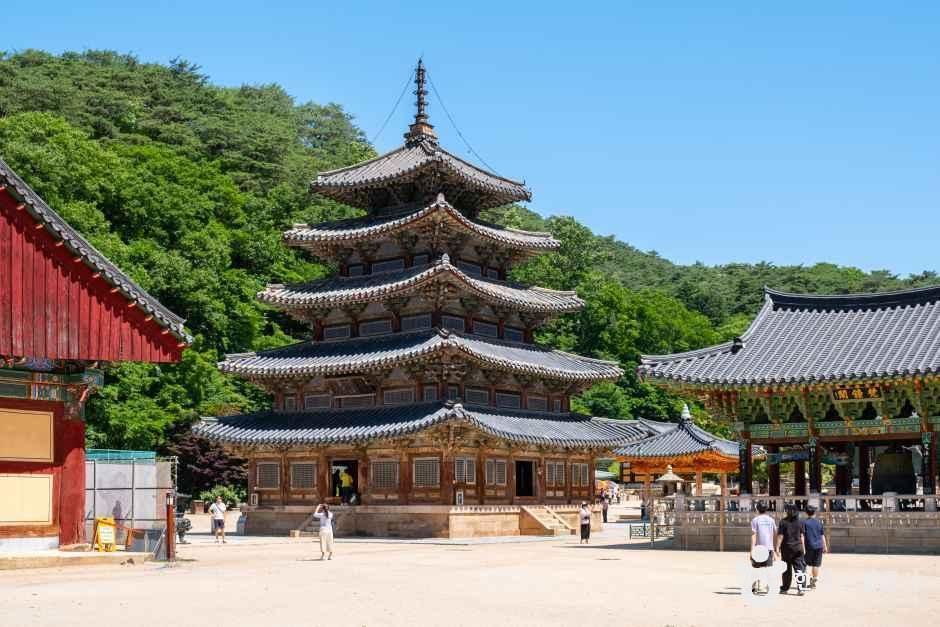
Songnisan National Park & Beopjusa (UNESCO)
속리산 법주사Songnisan National Park & Beopjusa (UNESCO), Boeun, Chungbuk, South Korea
Songnisan National Park and Beopjusa Temple is a UNESCO World Heritage Buddhist sanctuary founded in 553 AD, celebrated for Palsangjeon (Korea’s only surviving 5-story wooden pagoda, National Treas...
Morning (around 09:30-10:00)
Details→
Cheongju Early Printing Museum (Jikji)
청주고인쇄박물관 (직지)Cheongju Early Printing Museum (Jikji), Cheongju, Chungbuk, South Korea
Cheongju Early Printing Museum is the UNESCO Memory of the World sanctuary commemorating Jikji, the world’s oldest extant book printed with movable metal type in 1377 AD at Heungdeoksa Temple, feat...
Morning (around 09:30-10:00)
Details→