Chungnam•Buyeo•Heritage•Historic Fortress
Buyeo Busosanseong & Nakhwaam Rock
부여 부소산성 낙화암
Powered by Korea Tourism OrganizationAddress: Buyeo Busosanseong & Nakhwaam Rock, Buyeo, Chungnam, South Korea (충청남도 부여군 부여읍 부소로 15 (관북리))
Editorial review pending

Nakhwaam Rock Baakhwajeong pavilion and Baekma River cliff at BusosanseongZoom


+1More
1 / 6
Nakhwaam Rock Baakhwajeong pavilion and Baekma River cliff at Busosanseong
Curator's Guide & Overview
Comprehensive Guide1. Historical Origins & Cultural Background
Inscribed as a core component of the UNESCO World Heritage "Baekje Historic Areas," Buyeo Busosanseong Fortress was the royal refuge and strategic citadel of the Sabi Kingdom (538–660 AD). Rising 106 meters along the sweeping southern bend of the Baengmagang River (the historic royal name for the lower Geumgang River), this 2.5-kilometer fortress served as the last bastion of royal power when the joint Tang-Silla alliance besieged Sabi in 660 AD, bringing an end to 678 years of Baekje civilization.
2. Architectural Highlights & Key Structures
The fortress grounds are steeped in poignant legends and ancient monastic architecture. Perched on a 40-meter vertical granitic river bluff is Nakhwaam ('The Rock of Falling Flowers'), immortalized by the tragedy of Baekje’s court women who leaped into the churning river waters rather than suffer capture by enemy invaders, likened in Korean verse to falling azalea petals. Crowning the rock is the hexagonal Baekhwajeong Pavilion (built in 1929). Below the bluff sits Goransa Temple, renowned for its natural rock fissure spring whose water is said to restore three years of youth per cup, marked by the rare cliff-dwelling Gorancho fern.
3. Four Seasons Landscape & Seasonal Visiting Charms
Spring blankets the pine-clad earthen ramparts in delicate cherry blossoms and wild mountain azaleas. Summer offers cool shaded walking through dense centuries-old oak and pine forests, followed by gentle river breezes on the open decks of traditional Hwangpodotbae wooden sailboats. Autumn displays golden ginkgoes and fiery maples mirroring across the tranquil Baengmagang River during the annual Baekje Cultural Festival. Winter showcases misty morning riverbanks, quiet stone hermitages, and snow dusting the hexagonal roof of Baekhwajeong.
4. Operating Hours & Peak Viewing Times
Busosanseong is open daily year-round from 09:00 to 18:00 in summer (March through October) and 09:00 to 17:00 in winter (November through February). The traditional wooden Hwangpodotbae sailboats run continuously every 15 to 20 minutes between Goransa Dock and Gudeurae Dock from 09:00 until 18:00. The quintessential touring route starts at the main gate at 14:00, arriving at Nakhwaam for late-afternoon river photography, then descending to Goransa to board the scenic riverboat back to Gudeurae Sculpture Park.
5. Admission Fees & Concessions (Youth/Foreigner Discounts)
Admission to Busosanseong Fortress is 2,000 KRW for adults, 1,100 KRW for youth, and 1,000 KRW for children. The one-way scenic cruise aboard the traditional Hwangpodotbae sailboat from Goransa Dock downriver to Gudeurae Dock is 6,000 KRW for adults and 3,000 KRW for children (round-trip 10,000 KRW). Complimentary parking is available at the Gudeurae riverfront lot and the Busosanseong main gate lot.
6. Public Transit & Subway Exit Directions
From Seoul, direct intercity express buses depart every 30 to 40 minutes from Seoul Nambu Terminal directly to Buyeo Intercity Bus Terminal (journey time approx. 2 hours). From Buyeo Terminal, enjoy an easy, flat 10-minute walk through the heritage district directly to the Busosanseong ticket office. Alternatively, take the KTX-Honam to KTX Gongju Station, then transfer to local bus 301 into central Buyeo (approx. 35 minutes).
7. Barrier-Free Accessibility & Visitor Amenities
The initial approach to Samchungsa Shrine and the central forested ridge consists of gently graded, packed dirt and timber ramps manageable with assisted wheelchairs and strollers. However, the descent from Baekhwajeong down the sheer rocky cliff to Nakhwaam and Goransa Dock involves uneven stone staircases with iron handrails; this lower cliff section is not wheelchair accessible. Wheelchairs are available for loan at the main ticket office.
8. Recommended Walking Route & Highlights Tour
Recommended 3-Hour Classic Sabi Circuit: Enter Busosanseong Main Gate → Pay respects at Samchungsa Shrine (honoring three loyal Baekje ministers) → Walk the pine-shaded earthen rampart ridge to Yeongillu Pavilion → Ascend to Sajaru Pavilion (the highest vantage point overlooking the river) → Walk out onto Nakhwaam Rock and Baekhwajeong Pavilion to gaze over the Baengmagang River → Descend stone stairs to Goransa Temple to drink from the legendary fountain of youth → Board the traditional wooden Hwangpodotbae Sailboat to cruise past the red-inscribed cliffs of Nakhwaam → Disembark at Gudeurae Dock → Feast on famous Buyeo Lotus Leaf Rice (Yeon-nip-bap).
9. Local Food Specialties & Regional Flavors
Buyeo is celebrated for refined royal cuisine inspired by the lotus blooms of Gungnamji Pond. Savor Yeon-nip-bap (glutinous rice steamed inside a fragrant lotus leaf with jujubes, chestnuts, pine nuts, and black beans), accompanied by Grilled Deodeok roots, Ddeokgalbi, and delicate wild greens. Savor freshwater Eel (Jangeo Gui) grilled along the Baengmagang River and Buyeo's famous sweet watermelon and melon desserts in season.
10. Dietary Options (Vegetarian, Halal & Allergen Guide)
Vegetarian and vegan diners will find pure culinary bliss in Buyeo: authentic Yeon-nip-bap (lotus leaf rice) is 100% plant-based, nutritious, and served alongside over 15 varieties of wild mountain herbs, pickled lotus roots, braised shiitake mushrooms, and vegetable pancakes. Halal diners will find lotus leaf rice sets, fresh grilled river fish, and vegetarian stews fully compliant.
11. Signature Photo Spots & Golden Hour Lighting
Legendary photo spots include: the panoramic view of the bending Baengmagang River from the hexagonal Baekhwajeong Pavilion atop Nakhwaam Rock, looking up at the sheer 40-meter red cliff face with the two Chinese characters 'Nakhwaam' painted in red from the deck of the Hwangpodotbae boat, the tranquil ancient courtyard of Goransa Temple nestled against the vertical stone cliff, and the pine forest tunnel along the ridge trail.
12. Visitor Etiquette & Cultural Property Regulations
Nakhwaam is an unprotected natural river cliff; do not climb over metal safety railings or step onto slippery rock edges. Maintain quiet decorum inside Goransa Temple. While on the Hwangpodotbae riverboat, all passengers must wear provided life jackets. Keep the historic forest pristine by carrying out all waste.
13. Safety Precautions & 1330 Tourism Hotline Support
Wear comfortable walking shoes with rubber grip, as walking the fortress trails and descending the stone stairs to Goransa requires steady footing. During severe river flooding or heavy storms, boat operations will temporarily suspend. For real-time boat and fortress information, contact the Busosanseong Office at 041-830-2880 or call 1330.
14. Nearby Connected Attractions & Walking Links
At the base of the fortress lies the Gudeurae Sculpture Park and the Guanbuk-ri Relics (Baekje Royal Palace site). A 5-minute drive south leads to Gungnamji Pond, South Korea’s oldest artificial lotus pond built by King Mu, and the Jeongnimsaji Five-Story Stone Pagoda (National Treasure No. 9).
15. Frequently Asked Questions (FAQ)
Q: What is the legend of Goransa spring water? A: Folklore holds that every cup of water from the natural rock spring behind Goransa Temple makes you three years younger; Baekje kings drank it daily, requiring court servants to float a Gorancho fern leaf on top as proof of authenticity. Q: Can I take the boat both ways? A: Yes, round-trip boat tickets are available, but most travelers walk through the fortress to Goransa and take the boat one-way back to Gudeurae.
16. Regional Extended Day Trip Itinerary
Buyeo Sabi UNESCO Heritage Day Tour: Morning bus from Seoul to Buyeo Terminal → walk through Busosanseong Fortress to Nakhwaam and Goransa Temple → drink from the fountain of youth → scenic Hwangpodotbae boat cruise on the Baengmagang River → authentic Lotus Leaf Rice (Yeon-nip-bap) lunch in Gudeurae → afternoon stroll around ancient Gungnamji Lotus Pond → visit National Treasure Jeongnimsaji Stone Pagoda → evening return bus to Seoul.
Essential Visitor Facts
Operating Hours
Summer (Mar - Oct) Daily 09:00 - 18:00; Winter (Nov - Feb) Daily 09:00 - 17:00; Hwangpodotbae Sailboat operates 09:00 - 18:00 (Departs every 15 mins)
Admission / Price
Adults 2,000 KRW, Youth 1,100 KRW, Children 1,000 KRW; Hwangpodotbae Sailboat (Goransa Dock to Gudeurae Dock): Adults 6,000 KRW, Children 3,000 KRW
Closed Days
Closed on Mondays/Tuesdays
Best Time to Visit
Morning (around 09:30-10:00)
Transit & Access Directions
From Seoul Nambu Terminal, take express bus to Buyeo Intercity Terminal (approx. 2 hrs), then walk 10 mins to Busosanseong Gate; or from KTX Gongju Station take Bus 301 to Buyeo
Accessibility & Special Amenities
Wheelchair ramps, tactile paving, accessible restrooms
Location Coordinates
Latitude: 36.2895
Longitude: 126.9125
Discover Themes & Highlights
Key interest areas and cultural highlights:
#buyeo-busosanseong-nakhwaam#VisitChungnam#KoreaTravelAtlas
Community Traveler Reviews0 Reviews
Visitor tips, feedback, and questions submitted by real travelers.
No community reviews submitted yet. Be the first traveler to share your experience!
Connected Cultural Destinations
Handpicked nearby attractions and regional cultural highlights.

Cheongnamdae Presidential Villa
청남대Cheongnamdae Presidential Villa, Cheongju, Chungbuk, South Korea
Cheongnamdae is South Korea’s storied former presidential lakeside retreat, dubbed the "Blue House of the South," set across 1.8 square kilometers of pristine Daecheongho Lake shoreline, featuring ...
Morning (around 09:30-10:00)
Details→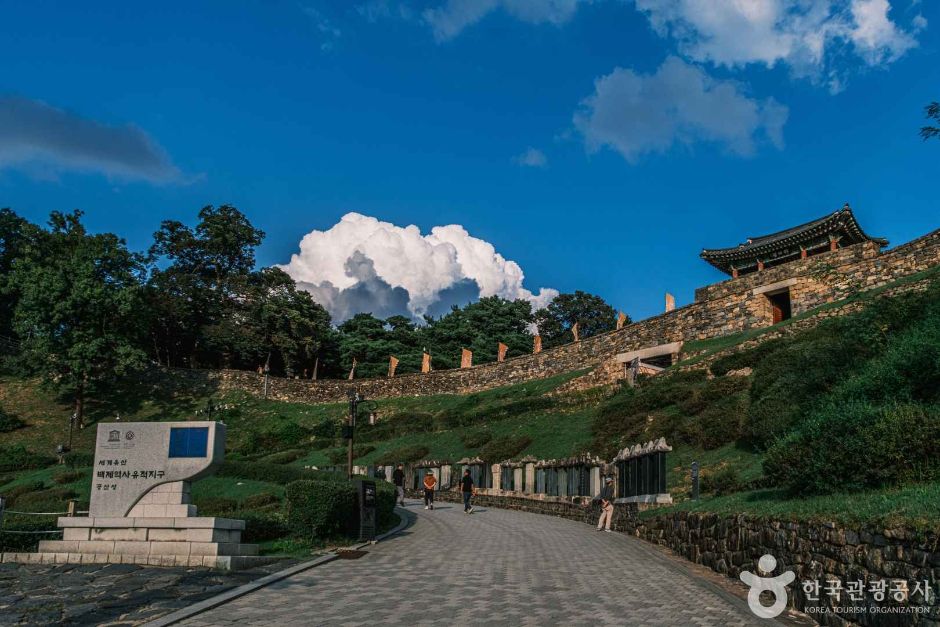
Gongju Gongsanseong Fortress (UNESCO)
공주 공산성Gongju Gongsanseong Fortress (UNESCO), Gongju, Chungnam, South Korea
Gongju Gongsanseong Fortress is a UNESCO World Heritage mountain rampart overlooking the Geumgang River, serving as the royal capital fortress of the ancient Baekje Kingdom (475–538 AD) during the ...
Morning (around 09:30-10:00)
Details→
Baekje Cultural Land & Royal Palace
백제문화단지Baekje Cultural Land & Royal Palace, Buyeo, Chungnam, South Korea
Baekje Cultural Land is South Korea’s largest historical theme park, spanning 3.3 million square meters in Buyeo, painstakingly reconstructing the royal Sabi Palace, Neungsa five-story wooden pagod...
Morning (around 09:30-10:00)
Details→
Jeonju Hanok Village
전주한옥마을Jeonju Hanok Village, Jeonju, Jeonbuk, South Korea
Jeonju Hanok Village encompasses over 700 traditional Korean tiled homes nestled within the historic downtown core of Jeonju. Designated as an International Slow City, the village preserves authent...
Morning (around 09:30-10:00)
Details→