Gyeongnam•Namhae•Nature•Scenic Nature Spot
Namhae Gacheon Daraengi Rice Terraces
남해 가천 다랭이마을
Powered by Korea Tourism OrganizationAddress: Namhae Gacheon Daraengi Rice Terraces, Namhae, Gyeongnam, South Korea (경상남도 남해군 남면 남면로679번길 21 (홍현리 가천마을))
Editorial review pending

Namhae Gacheon Daraengi Rice Terraces representative scenic panoramaZoom


+1More
1 / 6
Namhae Gacheon Daraengi Rice Terraces representative scenic panorama
Curator's Guide & Overview
Comprehensive Guide1. Historical Origins & Cultural Background
Namhae Gacheon Daraengi Village, designated as National Scenic Site No. 15, is South Korea’s most spectacular and poignant agrarian monument to human perseverance. Clinging to the sheer, 45-degree granite slopes of Mount Seolheulsan where the mountain plummets directly into the turquoise waters of the South Sea, the village features over 100 tiers of narrow terraced rice paddies (Daraengi-non). For generations, island ancestors possessed not a single inch of flat soil; with their bare hands, they cleared colossal boulders, hauled fertile dirt from mountain gullies, and built thousands of curved, dry-stacked stone retaining walls to carve out micro-fields—some no larger than a traditional woven mat—ensuring their families' survival against starvation.
2. Architectural Highlights & Key Structures
The architectural and cultural landscape of Daraengi Village is unlike anywhere else in East Asia. The village is completely step-free from roads: because the slopes are so steep that mechanized cultivators and tractors cannot operate, local farmers still use traditional Korean native cattle (oxen) yoked to wooden plows to till the narrow earthen terraces. A labyrinth of ancient flagstone alleys weaves between colorful tile-roofed cottages down to the jagged coastal rock cliffs, where a pedestrian suspension bridge arches over crashing oceanic swells. Along the path stand the sacred Gacheon Amsoo-bawi (Male and Female Rocks, Gyeongsangnam-do Folk Cultural Heritage No. 13)—ancient phallic and maternal fertility totems worshipped by villagers for centuries to pray for bountiful harvests and safe voyages for fishermen.
3. Four Seasons Landscape & Seasonal Visiting Charms
Daraengi Village enchants travelers across all four seasons with dramatic seasonal palettes. Spring (March to May) is world-famous: brilliant yellow canola blossoms carpet all 100 tiers of terraced paddies, framing the azure sea in an unforgettable golden spectacle. Summer (June to August) fills the stepped terraces with flooded mirror-smooth waters reflecting blue skies and floating clouds, which turn into vibrant emerald-green carpets of waving rice shoots. Autumn (September to November) transforms the hillside into a shimmering golden amphitheater as ripening rice is harvested by hand with sickles under crisp sunshine. Winter brings calm serenity, with mild southern breezes and emerald coastal waters lapping against the stone walls. Sunset is mesmerizing: as dusk settles, the terraced paddies glow like molten copper under the setting sun.
4. Operating Hours & Peak Viewing Times
The village footpaths, terraced viewing platforms, and coastal suspension bridge are open 24 hours daily year-round with unrestricted access. Village restaurants, homestay cafes, and experiential centers operate from roughly 09:00 to 19:00 or 20:00. The ideal time to explore is early morning (08:30 to 10:30) when coastal sea mist rises over the terraces, or late afternoon (16:30 to 18:00) to photograph the sunset reflections on the water. Allocate roughly 2 to 2.5 hours to descend through the village alleys, cross the suspension bridge, climb the terraced observatory, and enjoy a local meal.
5. Admission Fees & Concessions (Youth/Foreigner Discounts)
Admission to Daraengi Village, its terraced paddy walking trails, and the coastal suspension bridge is completely FREE. Hand-plowing or traditional agricultural experience programs cost approximately 5,000 to 10,000 KRW per participant. Spacious municipal parking lots at the top of the village along Namhyeon-ro are completely free of charge.
6. Public Transit & Subway Exit Directions
From Seoul Nambu Bus Terminal, take an express bus directly to Namhae Public Terminal (approx. 4 hours 15 minutes). From Namhae Terminal, local rural buses bound for Gacheon (Daraengi Village) operate via the scenic southern coastal road 5 to 6 times daily, taking roughly 45 to 50 minutes. Alternatively, a taxi from Namhae Terminal takes about 25 minutes and costs approximately 25,000 KRW. Driving from Jinju or Sacheon takes about 1 hour via the scenic Namhae Grand Bridge or Changseon-Samcheonpo Bridge.
7. Barrier-Free Accessibility & Visitor Amenities
Because Daraengi Village is carved into a steep 45-degree seaside cliff, the village paths consist entirely of winding downhill and uphill flagstone lanes, concrete switchbacks, and stone steps. Vehicles cannot enter the interior village alleys; all cars must park at the top roadside parking areas. Consequently, navigating the lower terraces, village interior, and suspension bridge with manual wheelchairs or strollers requires considerable physical exertion and assistance. However, the upper roadside observation pavilion near the parking area provides an expansive, fully barrier-free panoramic view across the entire terraced landscape and sea. Accessible restrooms are located at the upper tourist parking plaza.
8. Recommended Walking Route & Highlights Tour
Recommended 2-Hour Terraced Heritage & Coastal Bridge Circuit: Park at the upper Gacheon Village lookout and take in the panoramic aerial vista of 100 terraced paddies cascading into the sea → Walk down the winding flagstone lane through the charming village cottages → Inspect the sacred Amsoo-bawi (Male and Female Rocks) and read the fertility legend → Continue downhill along the irrigation channels through the emerald terraced fields → Reach the coastal cliff edge and cross the thrilling Gacheon Suspension Bridge suspended over crashing waves → Sit on the flat rocks of the coastal ledge to feel the cool sea spray → Climb the scenic wooden boardwalk up through the terraced paddies to an ocean-view tavern → Enjoy a lunch of sizzling Namhae Anchovy Ssambap paired with chilled Namhae Yuzu Makgeolli.
10. Dietary Options (Vegetarian, Halal & Allergen Guide)
Vegetarians can dine well at the village family restaurants: order traditional Sanchae Bibimbap loaded with mountain namul and wild garlic, crispy potato pancakes, savory vegetable pajeon, and comforting soybean curd stews. Sweet citron tea, iced persimmon punch, and pumpkin snacks are available at village cafes. Halal and pescatarian travelers can feast on Namhae's celebrated seafood: fresh anchovy ssambap, grilled Spanish mackerel, braised hairtail, and seafood noodle soups are prepared without pork or red meat broths.
11. Signature Photo Spots & Golden Hour Lighting
Iconic photographic perspectives: an aerial wide-angle shot from the upper roadside observation deck capturing all 100 tiers of curved emerald or golden terraced fields cascading down the mountain into the blue sea; walking across the narrow stone ridges between the flooded paddies with the coastal horizon in the background; dynamic shots standing on the coastal suspension bridge with white ocean breakers crashing below; and golden sunset rays casting molten copper reflections across the flooded terraced waters in early summer.
12. Visitor Etiquette & Cultural Property Regulations
Heritage preservation etiquette: Daraengi Village is an active agricultural community and a protected National Scenic Site. Walk strictly on marked stone and concrete paths. Never step directly into the terraced rice paddies, walk on the fragile stone retaining walls, or damage irrigation channels. Do not pick crops, vegetables, or wildflowers. Do not enter private residential yards. Drones must not be flown close to houses. Smoking is strictly prohibited throughout the village and terraced fields. Take all personal trash back to the parking plaza.
13. Safety Precautions & 1330 Tourism Hotline Support
Wear comfortable walking shoes with excellent grip, as walking back up the 45-degree slope to the parking lot involves a vigorous uphill trek of about 15 to 20 minutes. In summer, carry water and sun protection, as the open hillside catches intense maritime heat. Bus departures back to Namhae Terminal are infrequent; note the return bus schedule at the village bus shelter before descending. For guided tours and homestay bookings, contact the Daraengi Village Information Center at 055-863-3427 or dial 1330.
14. Nearby Connected Attractions & Walking Links
Nearby attractions: drive 10 minutes east to explore Namhae German Village (PLACE-GYEONGNAM-004) and House N Garden; drive 15 minutes to hike the surreal jagged granite pinnacles of Mount Geumsan and visit the cliffside Boriam Hermitage; or visit the sandy crescent of Sangju Silver Sand Beach.
15. Frequently Asked Questions (FAQ)
Q: How was Daraengi Village created on such steep slopes? A: Facing severe poverty and land scarcity, island ancestors in the late Joseon Dynasty laboriously cleared the 45-degree mountain slope by hand, using cattle and levers to construct over 100 tiers of dry-stacked granite retaining walls that prevent soil erosion and hold water, creating micro-paddies that allowed families to cultivate rice on land where farming seemed impossible. Q: What is the legend of the Amsoo-bawi rocks? A: Discovered in 1751, the two natural stones—one resembling a pregnant woman and the other a phallus—are revered as the village guardians; fishermen and infertile couples historically made offerings before the rocks to pray for abundant catches and healthy sons, and the annual village Dongje ritual is still performed here every lunar October.
16. Regional Extended Day Trip Itinerary
Namhae Daraengi Village & Coastal Heritage Day Tour: Morning bus or drive from Namhae Terminal to Gacheon Daraengi Village → Admire the panoramic aerial view of 100 terraced paddies from the roadside lookout → Walk down through the stone alleys to inspect the sacred Amsoo-bawi → Cross the coastal suspension bridge over crashing ocean waves → Climb the wooden boardwalk through the terraces → Village lunch enjoying spicy Namhae Anchovy Ssambap and chilled Yuzu Makgeolli on an ocean terrace → Drive to Mount Geumsan Boriam Hermitage for breathtaking coastal cliff vistas → Visit Namhae German Village for afternoon pretzels and craft beer → Return via Namhae or Jinju.
Essential Visitor Facts
Operating Hours
Open 24/7 year-round (free pedestrian access to village alleys and coastal trails); local restaurants, cafes, and homestays typically operate 09:00 - 19:00 / 20:00.
Admission / Price
FREE ADMISSION to Daraengi Village, terraced paddy walking paths, and the coastal suspension bridge; Public parking lots at the top of the village (free).
Closed Days
Open 365 Days
Best Time to Visit
Morning (around 09:30-10:00)
Transit & Access Directions
From Namhae Public Bus Terminal, take a local rural bus bound for Gacheon (Daraengi Village) via the South Coast route (approx. 45-50 minutes, departs 5-6 times daily). A taxi from Namhae Terminal takes about 25 minutes (approx. 25,000 KRW).
Accessibility & Special Amenities
Wheelchair ramps, tactile paving, accessible restrooms
Location Coordinates
Latitude: 34.7265
Longitude: 127.8912
Discover Themes & Highlights
Key interest areas and cultural highlights:
#namhae-daraengi-terraced-village#VisitGyeongnam#KoreaTravelAtlas
Community Traveler Reviews0 Reviews
Visitor tips, feedback, and questions submitted by real travelers.
No community reviews submitted yet. Be the first traveler to share your experience!
Connected Cultural Destinations
Handpicked nearby attractions and regional cultural highlights.
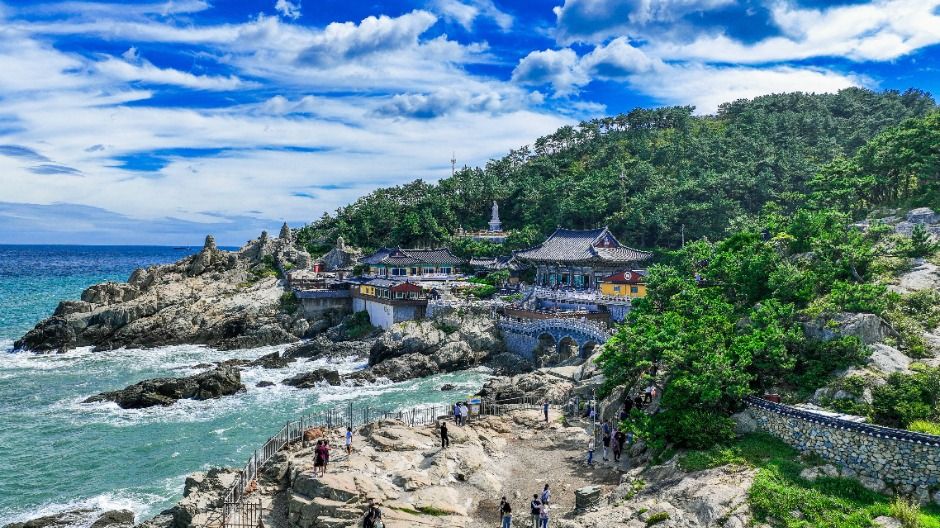
Haedong Yonggungsa Temple
해동용궁사86 Yonggung-gil, Gijang-eup, Gijang-gun, Busan
Haedong Yonggungsa Temple, perched dramatically on rugged oceanfront cliffs in Gijang, Busan, is one of South Korea's rare and magnificent seaside Buddhist sanctuaries. Founded in 1376 by Great Mas...
HalalMorning (around 09:30-10:00)
Details→
Boseong Green Tea Fields (Daehan Dawon)
보성 대한다원 녹차밭Boseong Green Tea Fields (Daehan Dawon), Boseong, Jeonnam, South Korea
Boseong Daehan Dawon is South Korea’s premier 500-hectare tea plantation, celebrated for 5.8 million terraced emerald green tea bushes cascading across misty mountain amphitheaters, soaring entranc...
Morning (around 09:30-10:00)
Details→
Geoje Windy Hill & Sinseondae Cliff
거제 바람의 언덕 및 신선대Geoje Windy Hill & Sinseondae Cliff, Geoje, Gyeongnam, South Korea
Geoje Windy Hill is South Korea’s most romantic coastal promontory, world-famous for its majestic Dutch windmill spinning in the ocean breezes of Dojangpo Harbor, paired with the ancient stratified...
Morning (around 09:30-10:00)
Details→
Namhae German Village (Deutsches Dorf)
남해 독일마을Namhae German Village (Deutsches Dorf), Namhae, Gyeongnam, South Korea
Namhae German Village is South Korea’s charming Bavarian coastal enclave, established in 2001 for Korean nurses and miners returning from Germany, featuring authentic white-walled villas with red-o...
Morning (around 09:30-10:00)
Details→