Gyeongbuk•Yeongju•Heritage•Buddhist Temple
Yeongju Buseoksa Temple (UNESCO)
영주 부석사 (무량수전)
Powered by Korea Tourism OrganizationAddress: Yeongju Buseoksa Temple (UNESCO), Yeongju, Gyeongbuk, South Korea (경상북도 영주시 부석면 북지리 148)
Editorial review pending
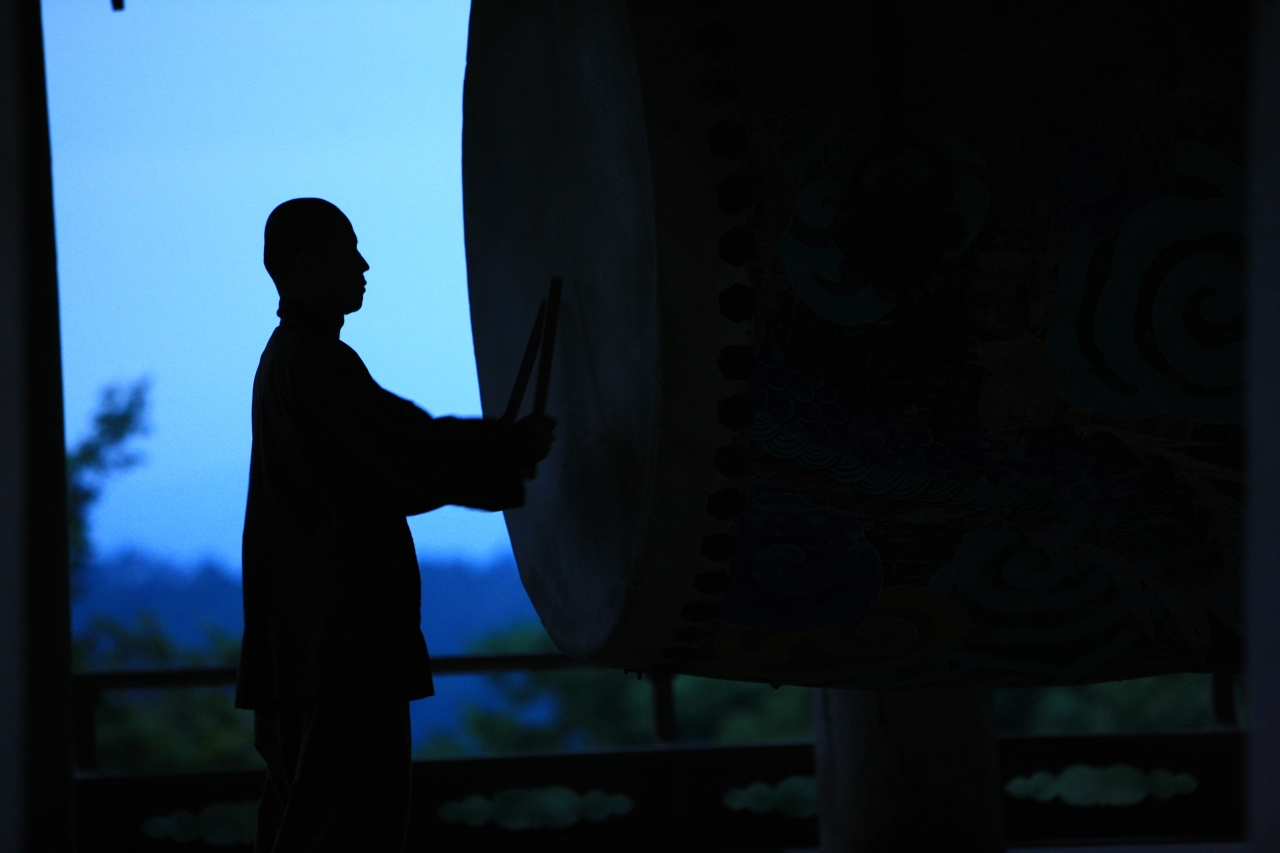
Yeongju Buseoksa Temple (UNESCO) representative scenic panoramaZoom
+1More
1 / 6
Yeongju Buseoksa Temple (UNESCO) representative scenic panorama
Curator's Guide & Overview
Comprehensive Guide1. Historical Origins & Cultural Background
Yeongju Buseoksa Temple, inscribed on the UNESCO World Heritage List in 2018 under 'Sansa, Buddhist Mountain Monasteries in Korea', is celebrated by art historians and travelers as the supreme aesthetic pinnacle of traditional Korean temple architecture. Founded in 676 AD by Great Master Uisang (625–702) under royal decree of King Munmu of Silla, Buseoksa stands as the fountainhead monastery of Avatamsaka (Hwaeom) Buddhism. Built across nine terraced stone platforms rising gracefully up the southwest slope of Mount Bonghwangsan, the monastery embodies the Buddhist pure land paradise, where the natural terrain and human architecture blend into celestial harmony.
2. Architectural Highlights & Key Structures
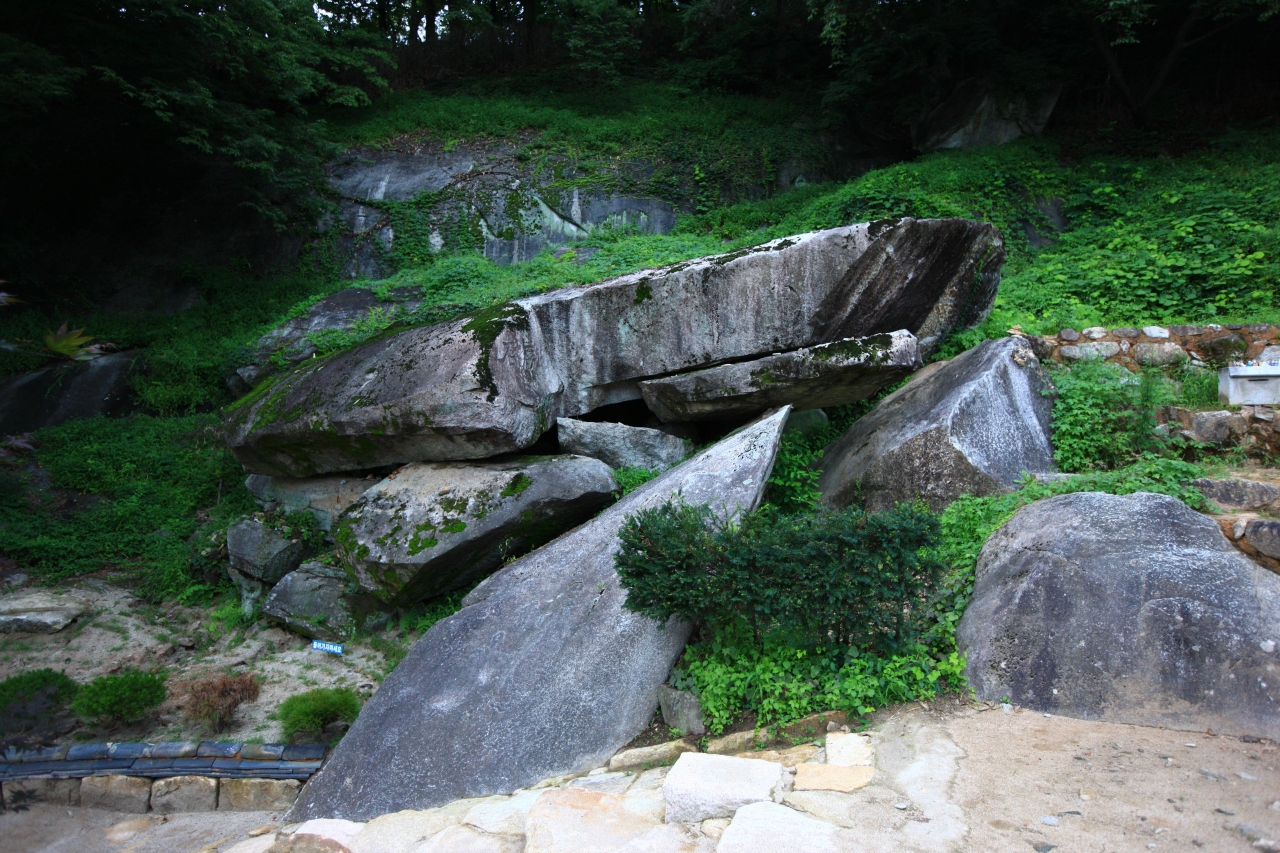
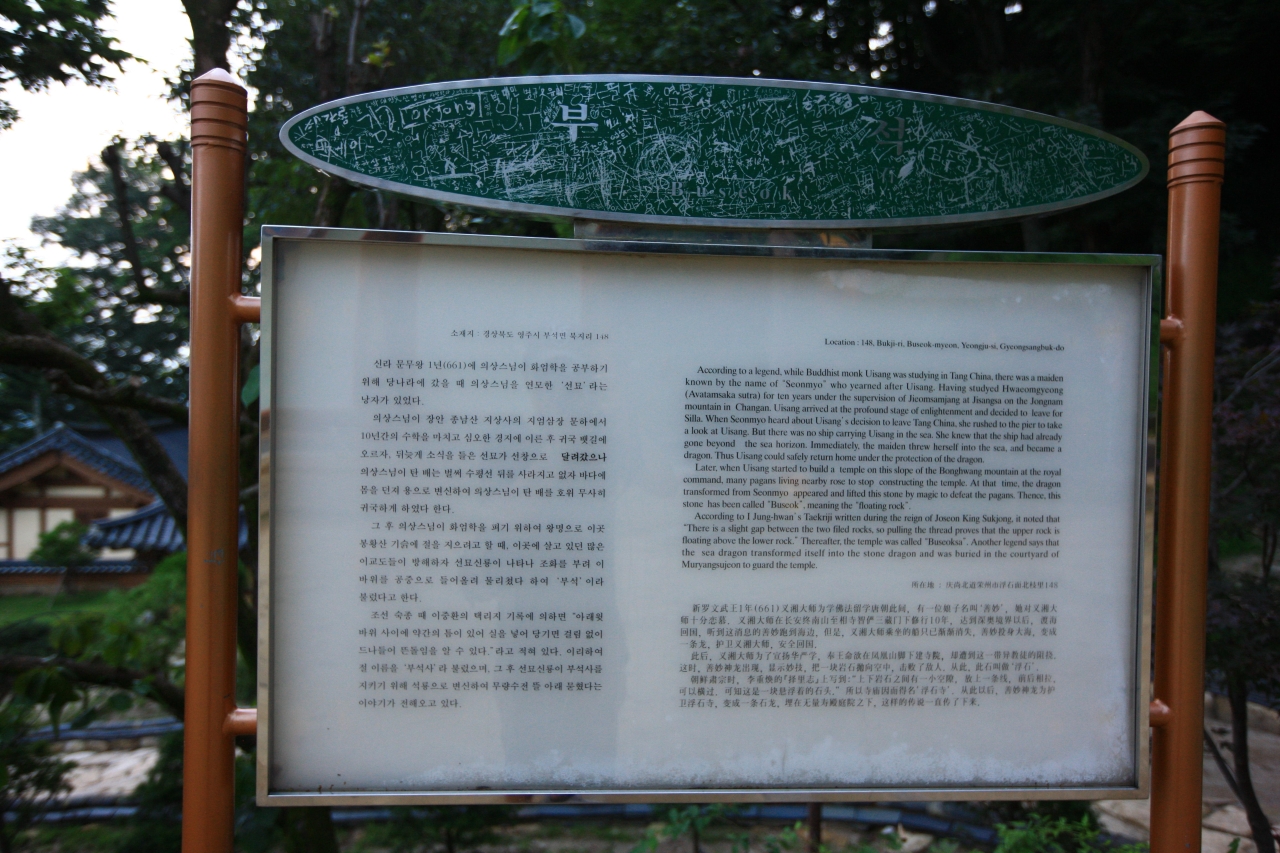
The architectural crown of Buseoksa is National Treasure No. 18: Muryangsujeon (The Hall of Infinite Life), reconstructed in 1376 during the Goryeo Dynasty and standing as one of the two oldest surviving wooden buildings in South Korea (alongside Geuknakjeon at Bongjeongsa). The hall is internationally revered for its sublime entasis columns (Baeheullim pillars), which swell gently in the middle to correct optical illusions and impart an aura of timeless weightless grace. Standing in the forecourt is National Treasure No. 17: the 8th-century Stone Lantern, carved with graceful relief apsaras. Directly behind the hall rests 'Buseok' (The Floating Rock)—a colossal natural boulder that, according to myth, Lady Seonmyo (transformed into a winged dragon) lifted into the air to vanquish bandits and defend the sacred grounds.
3. Four Seasons Landscape & Seasonal Visiting Charms
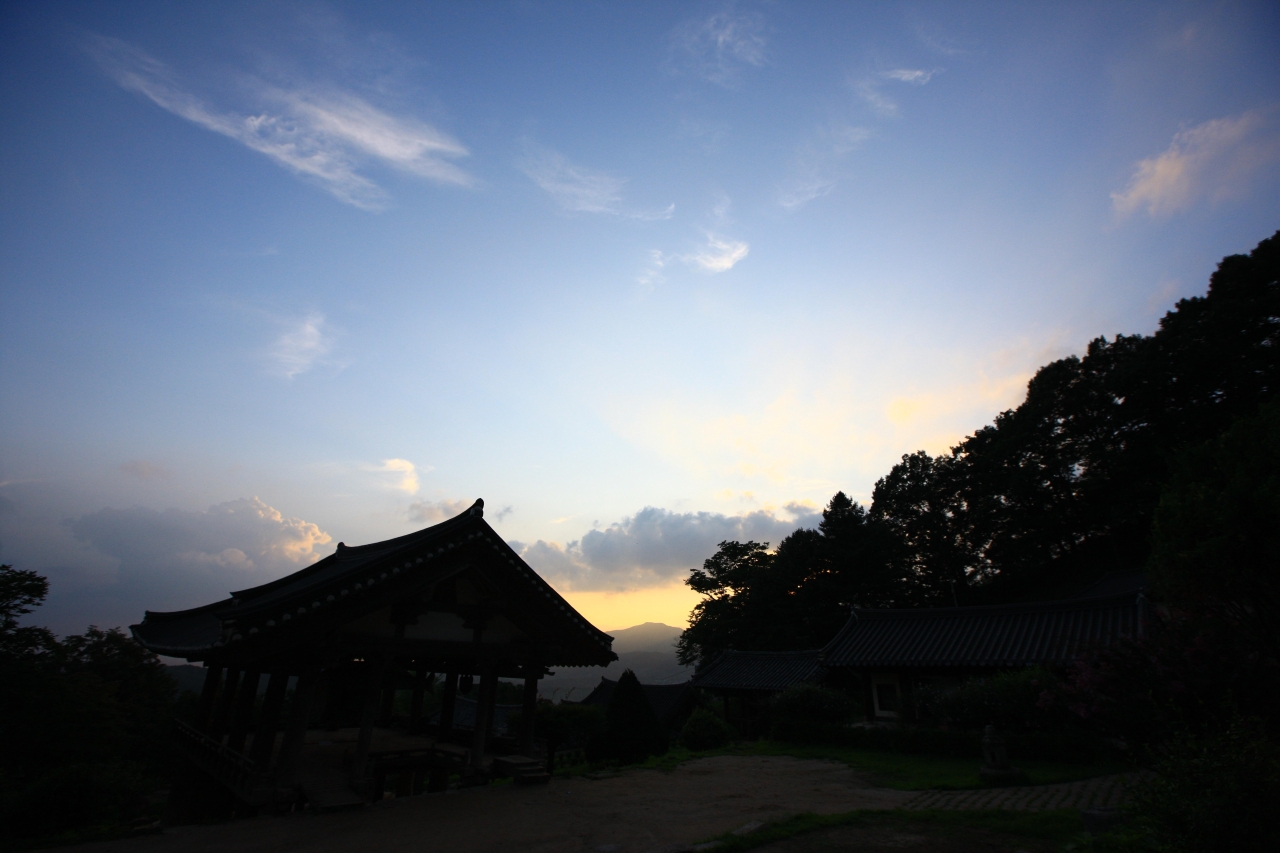
Buseoksa offers transcendent natural panoramas across every season. Spring (April to May) carpets the long approach road in fragrant apple blossoms and blooming wild azaleas. Summer (June to August) brings cool breezes through the open timber bays of Anyangnu Pavilion, framed by deep green oak forests. Autumn (October to November) is the temple's legendary golden zenith: the 500-meter avenue leading from the Iljumun gate becomes a dazzling golden tunnel of ancient ginkgo canopies, drawing pilgrims from across the globe. Winter wraps the layered hipped roofs and stone terraces in pristine snow, offering a breathtaking contrast with the indigo blue skies. Twilight is immortal: standing before Muryangsujeon as the setting sun casts a golden glow over the distant rolling blue ridges of the Sobaeksan Mountains has been hailed by Korean scholars as 'the most moving vista in all of Korea'.
4. Operating Hours & Peak Viewing Times
The temple grounds are open daily year-round from 07:00 to 18:00 (March to October) and 08:00 to 17:00 (November to February). Early morning arrivals (08:00 to 10:00) offer tranquil solitary contemplation before tour buses arrive. However, the late afternoon (16:30 to 17:45) is the undisputed golden hour, when visitors gather on the platform of Anyangnu Pavilion to witness the sunset over the undulating waves of the Sobaek mountain range. Allocate at least 2 to 2.5 hours to leisurely climb the terraced platforms, admire Muryangsujeon, and explore the nearby Josadang Hall (National Treasure No. 19).
5. Admission Fees & Concessions (Youth/Foreigner Discounts)
Following South Korea's national cultural heritage preservation reform, admission to Buseoksa is completely FREE of charge for all domestic and international visitors. Spacious open-air municipal parking lots at the base of the mountain village charge a flat parking fee of 3,000 KRW for passenger cars.
6. Public Transit & Subway Exit Directions
From Seoul Cheongnyangni Station, board the high-speed KTX-Eum train directly to KTX Yeongju Station (approx. 1 hour 40 minutes). Directly in front of Yeongju Station, take City Bus 27 or 55, which operates directly to the Buseoksa bus terminal in roughly 45 to 50 minutes (departing every 30 to 40 minutes). A taxi from Yeongju Station or Yeongju Bus Terminal takes about 35 minutes and costs approximately 30,000 to 35,000 KRW. Driving from Seoul takes about 2.5 hours via the Jungang Expressway (exit at Punggi IC).
7. Barrier-Free Accessibility & Visitor Amenities
The approach to Buseoksa begins with a gentle 500-meter unpaved ginkgo path from the ticket gate to the Cheonwangmun (Heavenly Kings Gate), which is accessible for baby strollers and manual wheelchairs. Beyond Cheonwangmun, ascending to the upper terraces of Muryangsujeon involves climbing several flights of steep, uneven historic granite staircases representing the nine stages of Buddhist paradise. Visitors with limited mobility can enjoy the lower pavilions, or request special vehicular access through the administrative office up to the rear service road near Josadang Hall. Accessible restrooms are located at the lower parking plaza and near the Cheonwangmun gate.
8. Recommended Walking Route & Highlights Tour
Recommended 2-Hour Pure Land Pilgrimage Route: Arrive at the lower parking plaza and walk past the local apple vendors → Enter through the Iljumun (One Pillar Gate) onto the golden ginkgo avenue → Ascend past the Tangganjiju flagpole support (Treasure) and through Cheonwangmun → Climb the steep stone stairs through the Beomjonggak bell tower terrace → Pass beneath the darkened underbelly of Anyangnu Pavilion and emerge dramatically into the radiant sunlit courtyard of Muryangsujeon → Marvel at the entasis columns and bow before the clay seated Amitabha Buddha (National Treasure No. 45) → Walk behind the hall to inspect the fabled Floating Rock (Buseok) → Climb the short trail to Josadang Hall → Return to Anyangnu Pavilion to sit and watch the sunset illuminate the endless mountain ridges of Sobaeksan → Descend peacefully through the ginkgo trees.
9. Local Food Specialties & Regional Flavors
Yeongju is acclaimed for pristine agricultural and livestock delicacies. Feast on world-famous Yeongju Hanwoo (exquisite Korean native beef celebrated for intense marbling and tenderness, raised on the clean grasses of the Sobaeksan Mountains). Savor Punggi Insam Samgyetang (chicken soup simmered with famous Punggi ginseng roots and jujubes) and Buseok Tae Cheonggukjang (savory, aromatic fermented soybean stew made from indigenous Buseok soybeans). Don't miss tasting crisp, honey-sweet Yeongju Apples and fresh apple cider sold at roadside orchards around the temple.
10. Dietary Options (Vegetarian, Halal & Allergen Guide)
Vegetarians will find exceptional dining options around Buseoksa: indulge in authentic Buseok Soybean Cheonggukjang or warm soft tofu stews, accompanied by fragrant mountain herb bibimbap, acorn jelly, and crispy wild deodeok root pancakes at village eateries near the bus terminal. Fresh local apple chips and dried persimmons make wonderful plant-based travel snacks. Halal and pescatarian diners can enjoy grilled mackerel banchan, pure soybean curd stews, and rich vegetarian bibimbap free from meat or pork extracts.
11. Signature Photo Spots & Golden Hour Lighting
Signature photography angles: looking westward from the terrace of Muryangsujeon through the wooden eaves of Anyangnu as the sunset silhouettes the 8th-century stone lantern against the rippling blue waves of the Sobaeksan mountain range (the iconic shot of Korean heritage); looking along the curved length of Muryangsujeon's famous entasis wooden pillars; the golden carpet of fallen leaves along the 500-meter ginkgo avenue in late October; and the dramatic natural stone boulder of Buseok perched behind the wooden sanctuary.
12. Visitor Etiquette & Cultural Property Regulations
Buseoksa is a sacred Buddhist monastery and a priceless UNESCO World Heritage site. Maintain silence within prayer courtyards. Do not touch or lean against the 600-year-old entasis wooden pillars of Muryangsujeon. Photography is strictly prohibited inside the hall facing the Amitabha Buddha. Wear modest attire covering shoulders and knees. Smoking, pets, and open flames are strictly forbidden throughout the mountain sanctuary.
13. Safety Precautions & 1330 Tourism Hotline Support
Wear comfortable walking sneakers with reliable traction, as ascending the nine stone terraces involves steep, historic stone staircases. At an elevation of over 500 meters on the mountain slopes, evening temperatures drop rapidly once the sun sets; bring a windbreaker or warm jacket for twilight photography. For guided cultural commentary and bus timetable updates, contact the Buseoksa Tourism Information Center at 054-639-5834 or call 1330.
14. Nearby Connected Attractions & Walking Links
Combine your visit with other historic treasures across Yeongju: visit Sosu Seowon (Korea’s very first state-chartered Confucian academy, established in 1543), explore the traditional thatched roofs of Seonbichon Folk Village, soak in the restorative waters of Punggi Hot Springs, or head south to Mungyeong Saejae Mountain Pass (PLACE-GYEONGBUK-009).
15. Frequently Asked Questions (FAQ)
Q: What is the story behind the 'Floating Rock' (Buseok)? A: According to the *Samguk Yusa*, a Chinese maiden named Seonmyo fell deeply in love with Master Uisang; when he returned to Silla, she threw herself into the sea and transformed into a dragon to protect his ship. When heretics threatened Uisang’s efforts to build this temple, the dragon lifted a massive rock into the air three times, banishing the bandits. The boulder settled behind Muryangsujeon, appearing to float above the bedrock, giving the temple its name 'Buseoksa' (Floating Rock Temple). Q: Why does the Buddha face east inside Muryangsujeon? A: Unlike most Buddhist halls where the Buddha sits in the center facing south, the Amitabha Buddha sits on the western side facing east, gazing toward the Pure Land paradise and illuminating all sentient beings across the world.
16. Regional Extended Day Trip Itinerary
Yeongju Buseoksa & Sobaeksan Heritage Day Tour: Morning KTX-Eum from Seoul to Yeongju Station → City Bus 27 to Buseoksa Temple → Walk the golden ginkgo avenue and climb the nine stone terraces → Contemplate the entasis pillars of Muryangsujeon and inspect the Floating Rock → Village lunch enjoying Buseok soybean stew and Punggi ginseng chicken soup → Afternoon visit to historic Sosu Seowon and Seonbichon Village → Sample sweet Yeongju apple juice → Return to Yeongju city for a premium Yeongju Hanwoo beef dinner → Evening return via KTX-Eum to Seoul.
Essential Visitor Facts
Operating Hours
Open daily year-round 07:00 - 18:00 (March to October); 08:00 - 17:00 (November to February); twilight sunset view from Anyangnu Pavilion is unforgettable.
Admission / Price
FREE ADMISSION following national cultural heritage reforms; Free entry to the temple grounds and Muryangsujeon courtyard; Parking fee: 3,000 KRW.
Closed Days
Closed on Mondays/Tuesdays
Best Time to Visit
Morning (around 09:30-10:00)
Transit & Access Directions
From Seoul Cheongnyangni Station, take the KTX-Eum to KTX Yeongju Station (approx. 1 hour 40 minutes). From Yeongju Station or Terminal, take City Bus 27 or 55 directly to Buseoksa Temple parking plaza (approx. 45-50 minutes, departs every 30-40 minutes).
Accessibility & Special Amenities
Wheelchair ramps, tactile paving, accessible restrooms
Location Coordinates
Latitude: 36.9985
Longitude: 128.6865
Discover Themes & Highlights
Key interest areas and cultural highlights:
#yeongju-buseoksa-temple#VisitGyeongbuk#KoreaTravelAtlas
Community Traveler Reviews0 Reviews
Visitor tips, feedback, and questions submitted by real travelers.
No community reviews submitted yet. Be the first traveler to share your experience!
Connected Cultural Destinations
Handpicked nearby attractions and regional cultural highlights.

Gongju Magoksa Temple (UNESCO)
공주 마곡사Gongju Magoksa Temple (UNESCO), Gongju, Chungnam, South Korea
Gongju Magoksa Temple, an acclaimed UNESCO World Heritage Mountain Monastery (Sansa), is renowned for its thousand-year-old wooden Daeungbojeon, the Taegeuk-shaped stream flowing through its courty...
Morning (around 09:30-10:00)
Details→
Jirisan Gurye Hwaeomsa Temple
구례 화엄사Jirisan Gurye Hwaeomsa Temple, Gurye, Jeonnam, South Korea
Jirisan Gurye Hwaeomsa is a monumental thousand-year-old Buddhist sanctuary on Mount Jirisan, revered for its peerless concentration of National Treasures—including the colossal two-story Gakhwangj...
Morning (around 09:30-10:00)
Details→
Seokguram Grotto (UNESCO)
석굴암Seokguram Grotto (UNESCO), Gyeongju, Gyeongbuk, South Korea
Seokguram Grotto is a supreme masterpiece of East Asian Buddhist art and a UNESCO World Heritage treasure, enshrining a monumental white granite Sakyamuni Buddha carved in 751 AD within a sublime s...
Morning (around 09:30-10:00)
Details→
Byeongsan Seowon Confucian Academy
안동 병산서원Byeongsan Seowon Confucian Academy, Andong, Gyeongbuk, South Korea
Byeongsan Seowon is a UNESCO World Heritage masterpiece of Neo-Confucian academy architecture, world-renowned for its sublime Mandaeru Pavilion—a soaring seven-bay open wooden pavilion that frames ...
Morning (around 09:30-10:00)
Details→