Chungbuk•Jecheon•Nature•Lake & Reservoir
Uirimji Ancient Reservoir & Pine Lake
제천 의림지
Powered by Korea Tourism OrganizationAddress: Uirimji Ancient Reservoir & Pine Lake, Jecheon, Chungbuk, South Korea (충청북도 제천시 의림지로 166 (모산동))
Editorial review pending

Uirimji Ancient Reservoir & Pine Lake representative scenic panoramaZoom


+1More
1 / 6
Uirimji Ancient Reservoir & Pine Lake representative scenic panorama
Curator's Guide & Overview
Comprehensive Guide1. Historical Origins & Cultural Background
Designated as National Scenic Site No. 20 under the title 'Uirimji and Jerim,' Jecheon Uirimji is one of the three foundational agricultural reservoirs of ancient Korea, alongside Gimje Byeokgolje and Miryang Susanje. While historical folklore attributes its construction to the legendary Gaya musician Ureuk in the 6th century or Park Eui-rim during the Goryeo era, archaeological excavations confirm that its initial clay earthen embankment was constructed during the Samhan confederacy period around the 4th century. For over 1,600 years, Uirimji has continuously supplied life-giving irrigation to the alluvial plains of Jecheon.
2. Architectural Highlights & Key Structures
The reservoir spans an aquatic perimeter of approximately 1.8 kilometers, held back by a sturdy earthen dike measuring over 500 meters long and 16 meters tall. Crowning this embankment is the historic 'Jerim' (Forest of the Dike), an atmospheric grove of centuries-old weeping willows and gnarled Korean red pines. The lake complex features antique pavilions such as Yeonghojeong (1807) and Gyeonghoru (1948), paired with the modern Yongchu Falls Glass Footbridge—a transparent cantilevered viewing platform perched directly above a roaring 30-meter cascading spillway.
3. Four Seasons Landscape & Seasonal Visiting Charms
Spring brings soft lime-green weeping willow tendrils dipping into the crystal-clear water and blooming cherry blossoms lining the perimeter roads. Summer offers refreshing breezes off the water basin, romantic swan pedal boating across lotus beds, and illuminated evening musical water fountains. Autumn transforms Uirimji into an exquisite painting, with fiery red maples mirroring across the tranquil lake surface while morning mists cling to the ancient pine boughs. Winter provides an austere, frozen wonderland where visitors stroll across snow-dusted embankments.
4. Operating Hours & Peak Viewing Times
The reservoir park, lakeside walking boardwalks, and Yongchu Falls Glass Bridge are accessible 24/7 year-round with free admission. The adjacent Uirimji History Museum operates Tuesday through Sunday from 09:00 to 18:00 (admission closes at 17:30; closed Mondays). Pedal boating operates daily from 09:00 to 18:00 (weather permitting). Early morning (06:30 to 08:30) is the quintessential photography hour when low lake mists swirl through the pine groves, while evening (19:30 to 21:30) brings colorful LED floodlighting to Yongchu Falls.
5. Admission Fees & Concessions (Youth/Foreigner Discounts)
Access to the reservoir, pine embankment, and the glass skywalk is completely free of charge. Admission to the indoor Uirimji History Museum is 2,000 KRW for adults and 1,000 KRW for children, which includes an instant 1,000 KRW voucher in Jecheon Love Gift Certificates to spend at local shops and cafes. Swan pedal boat rentals cost 15,000 KRW for a 2-seater and 18,000 KRW for a 4-seater (30 minutes). Free parking is available at the large main lot.
6. Public Transit & Subway Exit Directions
From Seoul Cheongnyangni Station, board the KTX-Eum high-speed train to KTX Jecheon Station (approx. 1 hour 05 minutes). From the bus stop directly outside Jecheon Station Exit 1, board local city bus 31 or 51 directly to the Uirimji terminal (approx. 25 minutes). Taxis from Jecheon Station or the Intercity Bus Terminal take just 12 to 15 minutes and cost approximately 8,500 to 10,000 KRW.
7. Barrier-Free Accessibility & Visitor Amenities
Uirimji is a designated barrier-free model park. The entire 2-kilometer circular lake walking trail is flat and step-free, paved with smooth composite timber boardwalks and packed fine gravel that accommodates manual and electric wheelchairs and baby strollers. The Yongchu Falls Glass Bridge features ramped step-free access, and the Uirimji History Museum offers elevators, tactile paving, and complimentary wheelchair loans.
8. Recommended Walking Route & Highlights Tour
Recommended 2.5-Hour Lakeside & Heritage Walk: Arrive at Uirimji Main Plaza → Walk across the ancient earthen embankment of Jerim beneath the weeping pines → Admire the Joseon architecture of Yeonghojeong Pavilion → Cross the thrilling Yongchu Falls Glass Skybridge and look down through your feet at the roaring cascade → Walk the wooden shoreline boardwalk past lotus pads to Gyeonghoru Pavilion → Visit the interactive Uirimji History Museum to discover ancient water engineering → Savor Jecheon red fish cakes and medicinal herb tea at a lakeside cafe.
9. Local Food Specialties & Regional Flavors
Jecheon is officially designated as South Korea’s capital of oriental medicinal herbs (Yakcho). Don’t miss Jecheon Ppalgan Eomuk (famous street-style fish cakes stewed in a fiery, sweet-and-savory red chili paste broth), Hwanggi Baeksuk (whole chicken slow-simmered with local milkvetch root and medicinal herbs), Sanchae Bibimbap topped with mountain aster and deodeok, and handmade potato dumpling soup (Gamja Ongsimi).
10. Dietary Options (Vegetarian, Halal & Allergen Guide)
Vegetarian travelers will find abundant options in the lake area: seasonal Sanchae Bibimbap served with fragrant wild herbs and toasted perilla oil, handmade Tofu Stew (Sundubu-jjigae), and crispy potato and buckwheat pancakes (Gamjajeon / Memiljeon). The local market also features sweet red bean pastries and organic herb teas. Halal visitors will find the vegetable bibimbap and potato dishes compliant and delicious.
11. Signature Photo Spots & Golden Hour Lighting
Top photo compositions: looking straight down through the transparent glass floor of Yongchu Falls Footbridge at the rushing white water, framing the reflection of Yeonghojeong Pavilion and ancient pines on the still glassy surface of the lake, wide-angle shots along the curved pine tree avenue during early morning sunrise mist, and evening shots of Yongchu Falls illuminated by multi-colored LED cascades.
12. Visitor Etiquette & Cultural Property Regulations
Leaning over the safety railings on the lake boardwalks or on the glass bridge is prohibited. Running and jumping on the glass panels is strictly forbidden. Swimming and fishing in the reservoir are strictly prohibited by agricultural water conservation regulations. Leashed pets are permitted along the outdoor promenades (please clean up after pets).
13. Safety Precautions & 1330 Tourism Hotline Support
The glass bridge floor can become slippery when wet; wear non-slip walking shoes during rainy or snowy weather. During winter freezing periods, pedal boat operations are suspended. In case of visitor inquiries or lost property, contact the Uirimji Tourist Information Center at 043-651-7101 or call the 1330 Korea Travel Hotline.
14. Nearby Connected Attractions & Walking Links
Located just 5 minutes south is the Uirimji Solbat Park (Pine Forest Park), featuring thousands of pristine pine trees and walking trails. A 20-minute drive southwest leads to the Cheongpung Cultural Heritage Complex and the Cheongpung Lake Cable Car offering panoramic views over the inland sea.
15. Frequently Asked Questions (FAQ)
Q: What makes the Yongchu Falls bridge glass special? A: The glass is made of intelligent opaque-to-transparent electro-chromic glass; as visitors step onto the bridge, the opaque frosted glass instantly clears, revealing the surging waterfall 30 meters beneath your feet. Q: How long does it take to walk completely around the reservoir? A: The flat perimeter boardwalk measures approximately 1.8km and takes 30 to 45 minutes at an easy strolling pace.
16. Regional Extended Day Trip Itinerary
Jecheon Ancient Lake & Heritage Day Tour: Morning KTX from Seoul to Jecheon Station → visit Uirimji Reservoir and walk the weeping pine embankment → thrill walk on Yongchu Falls Glass Bridge → explore Uirimji History Museum → spicy Ppalgan Eomuk and medicinal herb lunch in town → afternoon scenic drive to Cheongpung Cultural Heritage Complex and Cable Car → evening KTX return to Seoul.
Essential Visitor Facts
Operating Hours
Uirimji Lake & Yongchu Falls Glass Bridge open 24/7 year-round; Uirimji History Museum: Tue - Sun 09:00 - 18:00 (Closed Mondays)
Admission / Price
Park Grounds, Pine Embankment & Glass Skywalk Free; Uirimji History Museum: Adults 2,000 KRW, Youth/Children 1,000 KRW (includes 1,000 KRW local voucher refund); Duck Boat (30 mins): 15,000 - 18,000 KRW
Closed Days
Open 365 Days
Best Time to Visit
Morning (around 09:30-10:00)
Transit & Access Directions
From KTX Jecheon Station, take City Bus 31 or 51 directly to Uirimji stop (approx. 25 mins) or take taxi (approx. 12 mins, ~9,000 KRW)
Accessibility & Special Amenities
Wheelchair ramps, tactile paving, accessible restrooms
Location Coordinates
Latitude: 37.1712
Longitude: 128.2105
Discover Themes & Highlights
Key interest areas and cultural highlights:
#uirimji-reservoir-jecheon#VisitChungbuk#KoreaTravelAtlas
Community Traveler Reviews0 Reviews
Visitor tips, feedback, and questions submitted by real travelers.
No community reviews submitted yet. Be the first traveler to share your experience!
Connected Cultural Destinations
Handpicked nearby attractions and regional cultural highlights.

Danyang Mancheonha Skywalk
단양 만천하스카이워크Danyang Mancheonha Skywalk, Danyang, Chungbuk, South Korea
Danyang Mancheonha Skywalk is an exhilarating cantilevered cliff-perched glass horseshoe observation complex rising 120 meters above the Namhangang River, boasting panoramic vistas of Sobaeksan, hi...
Morning (around 09:30-10:00)
Details→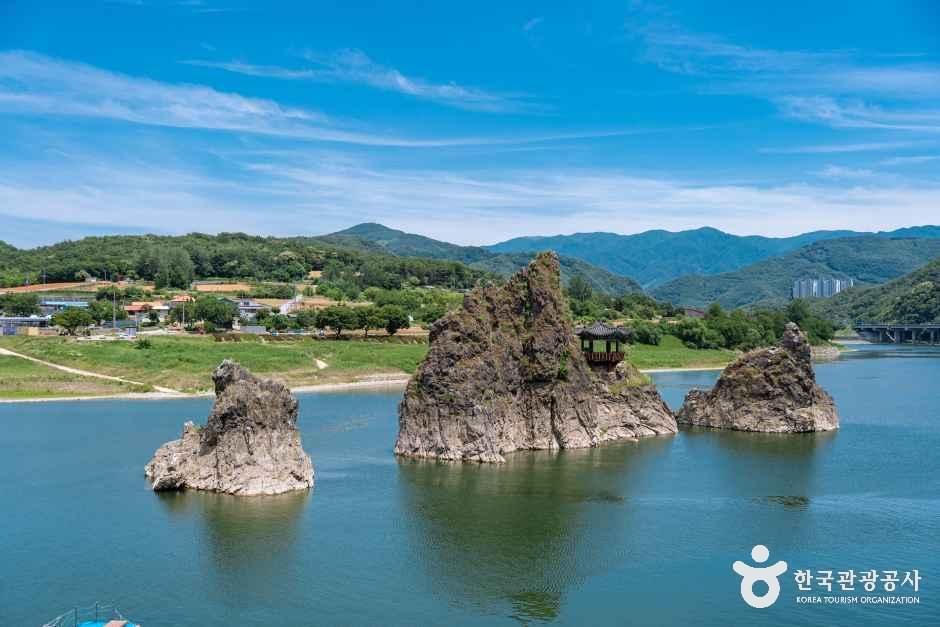
Dodamsambong Three Stone Peaks
도담삼봉Dodamsambong Three Stone Peaks, Danyang, Chungbuk, South Korea
Dodamsambong Three Stone Peaks is the crown jewel of the Eight Scenic Views of Danyang, featuring three limestone karst peaks rising majestically from the emerald waters of the Namhangang River, cl...
Morning (around 09:30-10:00)
Details→
Chungju Lake & Jungangtap Pagoda
충주 중앙탑 및 충주호Chungju Lake & Jungangtap Pagoda, Chungju, Chungbuk, South Korea
Chungju Jungangtap Historic Park and Chungju Lake features the National Treasure No. 6 Seven-Story Stone Pagoda marking the exact geographic center of ancient Unified Silla, paired with scenic lake...
Morning (around 09:30-10:00)
Details→
Woraksan National Park (Yeongbong Peak)
월악산국립공원 (영봉)Woraksan National Park (Yeongbong Peak), Jecheon, Chungbuk, South Korea
Woraksan National Park is celebrated as the "Matterhorn of Korea," featuring Yeongbong Peak (1,097m)—a colossal 150-meter vertical limestone cliff rising above Chungju Lake—along with historic Deok...
Morning (around 09:30-10:00)
Details→