Gyeonggi•Namyangju•Nature•Garden & Forest
Namyangju Water Garden
남양주 물의정원
Powered by Korea Tourism OrganizationAddress: Namyangju Water Garden, Namyangju, Gyeonggi, South Korea (경기도 남양주시 조안면 북한강로 398 (진중리))
Editorial review pending

Namyangju Water Garden representative scenic panoramaZoom
+1More
1 / 6
Namyangju Water Garden representative scenic panorama
Curator's Guide & Overview
Comprehensive Guide1. Historical Origins & Cultural Background
Established in 2012 along the Bukhangang River as part of South Korea's landmark Han River Ecological Restoration Initiative, Namyangju Water Garden spans 484,000 square meters of preserved riparian wetland in Joan-myeon. Designed as a sanctuary where flowing river waters harmonize with human tranquility, the park was planted on former farmland along the Bukhangang bike expressway, evolving into one of the country's most celebrated riverside botanical landscapes.
2. Architectural Highlights & Key Structures
The park's architectural centerpiece is the Baennadeuri-gyo (Boat Excursion Bridge), an elegant arched timber and steel pedestrian suspension bridge spanning an emerald river inlet. Beyond the bridge stretches the vast Heart-Pounding Meadow (Dugeun-dugeun Deulpand), an enormous natural amphitheater of seasonal floral spectacles, framed by centuries-old weeping willows dipping gracefully into mirror-still backwaters, observation docks, and the popular wooden picture-frame photo point.
3. Four Seasons Landscape & Seasonal Visiting Charms
Late spring to early summer (late May through June) is the park's crowning glory, when over 100,000 square meters of rolling riverbank meadows burst into a breathtaking scarlet sea of red poppies (Kkot-yanggwibi). Summer features lush lotus blossom ponds and refreshing cool river breezes beneath shade groves. Autumn (September to October) transforms the entire meadow into a vibrant golden-orange ocean of sulfur cosmos (Hwanghwa Cosmos). Winter blankets the tranquil wetlands and snow-covered willow trees in meditative, serene quiet.
4. Operating Hours & Peak Viewing Times
Namyangju Water Garden is open 24 hours a day, 365 days a year with completely free public access. Photographers and nature lovers flock here at dawn around 06:00 to capture ethereal morning mist rising off the Bukhangang River with Mount Ungilsan in the background. Late afternoon between 16:30 and 18:30 offers radiant sunset illumination reflecting off the broad river waters.
5. Admission Fees & Concessions (Youth/Foreigner Discounts)
Admission to the entire Water Garden, its observation decks, and flower meadows is completely free of charge. Generous public parking lots adjacent to the entrance provide free parking on weekdays, with modest holiday rates (approx. 2,000 to 4,000 KRW for a half-day stay).
7. Barrier-Free Accessibility & Visitor Amenities
Engineered with universal accessibility in mind, the park features wide, level asphalt and compacted dirt pathways free of steps throughout the main waterfront loop. The Baennadeuri-gyo bridge has gentle ramp approaches accessible for wheelchairs and strollers. Tactile paving and accessible public restrooms are situated at the park entrance plaza and near the bike rental pavilion.
8. Recommended Walking Route & Highlights Tour
Recommended 2-Hour Riverside Leisure Loop: Arrive at Ungilsan Station → enter the Water Garden Main Plaza → cross the arched Baennadeuri-gyo wooden bridge over the reed inlet → photograph the sweeping panorama of red poppies (early summer) or golden cosmos (autumn) on the Heart-Pounding Meadow → pose at the giant riverside Picture Frame sculpture → stroll beneath the weeping willow boughs along the river edge → relax on the wooden lounge benches overlooking the Bukhangang waters.
9. Local Food Specialties & Regional Flavors
The Joan-myeon and Ungilsan Station area is famous across the capital region for mouthwatering local dining: feast on tender freshwater charcoal-grilled Eel (Jangeo-gui, seasoned with sweet ginger soy glaze), bubbling spicy catfish stew (Maeuntang), organic wild vegetable bibimbap, and freshly steamed sweet corn.
10. Dietary Options (Vegetarian, Halal & Allergen Guide)
Vegetarian diners will find delightful choices in traditional country restaurants near Ungilsan Station: rustic acorn jelly salad (dotori-muk), potato pancakes (gamjajeon), vegetable kalguksu noodle soup, and mountain herb set menus. Charming open-air cafes along the Bukhangang river drive serve organic herbal infusions, fresh strawberry pastries, and plant-milk coffees with riverfront views.
11. Signature Photo Spots & Golden Hour Lighting
Premier photo spots: looking across the sweeping red poppy fields toward the arched Baennadeuri-gyo bridge during golden hour, framing the calm Bukhangang River and Mount Ungilsan inside the giant rectangular wooden 'Picture Frame' photo installation, and capturing the tranquil reflection of giant weeping willows in the mirror-like morning backwaters.
12. Visitor Etiquette & Cultural Property Regulations
To protect the drinking water reserve of the capital metropolitan area, entering deep river water, fishing, camping, and open cooking fires are strictly prohibited. Stay on designated footpaths and boardwalks to avoid trampling delicate flower meadows. Bicycles must be walked across the pedestrian bridge. Leashed pets are warmly welcomed throughout all outdoor trails.
13. Safety Precautions & 1330 Tourism Hotline Support
A tourist guidance booth is stationed at the entrance plaza with cycling trail maps and first-aid kits. Water safety rescue buoys are positioned along all shoreline embankments. For inquiries or local tourism assistance, call the Namyangju Culture & Tourism Division at 031-590-2799 or dial the 1330 Korea Travel Hotline.
14. Nearby Connected Attractions & Walking Links
The Water Garden is connected via the Bukhangang bicycle trail just 10 minutes south to the historic Dumulmeori confluence in Yangpyeong, and 10 minutes north to the K-Water Bukhangang River Cultural Pavilion and Dasan Heritage Site.
15. Frequently Asked Questions (FAQ)
Q: When is the red poppy season at Water Garden? A: The famous red poppy fields bloom in full glory from late May through mid-June; during this 3-week window, the entire meadow looks like a breathtaking crimson carpet along the blue river.
16. Regional Extended Day Trip Itinerary
Bukhangang Eco-River & Flower Day Tour: Morning train from Seoul to Ungilsan Station → 2-hour walk and photography amidst red poppies or golden cosmos at Water Garden → charcoal-grilled eel or acorn jelly lunch near the station → afternoon bike ride along the Bukhangang trail to Yangpyeong Dumulmeori → evening return to Seoul.
Essential Visitor Facts
Operating Hours
Open 24/7 Year-round; Early Morning Mist and Sunset Golden Hours are Peak Times
Admission / Price
Free Public Entry
Closed Days
Open 365 Days
Best Time to Visit
Morning (around 09:30-10:00)
Transit & Access Directions
From Ungilsan Station (Gyeongui-Jungang Line) Exit 2, walk 5 minutes directly east to the main park entrance
Accessibility & Special Amenities
Wheelchair ramps, tactile paving, accessible restrooms
Location Coordinates
Latitude: 37.5742
Longitude: 127.3125
Discover Themes & Highlights
Key interest areas and cultural highlights:
#namyangju-water-garden#VisitGyeonggi#KoreaTravelAtlas
Community Traveler Reviews0 Reviews
Visitor tips, feedback, and questions submitted by real travelers.
No community reviews submitted yet. Be the first traveler to share your experience!
Connected Cultural Destinations
Handpicked nearby attractions and regional cultural highlights.

Gyeongbokgung Palace
경복궁Gyeongbokgung Palace, Seoul, South Korea
Gyeongbokgung Palace is the grandest royal palace of the Joseon Dynasty, established in 1395 in northern Seoul. Framed by Mount Baegaksan, its majestic grounds encompass Geunjeongjeon Throne Hall, ...
HalalMorning (around 09:30-10:00)
Details→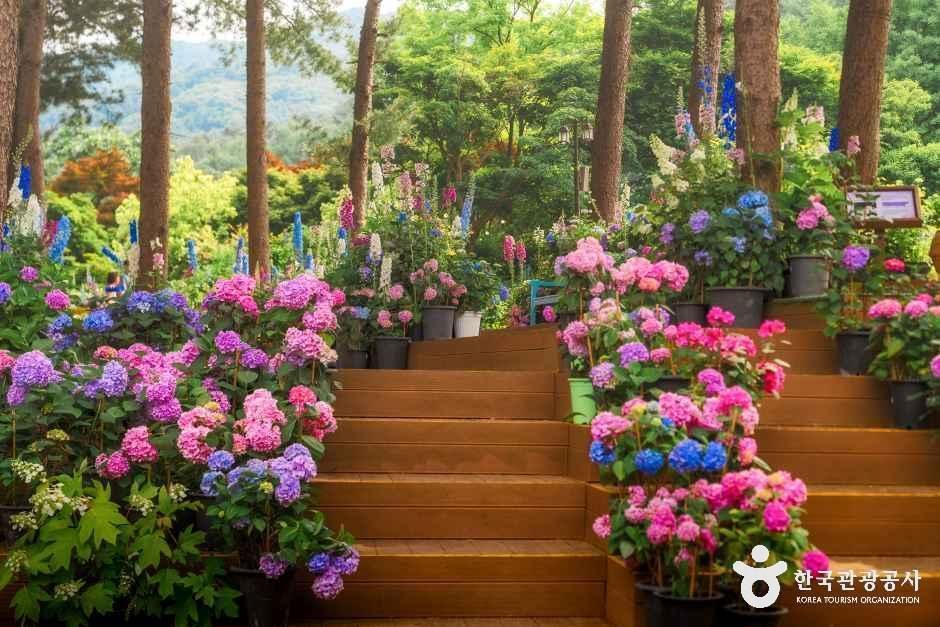
The Garden of Morning Calm
아침고요수목원The Garden of Morning Calm, Gapyeong, Gyeonggi, South Korea
The Garden of Morning Calm is South Korea’s premier classical botanical arboretum nestled beneath Mount Chungnyeong in Gapyeong, featuring over 5,000 plant species across 22 themed gardens, and the...
Morning (around 09:30-10:00)
Details→
Dumulmeori Waterway (Yangpyeong)
양평 두물머리Dumulmeori Waterway (Yangpyeong), Yangpyeong, Gyeonggi, South Korea
Dumulmeori is a legendary scenic headland in Yangpyeong where the Bukhangang (North) and Namhangang (South) Rivers merge into the Han River, acclaimed for its 400-year-old zelkova tree, traditional...
Morning (around 09:30-10:00)
Details→
Nami Island (Chuncheon)
춘천 남이섬Nami Island (Chuncheon), Chuncheon, Gangwon, South Korea
Nami Island is South Korea’s globally acclaimed storybook cultural crescent island in Chuncheon, celebrated worldwide as the romantic birthplace of the Korean Wave (Hallyu) via ‘Winter Sonata’, fea...
Morning (around 09:30-10:00)
Details→