Gyeonggi•Pocheon•Nature•Lake & Reservoir
Pocheon Art Valley & Emerald Lake
포천아트밸리
Powered by Korea Tourism OrganizationAddress: Pocheon Art Valley & Emerald Lake, Pocheon, Gyeonggi, South Korea (경기도 포천시 신북면 아트밸리로 234 (기지리))
Editorial review pending
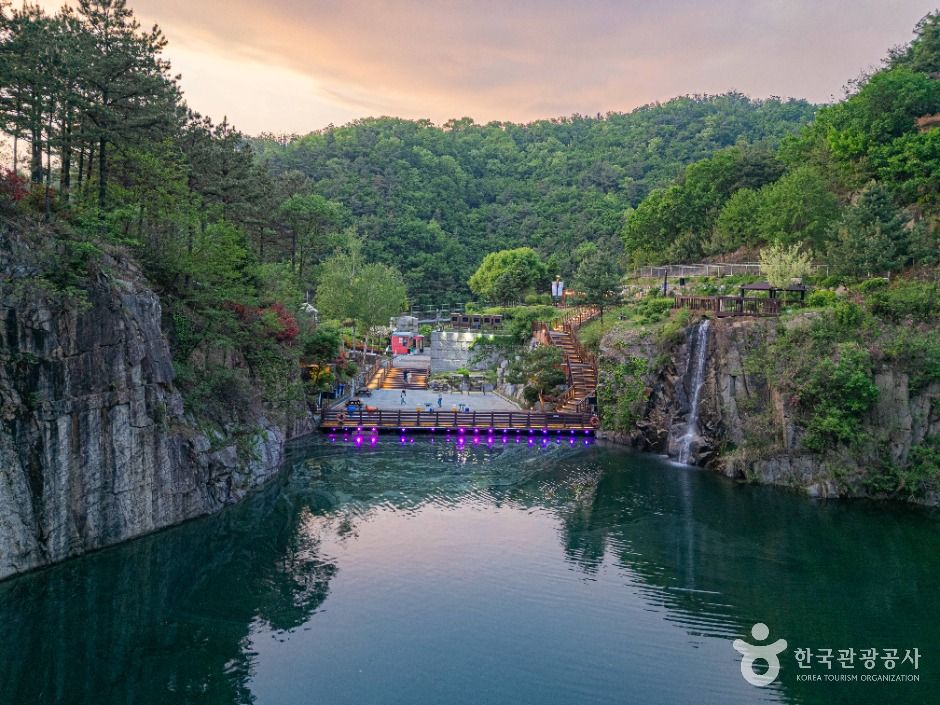
Pocheon Art Valley & Emerald Lake representative scenic panoramaZoom


+1More
1 / 6
Pocheon Art Valley & Emerald Lake representative scenic panorama
Curator's Guide & Overview
Comprehensive Guide1. Historical Origins & Cultural Background
From the late 1960s through the 1990s, the granite quarries of Mount Cheonju in Pocheon were among the most productive in Korea, producing high-grade Pocheon granite used in iconic national monuments such as the Blue House (Cheongwadae), the National Assembly Building, and Incheon International Airport. When mining ceased in the late 1990s, the scarred mountainside was abandoned as an industrial eyesore until 2003, when the City of Pocheon pioneered South Korea's first environmental reclamation project, transforming the quarry into an internationally acclaimed 150,000-square-meter eco-art oasis in 2009.
2. Architectural Highlights & Key Structures
The showpiece of the valley is Cheonjuho (Heavenly Pillar Lake), a breathtaking 20-meter-deep canyon lake naturally filled by pristine mountain springwater and rainwater, enclosed by 50-meter-tall sheer cut-granite cliffs. The site features an electric yellow monorail, the Sky Garden observation platform, a 20-meter vertical spiral staircase overlooking the gorge, an outdoor sculpture park displaying contemporary works carved from local granite, and an astronomical science museum. It achieved international fame as the filming site for hit K-dramas including 'Moon Lovers: Scarlet Heart Ryeo', 'Legend of the Blue Sea', and 'A Korean Odyssey'.
3. Four Seasons Landscape & Seasonal Visiting Charms
Spring brings pink azaleas blooming along cliff ledges and fresh green alpine vegetation framing the emerald lake. Summer offers cool mountain valley breezes, outdoor amphitheater concerts under vertical cliffs, and dazzling projection mapping light shows. Autumn paints the forest surrounding the canyon in brilliant gold and crimson, creating breathtaking color contrasts against the white granite walls. Winter transforms the lake into a pristine sheet of turquoise ice, with frozen waterfalls cascading down the sheer rock face.
4. Operating Hours & Peak Viewing Times
Pocheon Art Valley operates Monday through Thursday from 09:00 to 19:00 (last entry at 18:00) and extends until 21:00 on Fridays, Saturdays, Sundays, and public holidays with spectacular night illuminations. The best visiting time is early afternoon around 14:00, allowing you to ride the monorail up, explore the sculpture meadows, climb the observation deck, and watch the sun cast golden light across Cheonjuho's vertical cliffs before evening media shows commence.
5. Admission Fees & Concessions (Youth/Foreigner Discounts)
Park admission is 5,000 KRW for adults (19+), 3,000 KRW for teenagers, and 1,500 KRW for elementary students. The round-trip monorail ticket is 6,000 KRW for adults, 5,000 KRW for youth, and 4,000 KRW for children (one-way tickets are also available if you prefer walking downhill). The Astronomical Observatory is free with park admission. Overseas credit cards are accepted at all kiosks.
7. Barrier-Free Accessibility & Visitor Amenities
The bright yellow electric monorail provides full universal barrier-free access from the ticket plaza directly to the summit station near Cheonjuho Lake and the Astronomical Museum. Paved, step-free ramps link the monorail terminal with the primary lake viewing terrace and the outdoor sculpture garden. The steep 20-meter Doleum Staircase is optional and bypassable via flat paved paths. Wheelchairs and strollers are loaned free at the visitor center.
8. Recommended Walking Route & Highlights Tour
Recommended 2.5-Hour Canyon Art Itinerary: Board the yellow monorail at the base station → arrive at the Upper Terminal and step out onto the Cheonjuho Lake observation deck → take iconic photos of the emerald waters framed by 50-meter vertical granite cliffs → descend the spiral Doleum staircase through the pine forest → explore the outdoor sculpture park featuring 30 granite masterpieces → visit the Pocheon Astronomical Science Museum and planetarium → enjoy handmade herb tea or coffee at the summit cafe overlooking the valley → walk down the gentle paved forest trail.
9. Local Food Specialties & Regional Flavors
Pocheon is celebrated throughout Korea for two legendary gastronomic treasures: authentic Pocheon Idong Galbi (tender beef short ribs marinated in a seasoned pear and soy sauce glaze, charcoal-grilled over hot coals) and traditional Pocheon Makgeolli (unpasteurized sparkling rice wine brewed with pristine Mount Baegun springwater). Local restaurants also serve comforting acorn noodle soups and wild mushroom casseroles.
10. Dietary Options (Vegetarian, Halal & Allergen Guide)
Vegetarian diners can enjoy customized plant-forward Korean cuisine in the valley: mountain herb bibimbap (sanchae bibimbap), pan-fried savory potato and buckwheat pancakes, and tofu mushroom stews. The valley cafe serves herbal teas, iced citron beverages, and sweet pastries.
11. Signature Photo Spots & Golden Hour Lighting
Unmissable photo opportunities: standing on the wooden lakeside terrace framing the emerald jade waters of Cheonjuho with the 50-meter cut-granite canyon rising dramatically behind you, capturing the bright yellow monorail gliding up the rocky green hillside, and looking down from the Sky Garden viewing platform onto the entire sculpted quarry basin.
12. Visitor Etiquette & Cultural Property Regulations
Throwing stones, coins, or litter into Cheonjuho is strictly prohibited to protect the 1st-grade springwater habitat supporting endangered fresh-water salamanders. Climbing granite rock faces or leaning over safety railings is dangerous and strictly banned. Drones are prohibited without prior permits. Leashed dogs are permitted on outdoor paths but excluded from the monorail and indoor science halls.
13. Safety Precautions & 1330 Tourism Hotline Support
The Visitor Information Center at the lower plaza is staffed with first-aid personnel, automated external defibrillators (AEDs), and lost-and-found support. Emergency contact phones are installed across the canyon decks. For assistance or translation, contact the Art Valley Office at 031-538-3485 or dial the 1330 Korea Travel Hotline.
14. Nearby Connected Attractions & Walking Links
Pocheon Art Valley pairs effortlessly with the famous Herb Island botanical park located just 20 minutes west, and the pristine waters of Sanjeong Lake situated 30 minutes north, forming the ultimate northern Gyeonggi excursion.
15. Frequently Asked Questions (FAQ)
Q: What makes Cheonjuho lake look so emerald green? A: The lake was formed by pure natural underground springwater and rainwater filling the 20-meter deep granite basin; the clean water, combined with light reflecting off the white quartz-rich granite bottom and surrounding green vegetation, creates its natural emerald gemstone hue.
16. Regional Extended Day Trip Itinerary
Pocheon Nature & Industrial Heritage Day Route: Morning departure from Seoul to Pocheon Art Valley → monorail ride and Cheonjuho emerald lake exploration → lunch of authentic Pocheon Idong Galbi barbecue → afternoon visit to Herb Island pink sand and botanical greenhouses → return to Seoul.
Essential Visitor Facts
Operating Hours
Mon - Thu 09:00 - 19:00 (Last entry 18:00); Fri - Sun & Holidays 09:00 - 21:00 (Last entry 19:30); Monorail operates concurrently
Admission / Price
Adults 5,000 KRW, Youth 3,000 KRW, Children 1,500 KRW; Monorail Round-trip: Adults 6,000 KRW, Youth 5,000 KRW, Children 4,000 KRW
Closed Days
Open 365 Days
Best Time to Visit
Morning (around 09:30-10:00)
Transit & Access Directions
From Seoul Subway Line 1 Uijeongbu Station take Bus 138 or 138-6 to Pocheon City Hall, transfer to Bus 73 to Pocheon Art Valley stop (approx. 70 mins)
Accessibility & Special Amenities
Wheelchair ramps, tactile paving, accessible restrooms
Location Coordinates
Latitude: 37.9252
Longitude: 127.2345
Discover Themes & Highlights
Key interest areas and cultural highlights:
#pocheon-art-valley#VisitGyeonggi#KoreaTravelAtlas
Community Traveler Reviews0 Reviews
Visitor tips, feedback, and questions submitted by real travelers.
No community reviews submitted yet. Be the first traveler to share your experience!
Connected Cultural Destinations
Handpicked nearby attractions and regional cultural highlights.

Gyeongbokgung Palace
경복궁Gyeongbokgung Palace, Seoul, South Korea
Gyeongbokgung Palace is the grandest royal palace of the Joseon Dynasty, established in 1395 in northern Seoul. Framed by Mount Baegaksan, its majestic grounds encompass Geunjeongjeon Throne Hall, ...
HalalMorning (around 09:30-10:00)
Details→
The Garden of Morning Calm
아침고요수목원The Garden of Morning Calm, Gapyeong, Gyeonggi, South Korea
The Garden of Morning Calm is South Korea’s premier classical botanical arboretum nestled beneath Mount Chungnyeong in Gapyeong, featuring over 5,000 plant species across 22 themed gardens, and the...
Morning (around 09:30-10:00)
Details→
Herb Island & Pink Sand
포천 허브아일랜드Herb Island & Pink Sand, Pocheon, Gyeonggi, South Korea
Pocheon Herb Island is South Korea’s largest Mediterranean botanical theme park spanning 330,000 square meters, featuring a fairy-tale Santa Village illuminated by millions of LED lights, pink sand...
Morning (around 09:30-10:00)
Details→
Nami Island (Chuncheon)
춘천 남이섬Nami Island (Chuncheon), Chuncheon, Gangwon, South Korea
Nami Island is South Korea’s globally acclaimed storybook cultural crescent island in Chuncheon, celebrated worldwide as the romantic birthplace of the Korean Wave (Hallyu) via ‘Winter Sonata’, fea...
Morning (around 09:30-10:00)
Details→