Gyeongbuk•Bonghwa•Nature•Garden & Forest
Bonghwa Baekdudaegan National Arboretum
국립백두대간수목원 (호랑이숲)
Powered by Korea Tourism OrganizationAddress: Bonghwa Baekdudaegan National Arboretum, Bonghwa, Gyeongbuk, South Korea (경상북도 봉화군 춘양면 문수로 24-90 (서벽리 국립백두대간수목원))
Editorial review pending

Bonghwa Baekdudaegan National Arboretum representative scenic panorama
1 / 1
Bonghwa Baekdudaegan National Arboretum representative scenic panorama
Curator's Guide & Overview
Comprehensive Guide1. Historical Origins & Cultural Background
Baekdudaegan National Arboretum, sprawling across 5,179 hectares (over 12,800 acres) of untouched subalpine valleys in Bonghwa County, is Asia’s largest botanical arboretum and the second largest in the world. Engineered to conserve and research the rich biodiversity of the Baekdudaegan mountain range—the grand ecological backbone running the entire length of the Korean Peninsula—the arboretum houses over 3,800 rare, endangered, and subalpine plant species across 37 specialized themed gardens, including alpine rockeries, subalpine rhododendron trails, and pristine bog wetlands.
3. Four Seasons Landscape & Seasonal Visiting Charms
The arboretum showcases pristine alpine nature through the four seasons. Spring (April to May) awakens the subalpine slopes in blooming wild rhododendrons, alpine tulips, and fragrant azaleas, with cool mountain breezes rushing down from Mount Munsubong. Summer (June to August) fills the wetlands with blooming water lilies, floating reeds, and cool forest shade. Autumn (September to November) is a sensory wonderland: brilliant golden larch trees, fiery red maples, and purple Siberian asters blanket the rolling hills under deep blue skies. Winter transforms the vast pine forests into a real Siberian winter wonderland, where heavy snow blankets the Tiger Forest and the magnificent tigers pace majestically through the snowdrifts.
4. Operating Hours & Peak Viewing Times
The arboretum is open Tuesday through Sunday from 09:00 to 18:00 (March to October) and 09:00 to 17:00 (November to February); closed Mondays (or the following weekday if Monday is a national holiday). Electric arboretum trams depart from the Visitor Center every 15 to 20 minutes, transporting visitors smoothly to the Entry Plaza and the Tiger Forest trailhead. Because of the sheer scale of the grounds, allocate at least 3 to 4 hours to thoroughly experience the visitor exhibits, ride the tram, walk through the Tiger Forest, and explore the alpine rock gardens.
5. Admission Fees & Concessions (Youth/Foreigner Discounts)
Admission is 5,000 KRW for adults (ages 19-64), 4,000 KRW for youth (ages 13-18), and 3,000 KRW for children (ages 7-12). Free entry is granted to infants under 6, seniors aged 65 and older, and disabled visitors with ID. Tram rides cost 2,000 KRW for adults and 1,000 KRW for children one-way. Sprawling municipal parking outside the Visitor Center is completely free of charge.
6. Public Transit & Subway Exit Directions
From Seoul Cheongnyangni Station, board the KTX-Eum train to KTX Yeongju Station (approx. 1 hour 40 minutes). From Yeongju, take an intercity bus or local train (Mugunghwa) to Chunyang Station or Chunyang Bus Terminal (approx. 35 minutes). From Chunyang Terminal, local rural buses depart directly for the National Arboretum roughly every hour (taking approx. 20 minutes). If driving, take the Jungang Expressway to Yeongju IC, followed by a scenic 45-minute drive past pine forests on Route 36 and 915.
7. Barrier-Free Accessibility & Visitor Amenities
The arboretum is an internationally celebrated model of accessible, barrier-free eco-tourism. The massive Visitor Center, all indoor exhibition halls, and connecting boardwalks feature smooth ramps, automated doors, and elevators. The open-air electric trams are equipped with low-floor wheelchair access ramps and dedicated secure seating. The trail connecting the tram station to the Tiger Forest viewing pavilion is a wide, smoothly graded wooden boardwalk designed for easy transit by manual wheelchairs and strollers. Free wheelchairs and strollers can be borrowed at the main information center. Multiple accessible restrooms are located at the Visitor Center and along the tram loop.
8. Recommended Walking Route & Highlights Tour
Recommended 3.5-Hour Tiger Forest & Alpine Ecology Circuit: Arrive at the Visitor Center and tour the Seed Vault exhibition hall to learn about wild plant conservation → Board the electric tram at the Departure Station for a scenic ride across the wildflower meadows → Disembark at the Tram Terminal and step onto the wooden boardwalk winding through the tall Geumgangsong red pine forest → Reach the Tiger Forest observation deck to watch the magnificent Siberian tigers pacing, bathing in natural pools, or resting beneath pine canopies → Walk down through the Alpine Rock Garden featuring rare subalpine flora from Korea’s highest peaks → Stroll past the Mirror Pond and Rainbow Garden → Browse the botanical gift shop at the Visitor Center → Savor a lunch of Bonghwa pine mushroom rice in the village.
9. Local Food Specialties & Regional Flavors
Bonghwa is renowned as one of South Korea’s cleanest, most pristine mountain foraging counties. Savor Bonghwa Songi Dolsot-bap (hot stone pot rice steamed with fragrant, prized wild pine mushrooms harvested from the surrounding red pine forests). Indulge in Bonghwa Hanwoo (exquisite native beef from cattle raised on clean alpine pastures and medicinal pine bark), Dwaeji-sutbul-gui (pork seasoned with sweet soy sauce and grilled over charcoal in nearby Bongseong village), and refreshing Bonghwa Corn Makgeolli.
10. Dietary Options (Vegetarian, Halal & Allergen Guide)
Vegetarians will find the mountain dining in Bonghwa utterly heavenly: village restaurants specialize in rich wild mushroom stews, mountain thistle rice (Gondre-bap), seasoned deodeok root platters, homemade bean curd stews, and fresh acorn jelly. Local farm shops offer dried mountain herbs and wild berry teas. Halal and pescatarian travelers can savor wild pine mushroom hot pots, freshwater river fish stews (Minmul Maeuntang), and mushroom bibimbap prepared without pork or beef derivatives.
11. Signature Photo Spots & Golden Hour Lighting
Iconic photographic perspectives: capturing a close-up portrait of the majestic Siberian tiger with its piercing amber eyes standing atop a granite rock in the natural Tiger Forest; looking out across the vast Alpine Rock Garden with the deep blue ridges of Mount Munsubong rolling into the distance; the ethereal reflection of the modern glass visitor pavilions across the mirror-smooth surface of the reflection pond; and golden larch needles carpeting the wooden forest boardwalks in autumn.
12. Visitor Etiquette & Cultural Property Regulations
Arboretum safety rules: at the Tiger Forest, never throw food, stones, or objects into the enclosure, do not make loud screeching noises, and never use flash photography, which can agitate the tigers. Remain on designated wooden boardwalks to avoid damaging fragile subalpine flora. Do not pick wildflowers, collect seeds, or break branches. The arboretum is a strictly protected forest sanctuary; smoking and open flames are forbidden everywhere. Pets are strictly prohibited to protect the wildlife and zoo animals.
13. Safety Precautions & 1330 Tourism Hotline Support
Wear comfortable walking sneakers, as exploring the vast 37 themed gardens involves extensive walking over boardwalks and forest paths. The arboretum is situated in a high mountain basin where weather can change rapidly; bring a light windbreaker and an umbrella or sunhat. Note the tram return schedule carefully to manage your transit. For daily tiger feeding times, tram updates, and educational programs, contact the Arboretum Visitor Center at 054-679-1000 or call 1330.
14. Nearby Connected Attractions & Walking Links
Nearby attractions: visit the UNESCO World Heritage mountain temple of Yeongju Buseoksa (PLACE-GYEONGBUK-010) located just 25 minutes west across the mountain pass, explore historic Daksil Folk Village in Bonghwa town, experience the dramatic white water canyoning at Cheongnyangsan Provincial Park, or ride the picturesque V-Train (Valley Train) along the scenic Nakdong River gorges from Buncheon Santa Village.
15. Frequently Asked Questions (FAQ)
Q: What is the difference between the Seed Vault and the Seed Bank? A: The arboretum operates both: the 'Seed Bank' stores plant seeds for ongoing scientific research and distribution, while the 'Seed Vault' is a top-secret, fortified underground doomsday bunker (located 46m deep) designed to permanently preserve wild plant seeds forever against global catastrophes, never to be opened except in the event of planetary extinction. Q: Why are the tigers kept in Bonghwa? A: Siberian tigers (the same subspecies as historical Baekdusan tigers) once roamed the entire Baekdudaegan mountain range before being hunted to local extinction during the early 20th century; the Tiger Forest was created to restore this majestic predator to its natural habitat in an expansive, humane forest setting.
16. Regional Extended Day Trip Itinerary
Bonghwa National Arboretum & Alpine Wildlife Day Tour: Morning KTX-Eum from Seoul to Yeongju Station → Intercity bus or taxi to Baekdudaegan National Arboretum → Tour the Seed Vault interactive exhibition → Ride the eco-friendly tram to the Tiger Forest → Observe the majestic Siberian tigers in their natural pine forest habitat → Walk through the Alpine Rock Garden and subalpine wetlands → Lunch at an entrance restaurant enjoying fragrant Bonghwa Songi (pine mushroom) stone pot rice and Hanwoo bulgogi → Afternoon scenic drive to nearby UNESCO Yeongju Buseoksa Temple → Return to Seoul via KTX-Eum Yeongju Station.
Essential Visitor Facts
Operating Hours
Open Tuesday to Sunday 09:00 - 18:00 (summer, March to October) / 09:00 - 17:00 (winter, November to February); closed Mondays; tram runs every 15-20 minutes.
Admission / Price
General Admission: Adults 5,000 KRW, Youth 4,000 KRW, Children 3,000 KRW; Free entry for children under 6 and seniors aged 65+; Arboretum Tram: Adults 2,000 KRW, Children 1,000 KRW; Free parking.
Closed Days
Open 365 Days
Best Time to Visit
Morning (around 09:30-10:00)
Transit & Access Directions
From Seoul Cheongnyangni Station, take the KTX-Eum to KTX Yeongju Station (approx. 1 hour 40 minutes), then take local bus or taxi to Chunyang Bus Terminal and transfer to the Arboretum shuttle bus (approx. 20 minutes from Chunyang). Alternatively, take a direct intercity bus from Dong Seoul to Chunyang.
Accessibility & Special Amenities
Wheelchair ramps, tactile paving, accessible restrooms
Location Coordinates
Latitude: 37.0125
Longitude: 128.8125
Discover Themes & Highlights
Key interest areas and cultural highlights:
#bonghwa-baekdudaegan-arboretum#VisitGyeongbuk#KoreaTravelAtlas
Community Traveler Reviews0 Reviews
Visitor tips, feedback, and questions submitted by real travelers.
No community reviews submitted yet. Be the first traveler to share your experience!
Connected Cultural Destinations
Handpicked nearby attractions and regional cultural highlights.

Seoraksan National Park (Sinheungsa)
설악산국립공원 (신흥사)1055 Seoraksan-ro, Sokcho-si, Gangwon-do
Seoraksan National Park, sprawling across Sokcho, Inje, and Yangyang in Gangwon-do, is a UNESCO Biosphere Reserve celebrated for its jagged granite spires, pristine mountain cascades, and rich biod...
Morning (around 09:30-10:00)
Details→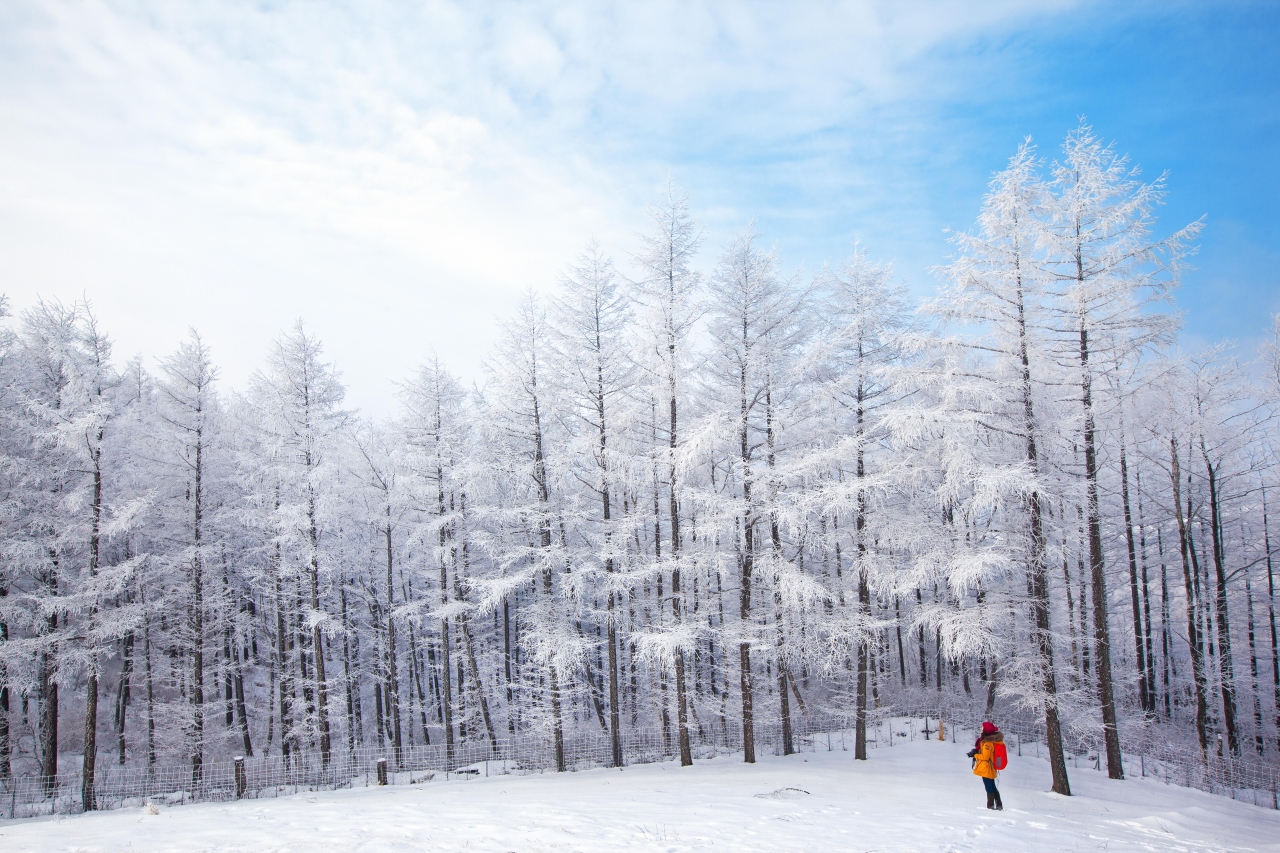
Daegwallyeong Highland Sheep Farm
대관령 양떼목장Daegwallyeong Highland Sheep Farm, Pyeongchang, Gangwon, South Korea
Daegwallyeong Highland Sheep Farm is South Korea’s iconic alpine pastoral paradise, situated at an altitude of 850 meters on the Baekdudaegan mountain ridge in Pyeongchang, featuring rolling green ...
Morning (around 09:30-10:00)
Details→
Anmyeondo Recreational Pine Forest
안면도 자연휴양림Anmyeondo Recreational Pine Forest, Taean, Chungnam, South Korea
Anmyeondo Recreational Pine Forest is South Korea’s only pure red pine sanctuary, preserving a pristine 430-hectare woodland of majestic, 100-year-old Anmyeonsong pines historically reserved for Jo...
Morning (around 09:30-10:00)
Details→
Yeongju Buseoksa Temple (UNESCO)
영주 부석사 (무량수전)Yeongju Buseoksa Temple (UNESCO), Yeongju, Gyeongbuk, South Korea
Yeongju Buseoksa Temple is a legendary UNESCO World Heritage mountain sanctuary on the slopes of Mount Bonghwangsan, world-renowned for Muryangsujeon (Hall of Infinite Life)—one of South Korea’s ol...
Morning (around 09:30-10:00)
Details→