Skip to content
Korea Travel Atlas

Gangwon-doNational Park

Seoraksan National Park (Outer Seorak)

설악산 국립공원 (외설악)

Visitor information

Address
1 Daecheongbong-gil, Yangyang-gun, Gangwon-doKorean address, to show a taxi driver: 설악산 국립공원 (외설악) · 강원특별자치도 속초시 설악산로 1055 (설악동)
Operating Hours
[Entry hours] Winter 04:00-12:00 / Summer 03:00-14:00
Closed Days
N/A (Open all year round)
Admission / Price
Check the current admission fee before you visit
Parking
Available
Information line
• 1330 Travel Hotline: +82-2-1330 (Korean, English, Japanese, Chinese) • For more info: +82-33-801-0900
Transit & Access Directions
From Sokcho Express Bus Terminal, take City Bus No. 7 or 7-1 directly to Seoraksan Sogongwon terminal stop (approx. 35 mins)
Accessibility & Special Amenities
Sogongwon to Sinheungsa Tongil Daebul statue is flat paved pathway; Cable car boarding platform equipped with elevator.

Hours, closed days, fees and parking come from the Korea Tourism Organization listing, retrieved November 14, 2026. They can change, so confirm before you visit.

Site text last checked:

Curator's Guide & Overview

Historical Origins & Cultural Background

Rising 1,708 meters at Daecheongbong Peak, Seoraksan is South Korea's third-tallest mountain and widely revered as the nation's most breathtaking natural monument. Designated as South Korea's 5th National Park in 1970 and inscribed as a UNESCO Biosphere Reserve in 1982, it protects ancient biodiversity and dramatic alpine scenery. Nestled in the Sogongwon entrance valley lies Sinheungsa Temple, founded in 652 AD by the Buddhist master Jajangyulsa during the Silla Dynasty, representing a historic pillar of Korean Seon (Zen) Buddhist heritage.

Architectural Highlights & Key Structures

The Outer Seorak (Oeseorak) region combines soaring granite peaks with ancient Buddhist sanctuaries. Architectural highlights include the monumental 14.6-meter bronze Tongil Daebul (Unification Great Buddha) weighing 108 tons, the ancient Iljumun Gate and Geungnakbojeon Hall (Treasure) at Sinheungsa, the Seorak Cable Car ascending to the 700-meter rocky fortress ridge of Gwongeumseong, the legendary stream gorge of Biseondae, and the six monumental granite spires of Ulsanbawi Rock.

Four Seasons Landscape & Seasonal Visiting Charms

Spring enlivens the valley with mountain cherry blossoms and flowering dogwoods along crystal creeks. Summer brings lush verdant canopies and cool cascading rapids through Cheonbuldong Valley. Autumn is Seoraksan's world-famous season: in mid-October, fiery red and golden maples sweep down from Daecheongbong Peak through the valleys, creating Korea's most celebrated foliage spectacle. Winter transforms the exposed rock ridges of Gwongeumseong and Ulsanbawi into majestic snowcapped peaks resembling traditional ink paintings.

Public Transit & Subway Exit Directions

From either the Sokcho Intercity Bus Terminal or the Sokcho Express Bus Terminal, board local Sokcho City Bus 7 or 7-1. The bus runs every 15–20 minutes and delivers passengers directly to the final terminal at 'Seoraksan Sogongwon' in approximately 30 to 35 minutes without any transfers.

Barrier-Free Accessibility & Visitor Amenities

The 1.5-kilometer entrance trail from Sogongwon bus stop past the Asian Black Bear monument, the cable car station, the Tongil Daebul Buddha, and Sinheungsa Temple is a level, paved barrier-free pathway accessible to manual and powered wheelchairs and baby strollers. Wheelchairs are loaned free at the visitor center, and the lower cable car terminal features an accessible lift. Note that higher trails (Biseondae and Ulsanbawi) consist of rocky stone stairs inaccessible to wheels.

Recommended Walking Route & Highlights Tour

Sogongwon entrance → Black Bear statue → Board Seorak Cable Car to Gwongeumseong Fortress ridge (1.5 hours round-trip) → Descend and visit Tongil Daebul Buddha → Sinheungsa Temple Gate and Main Hall → Scenic nature walk along the stream to Biseondae Rock (2 hours round-trip, total 3.5 to 4 hours).

Local Food Specialties & Regional Flavors

At the Sogongwon dining village and nearby Sokcho City, travelers can savor wild mountain herb bibimbap (sanchae bibimbap) seasoned with wild sesame oil, crispy potato pancakes (gamjajeon), deep-fried sweet honey chicken bites (Sokcho dakgangjeong), stuffed squid sausage (ojingeo sunda-e), and soft tofu stew prepared with natural East Sea brine at Haksapyeong Tofu Village.

Dietary Options (Vegetarian, Halal & Allergen Guide)

Temple food and mountain herb cuisine around Seoraksan naturally cater to vegetarians and vegans with wild edible greens, tofu hot pots, and acorn jelly salads (dotorimuk). In central Sokcho near the tourist fish market, grilled mackerel and seafood restaurants offer abundant pork-free dining options suitable for Muslim travelers.

Signature Photo Spots & Golden Hour Lighting

The premier photo composition captures the colossal bronze Tongil Daebul Buddha framed against the granite jagged pinnacles of Nojeokbong Peak. At the upper terminus of the cable car on Gwongeumseong ridge, a 360-degree panorama framing the sheer rock face and the distant blue horizon of the East Sea provides dramatic wilderness imagery.

Visitor Etiquette & Cultural Property Regulations

Seoraksan is a strictly preserved national park and UNESCO Biosphere Reserve. Camping, campfires, open-flame cooking, and smoking are strictly illegal everywhere in the park, with heavy fines enforced under the Natural Parks Act. Never stray from marked hiking trails, and leave no trace by packing out all rubbish.

Safety Precautions & 1330 Tourism Hotline Support

Mountain weather shifts rapidly; always pack an extra windbreaker layer and adequate drinking water. Stone pathways along stream beds can be treacherous when damp; wear sturdy hiking boots with rubber grip soles. For emergencies or mountain rescue, contact the Seoraksan National Park Office (033-801-0900) or 119. For 24/7 multilingual interpretation, call 1330.

Nearby Connected Attractions & Walking Links

A 15-minute taxi ride from Sogongwon brings you to Sokcho Beach and the towering 'Sokcho Eye' Ferris wheel. Across the harbor, experience the historic Abai Village hand-pulled raft ferry, the sunrise pavilion at Yeonggeumjeong, and the vibrant night markets of Cheongchoho Lake.

Frequently Asked Questions (FAQ)

  • Q: Can I book Seorak Cable Car tickets in advance online?

A: No, cable car tickets can only be purchased on-site on the day of travel due to unpredictable high-altitude mountain wind conditions.

  • Q: How difficult is the Ulsanbawi hiking course?

A: The 3.8-kilometer trail from Sogongwon takes roughly 2 hours each way; the final 1-kilometer ascent involves more than 800 steep metal and stone stairs, requiring moderate-to-high physical stamina.

Regional Extended Day Trip Itinerary

Morning: Arrive at Seoraksan Sogongwon → Cable car ride to Gwongeumseong ridge → Visit Tongil Daebul Buddha and walk to Biseondae → Lunch: Silken soft tofu meal at Haksapyeong Village → Afternoon: Sokcho Abai Village ferry and squid sundae → Sokcho Tourist Fish Market street food → Evening: Sunset and ocean waves at Yeonggeumjeong Pavilion.
Official description

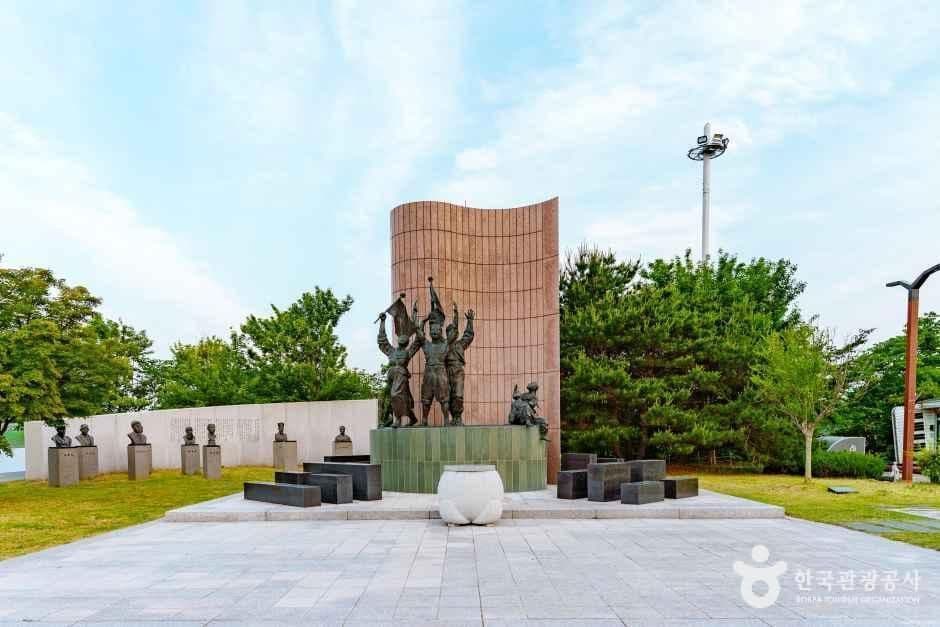
Seoraksan Mountain is renowed for its natural splendors and breathtaking views. It holds the distinction of being Korea's first UNESCO Biosphere Reserve and is also listed on the IUCN Green List. The mountain is divided into Inner Seorak, South Seorak, and Outer Seorak, which includes Daecheongbong peak (1,708 meters above sea level), ranking as the third highest peak in Korea. The area is celebrated for its popular hiking trails, with the sunrise and sunset views from the top being particularly spectacular.

Text: Korea Tourism Organization (EngService2, content 264211), retrieved November 14, 2026. KOGL Type 1

Audio guide script

Narration scripts from the Korea Tourism Organization’s Odii audio guide, shown as text. Retrieved November 14, 2026.

Seoraksan National Park3 parts
  1. Seoraksan National Park

    Seoraksan National Park Do you know the third-highest mountain in South Korea after Hallasan Mountain and Jirisan Mountain? It’s Seoraksan Mountain, located within Seoraksan National Park. The “Seol” (雪) in Seoraksan means “snow,” and it’s said that snow falling around Chuseok (Korean Thanksgiving) doesn’t melt until June. Another explanation is that the mountain’s white rocks resemble snow. Jirisan Mountain is praised for its majestic, earthy ridges; Juwangsan Mountain for its dramatic rock formations and sheer cliffs. Odaesan’s Sogeumgang River for its beautiful valleys with flowing streams. Seoraksan Mountain is said to be a renowned mountain that embodies the distinct features of all these three mountains. For this reason, people often refer to Seoraksan Mountain as the most scenic among mountains. Designated as the fifth national park in Korea, Seoraksan Mountain is beloved for its beauty in all four seasons. In spring, azaleas and royal azaleas are in full bloom, painting the entire mountain pink. In summer, the lush green foliage and the cool canyons create a breathtaking view. In autumn, fiery red fall foliage glows between the boulders, in winter, snow covers the mountain, creating a fairytale-like scene. In addition to its vibrant flora, Seoraksan National Park features numerous valleys like Cheonbuldong Valley and Baekdamgyegok Valley, along with twenty-eight waterfalls, including Biryong Falls and Daeseung Falls. The park also features uniquely shaped rock formations such as Ulsanbawi Rock and Gongnyong Ridge as well as cultural and historical sites like Sinheungsa Temple and Baekdamsa Temple. These elements give Seoraksan Mountain both geographic and cultural significance.

  2. Ulsanbawi Rock of Seoraksan Mountain

    Ulsanbawi Rock of Seoraksan Mountain Seoraksan Mountain is known as the “beauty among mountains” for its stunning views, featuring the famous Ulsanbawi Rock formation. Seoraksan Ulsanbawi Rock showcases uniquely shaped stones arranged like a natural stone backdrop along the mountain slopes. With six peaks and a circumference of about 4 km, Ulsanbawi Rock is a magnificent sight. If you come and see Seoraksan Ulsanbawi Rock, you’ll be amazed by the variety in shape and scale of each rock formation. Ulsanbawi Rock is also famous for its scenery, wrapping around Sokcho like a natural screen and facing Seoraksan Mountain. From the summit, you can enjoy breathtaking views of Daecheongbong Peak, Hwachaen Ridge, and the surrounding landscapes, including the East Sea and Sokcho city at a glance. Seoraksan Ulsanbawi Rock is steeped in legend. One story tells that the Heavenly God gathered mountain peaks at Geumgangsan Mountain to create the most scenic place. However, the large and heavy Ulsanbawi Rock arrived late. Instead of returning to its hometown in Ulsan, it chose to settle on Seoraksan Mountain, where it remains to this day as Ulsanbawi Rock. The hike to Seoraksan Ulsanbawi Rock begins at Sokcho’s Sogongwon Park, passing by Sinheungsa Temple and Heundeulbawi Rock. The round trip takes about four hours and is relatively challenging, so it may be difficult for children or the elderly.

  3. Seoraksan Cable Cars

    Seoraksan Cable Cars In the past, large mountains in Korea were referred to as “Aksan.” Representative examples include Gwanaksan Mountain in Seoul, Wolaksan Mountain in Chungju, and Seoraksan Mountain in Sokcho. Seoraksan Mountain has relatively challenging trails, making it difficult for children and the elderly to hike. Fortunately, there is an ideal way for everyone to enjoy the scenic beauty of Seoraksan Mountain, and it is the Seoraksan cable cars. From the Seoraksan Cable Car station at Sogongwon Park in Seoraksan National Park, you can reach Gwongeumseong Fortress, located 700 meters above sea level, in just about ten minutes. While the cable cars provide a faster alternative to climbing the mountain, only round-trip tickets are available; one-way tickets are not offered. Shall we take the Seoraksan Cable Car up to Gwongeumseong Fortress? After purchasing your round-trip ticket, join the line and board the cable car. Once inside, the scenic views of Seoraksan Mountain unfold before you. Enjoy the harmony of the mountains and rocks, the massive Ulsanbawi Rock with its six peaks, the clear sky, and even the sea in the distance. Time flies as you take in the breathtaking scenery, and before you know it, the cable car comes to a stop. After exiting, head up the stairs toward Gwongeumseong Fortress, where the beacon platform comes into view. At the summit, be amazed by grand ridges and uniquely shaped rock formations on Seoraksan Mountain. The Seoraksan Cable Car offers a convenient way to enjoy the beauty of Seoraksan Mountain, making it popular among visitors. Due to this convenience, many visitors come on weekends, holidays, and especially during the autumn foliage season. It’s a good idea to arrive early during these times, as there may be long queues and waiting times.

Itineraries that include Seoraksan National Park (Outer Seorak)

Community Traveler Reviews

Visitor tips, feedback, and questions submitted by real travelers.

Share Your Experience

5.0 / 5.0

Connected Cultural Destinations

Handpicked nearby attractions and regional cultural highlights.

Gyeongpodae Beach & PavilionKTO photo

NatureBeach & CoastGangneung

Gyeongpodae Beach & Pavilion

강릉 경포대 및 경포해변

Gyeongpodae Beach & Historic Pavilion is Gangneung’s premier coastal sanctuary, pairing a 6-kilometer white sand beach on the East Sea with a celebrated 14th-century wooden pavilion overlooking a n...