Chungbuk•Danyang•Heritage•Buddhist Temple
Guinsa Mountain Temple
구인사
Powered by Korea Tourism OrganizationAddress: Guinsa Mountain Temple, Danyang, Chungbuk, South Korea (충청북도 단양군 영춘면 구인사길 73 (백자리))
Editorial review pending

Guinsa Mountain Temple representative scenic panoramaZoom


+1More
1 / 6
Guinsa Mountain Temple representative scenic panorama
Curator's Guide & Overview
Comprehensive Guide1. Historical Origins & Cultural Background
Nestled deep within a steep lotus-petal-shaped canyon beneath Yeonhwabong Peak of Sobaeksan National Park, Guinsa Temple is the monumental administrative and spiritual headquarters of the Cheontae (Tiantai) Order of Korean Buddhism. Founded in 1945 by Great Patriarch Sangwol Wongak, who built a modest thatched hermitage after years of ascetic meditation, the complex has undergone a miraculous transformation. Today, it stands as South Korea's largest modern Buddhist monastic center, with over 50 multi-tiered concrete and wooden halls rising vertically along the mountain canyon.
2. Architectural Highlights & Key Structures
Unlike traditional Joseon-era low-slung temple layouts, Guinsa is famous for its towering multi-story Buddhist palace architecture that maximizes spatial capacity along the narrow gorge. Highlights include the 5-story Gwangmyeongjeon Hall, the colossal Daejeokgwangjeon (Great Hall of Universal Light) accommodating up to 10,000 worshippers, and the awe-inspiring Daejosajeon (Great Patriarch Hall), an architectural jewel constructed from centuries-old domestic red pine timber and crowned with a triple-eaved roof tiled in shimmering gilded ceramic tiles.
3. Four Seasons Landscape & Seasonal Visiting Charms
Spring brings soft pink mountain cherries and fresh green oak leaves unfurling along the valley walls. Summer fills the canyon with cool mountain breezes, cascading stream water, and the rhythmic drone of thousand-voice Lotus Sutra chanting echoing through the night. Autumn sets the surrounding Sobaeksan ridges ablaze in brilliant crimson and amber foliage framing the colorful eaves. Winter transforms Guinsa into a mythical Himalayan-like citadel, when heavy snow blankets the tiered roofs and red temple lanterns glow brightly in the swirling twilight.
4. Operating Hours & Peak Viewing Times
Guinsa is open 24 hours a day, 365 days a year. Morning prayer begins at 03:30, and the main worship halls remain accessible until 21:00. The temple offers communal vegetarian meals (Gongyang) to all visitors free of charge in its massive dining hall (Hyangjeokdang) at 06:00 (breakfast), 11:30 to 12:30 (lunch), and 18:00 (dinner). Visit between 10:00 and 14:00 to experience the communal lunch ritual and comfortably climb the canyon.
5. Admission Fees & Concessions (Youth/Foreigner Discounts)
Admission to Guinsa Temple and all its sacred halls is completely free of charge. The communal vegetarian meal provided at the temple dining hall is entirely complimentary (donations are welcomed in prayer boxes). Free shuttle electric trams carry mobility-impaired visitors and seniors from the lower bus terminal up to the mid-level temple gate. Public parking at the entrance terminal is 3,000 KRW per day.
6. Public Transit & Subway Exit Directions
Guinsa features remarkable public transit connectivity: direct intercity buses run from Seoul Dong Seoul Bus Terminal directly into the lower Guinsa Bus Terminal (takes approx. 2 hours 50 minutes). Alternatively, take the KTX-Eum from Seoul to KTX Danyang Station (1 hour 15 mins), then board the local Danyang rural bus directly to Guinsa (runs hourly, takes approx. 35 mins). Taxis from Danyang Station take 25 minutes (approx. 28,000 KRW).
7. Barrier-Free Accessibility & Visitor Amenities
The temple is built along a steep mountain valley ascending roughly 1 kilometer uphill. To assist visitors with limited mobility, elderly guests, and wheelchair users, the temple operates complimentary electric shuttle minibuses between the lower terminal and the central Cheonwangmun gate. The main central pathway is asphalted, but steep gradients mean manual wheelchair users require a powered wheelchair or an accompanying assistant. An elevator is installed inside Gwangmyeongjeon to access the upper terrace.
8. Recommended Walking Route & Highlights Tour
Recommended 3-Hour Monastic Pilgrimage: Arrive at Guinsa Lower Terminal → Board the electric tram or walk up past the dramatic One Pillar Gate (Iljumun) → Pass through the Celestial Kings Gate (Cheonwangmun) → Enter Hyangjeokdang Dining Hall at 11:30 for the sacred vegetarian temple meal → Ascend past the massive 5-story Gwangmyeongjeon → Take the internal elevator to the upper sky courtyard → Gaze upon the gilded masterpiece of Daejosajeon Hall framed by towering Sobaeksan cliffs → Meditate peacefully before returning down the valley.
9. Local Food Specialties & Regional Flavors
Guinsa’s vegetarian dining hall (Hyangjeokdang) serves Korea's most celebrated communal temple meals. Prepared daily for thousands of monks and travelers, a typical meal consists of freshly steamed highland white rice, soothing soybean paste soup (Doenjangguk), hand-made mountain cabbage kimchi seasoned without fish sauce, sweet pickled radishes, and seasonal wild greens farmed directly by the temple community. Local village restaurants outside the gate serve Sobaeksan wild mountain herb banquets (Sanchae Jeongsik) and buckwheat pancakes.
10. Dietary Options (Vegetarian, Halal & Allergen Guide)
Guinsa is an absolute paradise for vegetarian and vegan travelers: every single dish served in the temple dining hall is 100% plant-based, using zero animal products, meat, poultry, seafood, garlic, leeks, or onions (in strict accordance with Cheontae Buddhist precepts). Halal travelers can dine here with total confidence, as all food is purely vegetarian.
11. Signature Photo Spots & Golden Hour Lighting
Extraordinary photo angles: standing at the base of the canyon looking up at the tiered concrete and timber temples stacked vertically against the mountainside, capturing the radiant golden dragon sculptures and shimmering gilded roof tiles of Daejosajeon Hall, the symmetrical perspective shot down the central staircase from the top terrace of Gwangmyeongjeon, and thousands of lotus prayer lanterns glowing during evening services.
12. Visitor Etiquette & Cultural Property Regulations
Guinsa is a rigorous practicing monastic headquarters where thousands of monks and lay devotees chant the Lotus Sutra day and night. Maintain silence and respectful decorum. When receiving the complimentary temple meal, take only what you can eat; in Buddhist monastic tradition, leaving even a single grain of rice or drop of soup is considered wasteful. Remove shoes before entering prayer halls and refrain from photographing meditators.
13. Safety Precautions & 1330 Tourism Hotline Support
The uphill walk up the valley is a moderate cardiovascular workout; wear supportive walking shoes and stay hydrated. Winter temperatures in this high mountain canyon drop significantly below zero; dress in warm layers with gloves. In case of visitor inquiries or temple stay reservations, call the Guinsa General Office at 043-423-7100 or contact the 1330 Korea Travel Hotline.
14. Nearby Connected Attractions & Walking Links
Directly across the river lies the Ondal Tourist Park, featuring the filming set of historical K-dramas, the natural limestone Ondal Cave, and the historic 6th-century stone mountain fortress Ondalsanseong offering sweeping views of the Namhangang River.
15. Frequently Asked Questions (FAQ)
Q: Is the temple meal really free for any tourist? A: Yes, Guinsa upholds the Buddhist principle of universal hospitality; anyone—regardless of religion, nationality, or background—is warmly welcomed to join the communal meal in the dining hall. Q: How long does the walk from the bus terminal to the top take? A: Walking at an easy pace up the 1-kilometer valley trail takes approximately 25 to 35 minutes.
16. Regional Extended Day Trip Itinerary
Guinsa Zen & Heritage Day Trip: Morning direct express bus from Dong Seoul to Guinsa Terminal → spiritual ascent through the canyon temples → participate in the traditional vegetarian temple meal at Hyangjeokdang → visit the golden Daejosajeon Hall → explore neighboring Ondal Cave and Fortress → scenic bus back to Danyang or direct bus return to Seoul.
Essential Visitor Facts
Operating Hours
Temple grounds open 24/7 year-round; Main Halls: 04:00 - 21:00; Communal Temple Meals: Breakfast 06:00, Lunch 11:30, Dinner 18:00 (Free for all visitors)
Admission / Price
Free Public Admission (Communal vegetarian temple lunch provided free of charge)
Closed Days
Closed on Mondays/Tuesdays
Best Time to Visit
Morning (around 09:30-10:00)
Transit & Access Directions
From Dong Seoul Bus Terminal, take direct intercity bus to Guinsa Terminal (approx. 2 hrs 50 mins); or from KTX Danyang Station, take City Bus to Guinsa (approx. 35 mins)
Accessibility & Special Amenities
Wheelchair ramps, tactile paving, accessible restrooms
Location Coordinates
Latitude: 37.0312
Longitude: 128.4812
Discover Themes & Highlights
Key interest areas and cultural highlights:
#guinsa-temple-danyang#VisitChungbuk#KoreaTravelAtlas
Community Traveler Reviews0 Reviews
Visitor tips, feedback, and questions submitted by real travelers.
No community reviews submitted yet. Be the first traveler to share your experience!
Connected Cultural Destinations
Handpicked nearby attractions and regional cultural highlights.

Odaesan National Park & Woljeongsa Fir Forest
오대산 월정사 전나무숲길Odaesan National Park & Woljeongsa Fir Forest, Pyeongchang, Gangwon, South Korea
Odaesan National Park and Woljeongsa Temple Fir Forest is a millennium-old Buddhist haven in Pyeongchang, famous for its 1,700 ancient needle fir trees, national treasures including the Octagonal N...
Morning (around 09:30-10:00)
Details→
Danyang Mancheonha Skywalk
단양 만천하스카이워크Danyang Mancheonha Skywalk, Danyang, Chungbuk, South Korea
Danyang Mancheonha Skywalk is an exhilarating cantilevered cliff-perched glass horseshoe observation complex rising 120 meters above the Namhangang River, boasting panoramic vistas of Sobaeksan, hi...
Morning (around 09:30-10:00)
Details→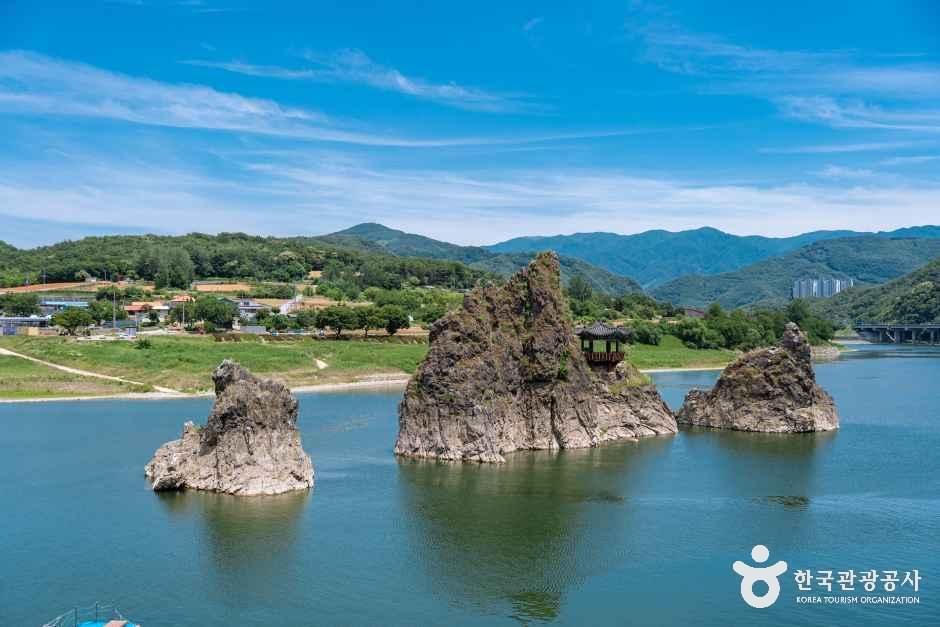
Dodamsambong Three Stone Peaks
도담삼봉Dodamsambong Three Stone Peaks, Danyang, Chungbuk, South Korea
Dodamsambong Three Stone Peaks is the crown jewel of the Eight Scenic Views of Danyang, featuring three limestone karst peaks rising majestically from the emerald waters of the Namhangang River, cl...
Morning (around 09:30-10:00)
Details→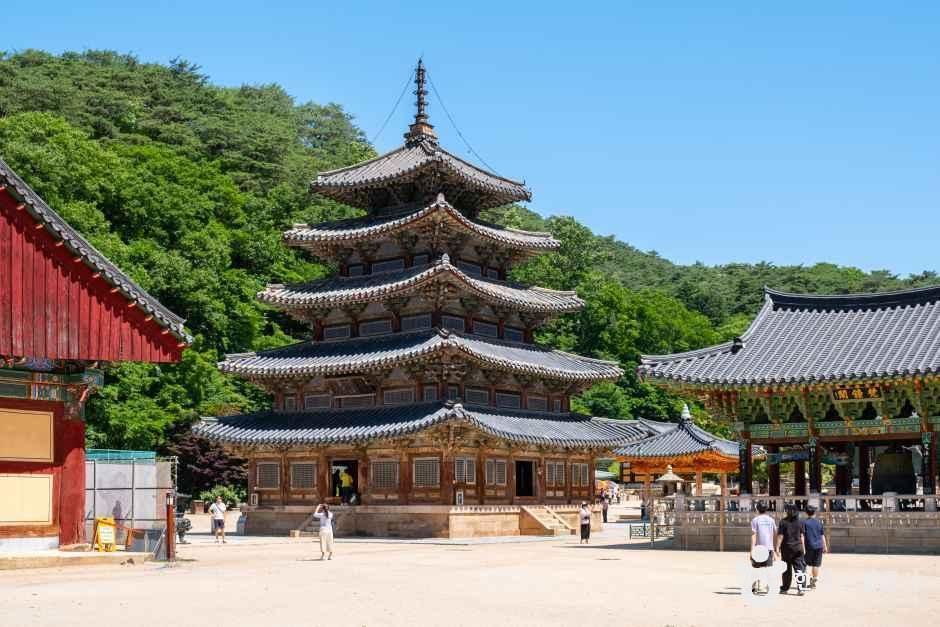
Songnisan National Park & Beopjusa (UNESCO)
속리산 법주사Songnisan National Park & Beopjusa (UNESCO), Boeun, Chungbuk, South Korea
Songnisan National Park and Beopjusa Temple is a UNESCO World Heritage Buddhist sanctuary founded in 553 AD, celebrated for Palsangjeon (Korea’s only surviving 5-story wooden pagoda, National Treas...
Morning (around 09:30-10:00)
Details→