Chungnam•Taean•Nature•Beach & Coast
Taean Coast (Kkotji Sunset Beach)
태안 꽃지해수욕장
Powered by Korea Tourism OrganizationAddress: Taean Coast (Kkotji Sunset Beach), Taean, Chungnam, South Korea (충청남도 태안군 안면읍 꽃지해안로 284 (승언리))
Editorial review pending

Kkotji Beach Halmi and Harabi Rocks coastal sunset view in TaeanZoom
+1More
1 / 6
Kkotji Beach Halmi and Harabi Rocks coastal sunset view in Taean
Curator's Guide & Overview
Comprehensive Guide1. Historical Origins & Cultural Background
Designated as National Scenic Site No. 69, Taean Kkotji Beach is the crown jewel of Taean Coast National Park, stretched along the western coastline of Anmyeondo Island. The name 'Kkotji' translates delightfully to 'Flowery Earth,' derived from the wild sea rugosa roses (Haedanghwa) and sand beach lilies that bloom abundantly along the coastal sand dunes every spring. The beach is world-renowned for its two monolithic granitic sea stacks standing side-by-side in the shallow intertidal zone: Halmi Bawi (Grandmother Rock) and Harabi Bawi (Grandfather Rock).
2. Architectural Highlights & Key Structures
According to deep-rooted Silla Dynasty folklore, during the 9th century, General Seung-eon of Cheonghaejin was posted to Anmyeondo to command maritime naval garrisons. When he departed for sea battle and failed to return, his devoted wife Madam Mido climbed the coastal rocks daily, pining toward the western sea until she turned to stone (Halmi Rock); subsequently, a second colossal boulder rose beside her (Harabi Rock) to keep her eternal vigil. Today, this poignant coastal pair provides the theatrical foreground for South Korea's most photographed oceanic sunset.
3. Four Seasons Landscape & Seasonal Visiting Charms
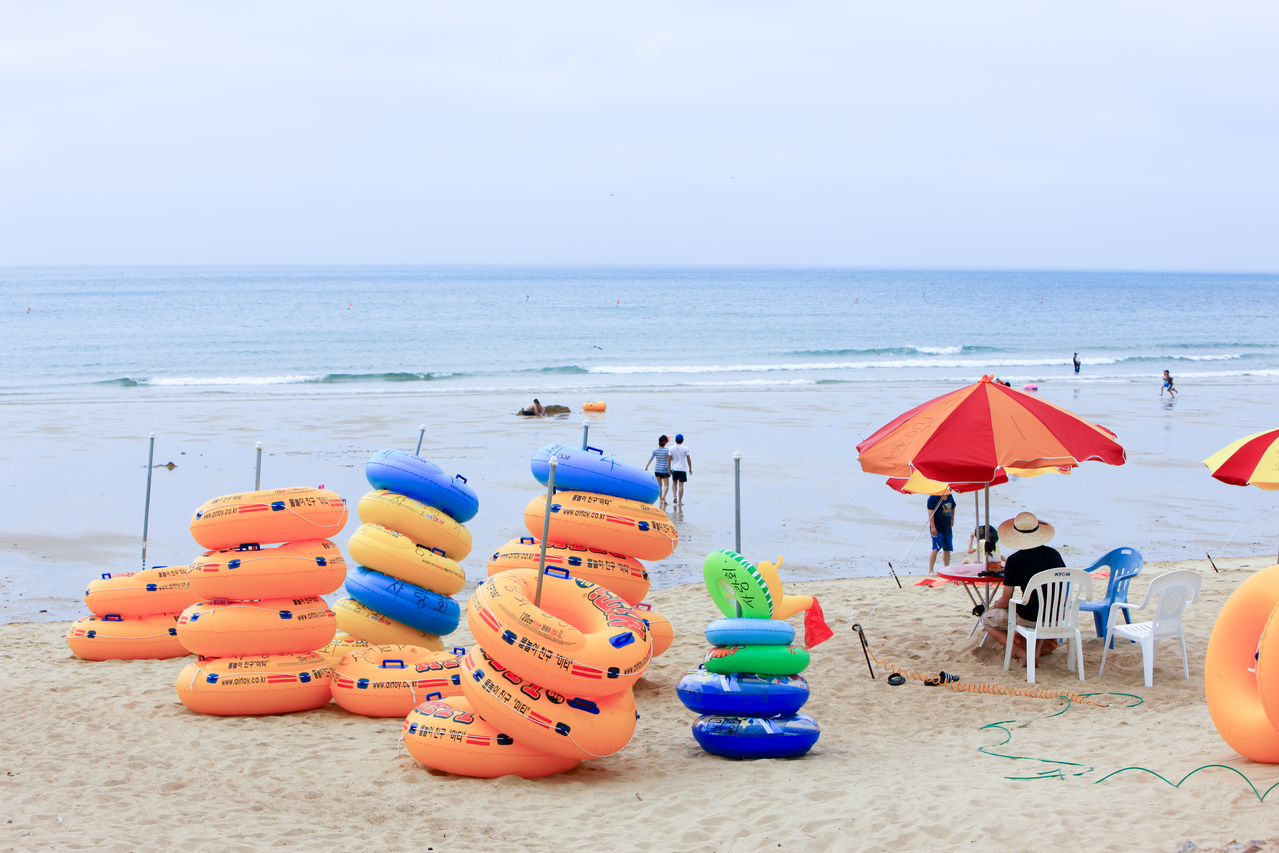
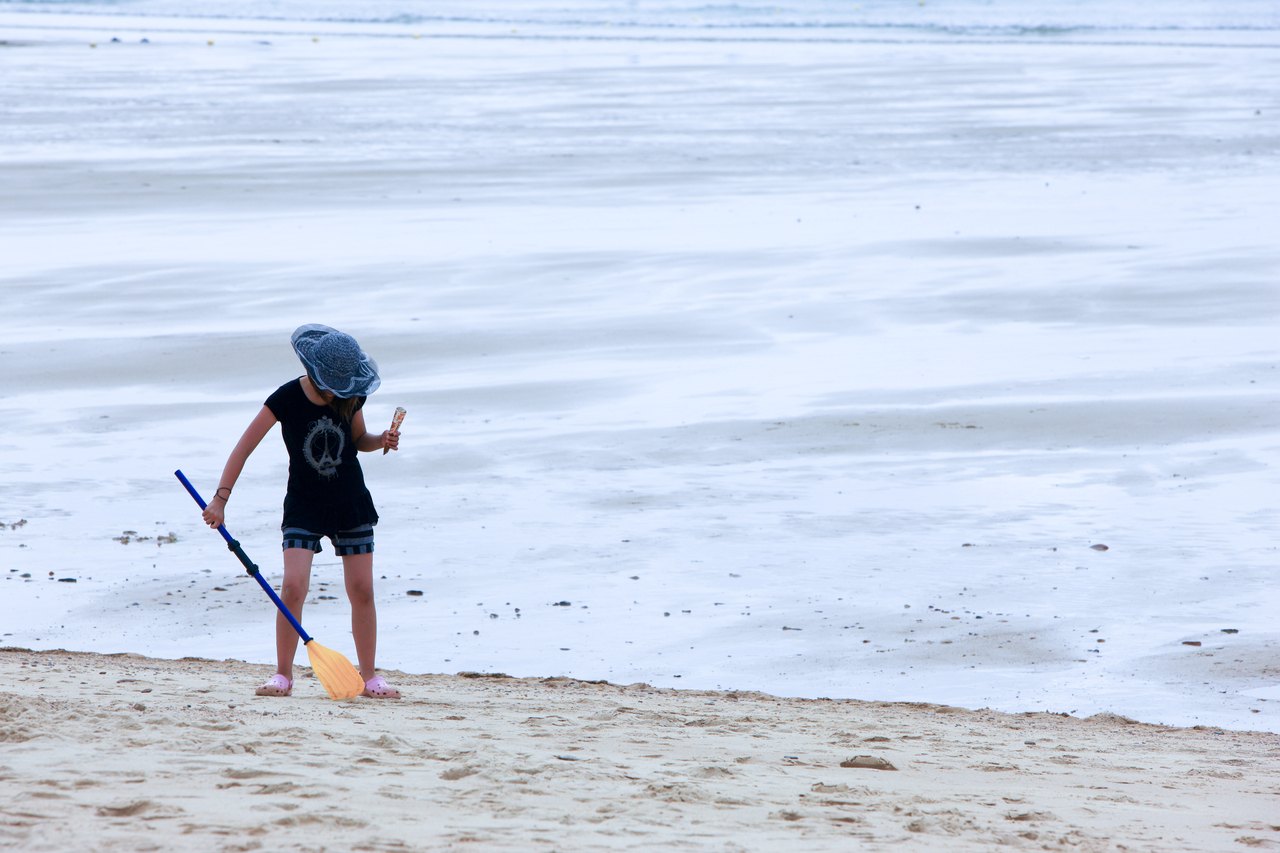
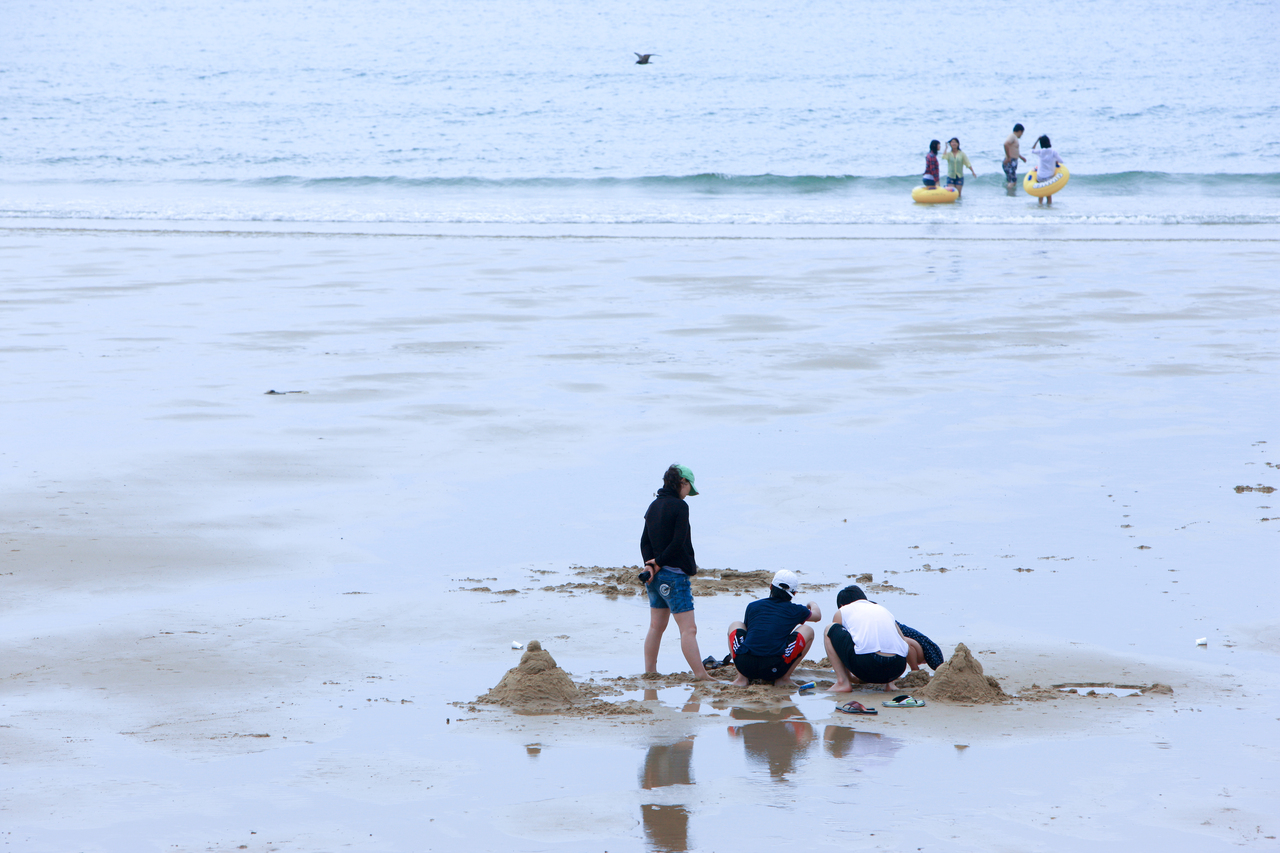
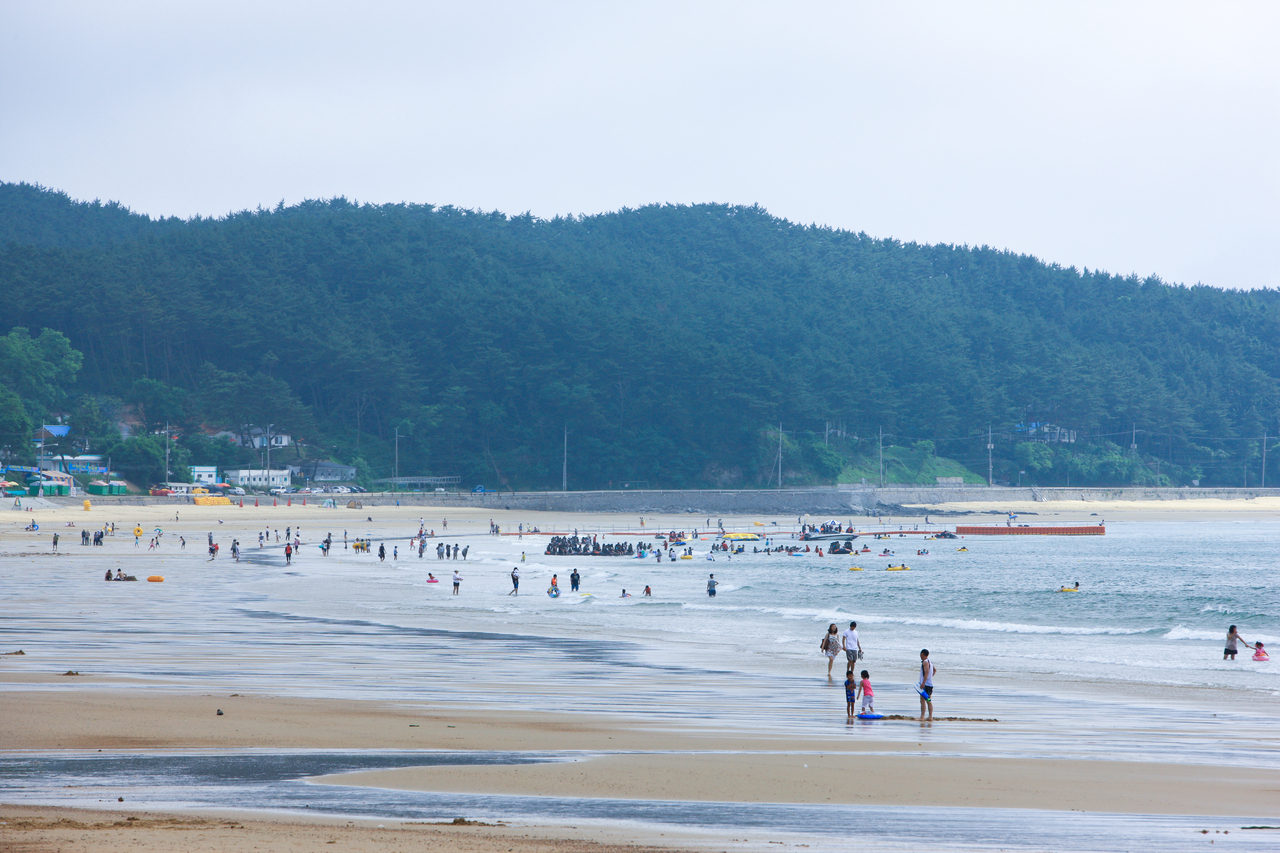
Spring brings the world-famous Taean International Tulip Festival directly behind the dunes at Korea Flower Park, with millions of blooming Dutch tulips contrasting against the blue sea. Summer draws beachgoers from across the nation to swim in gently sloping, child-friendly shallow waters and harvest clams during low tide. Autumn features crisp sea breezes, vibrant crimson sunsets, and migrating shorebirds along the intertidal flats. Winter showcases a dramatic, desolate beauty when sea winds carve ripple patterns in the damp tidal sands and sea spray coats the rocks in ice crystals.
4. Operating Hours & Peak Viewing Times
The beach, sand dunes, and the Sunset Coastal Boardwalk are open 24/7 year-round with free public access. Official guarded swimming operates from early July to late August (09:00 to 18:00). Low tide exposes a wide, sandy land bridge allowing visitors to walk directly between the shore and the base of Grandmother and Grandfather Rocks twice daily. Check the daily Anmyeondo tidal table; arriving 1 hour before scheduled sunset ensures the most spectacular photographic conditions.
5. Admission Fees & Concessions (Youth/Foreigner Discounts)
Entry to Kkotji Beach and walking to the sea stacks is completely free of charge. Admission to adjacent Korea Flower Park varies seasonally (10,000 to 14,000 KRW during major spring tulip and autumn flower exhibitions). Mudflat clam-digging tools (small hoe and bucket) can be rented from beach vendors for 5,000 KRW. Spacious public parking along Kkotji Coastal Road is completely free.
6. Public Transit & Subway Exit Directions
From Seoul, direct intercity express buses depart regularly from Seoul Nambu Terminal or Central City Terminal directly to Anmyeon Bus Terminal (approx. 2 hours 10 minutes). From Anmyeon Terminal, local town buses run to Kkotji Beach in 10 minutes, or a quick taxi ride takes 5 minutes for approximately 5,000 KRW. Travelers can also drive directly via the Boryeong Undersea Tunnel (connecting Boryeong Daecheon Beach to southern Anmyeondo in just 10 minutes).
7. Barrier-Free Accessibility & Visitor Amenities
Kkotji Beach features excellent barrier-free shoreline infrastructure. A wide, smooth wooden promenade (Kkotji Sunset Walk) runs parallel to the beach for over 1 kilometer, equipped with step-free wheelchair ramps leading onto viewing plazas that overlook the sea stacks without descending onto soft sand. Accessible public restrooms and designated disabled parking bays are located directly at the central plaza.
8. Recommended Walking Route & Highlights Tour
Recommended 3-Hour Sunset & Mudflat Experience: Arrive at Kkotji Beach in the afternoon → Walk along the paved Sunset Boardwalk admiring the twin sea stacks → During low tide, walk across the hard-packed sand flat directly to Halmi and Harabi Rocks → Dig for Manila clams (Bajirak) and tiny sea snails in the tide pools → Tour the blooming floral sculptures at adjacent Korea Flower Park → Settle onto the Sunset Deck with a warm drink at 17:30 → Watch the crimson sun melt into the West Sea directly between the two stone pillars.
9. Local Food Specialties & Regional Flavors
Anmyeondo is world-famous for fresh West Sea crab and seafood delicacies. Savor Gejang Baekban (fresh raw blue crab marinated in aged herbal soy sauce or sweet-and-spicy chili paste), Gukmul Gebeom (crab simmered with aged kimchi into a rich stew known as Gekukji), freshly steamed king prawns (Daeha-gui) roasted over coarse sea salt, and piping-hot Bajirak Kalguksu (hand-cut wheat noodles loaded with sweet local clams).
10. Dietary Options (Vegetarian, Halal & Allergen Guide)
Vegetarian travelers can savor wholesome coastal meals: rich Acorn Jelly Salad (Dotorimuk-muchim), crispy Potato and Wild Mountain Herb Pancakes (Gamjajeon / Chwinamul-jeon), and Soybean Paste Stew cooked with local sea vegetables and tofu. Diners along the beach street readily accommodate meat-free noodle and rice requests. Halal travelers will find fresh grilled seafood, crab stews, and clam kalguksu abundant and compliant.
11. Signature Photo Spots & Golden Hour Lighting
Signature photo angles: positioning your camera low along the wet, reflective tidal sands at sunset so the flaming red sun drops directly through the narrow gap between Halmi and Harabi Rocks, wide-angle shots of blooming tulips at Korea Flower Park with the blue ocean in the background, walking the tidal sandbar toward the sea stacks during low tide, and long-exposure dusk shots as twilight turns the sea magenta and violet.
12. Visitor Etiquette & Cultural Property Regulations
Be mindful of the rapidly rising tide; when the sea begins advancing, depart the rocks immediately to avoid getting cut off by incoming waters. Wear sturdy sandals or water shoes when exploring rock pools to prevent cuts from sharp barnacles and oyster shells. Do not litter on the beach or dunes; Taean Coast is a strictly protected National Park. Fireworks are prohibited on public sands.
13. Safety Precautions & 1330 Tourism Hotline Support
West Sea coastal winds can be brisk at dusk, even in summer; carry a light jacket. Check local tidal charts (available on Naver or the Taean County portal) to plan your walking crossing to the rocks. For visitor inquiries and tidal safety, contact the Taean Coast National Park Anmyeon Office at 041-672-9737 or call 1330.
14. Nearby Connected Attractions & Walking Links
Just 5 minutes inland lies the pristine Anmyeondo Natural Recreation Forest, famed for 100-year-old native Korean red pines (Anmyeonsong) once preserved exclusively for Joseon royal shipbuilders. A 10-minute drive south leads to the Boryeong Undersea Tunnel connecting directly to Daecheon Beach.
15. Frequently Asked Questions (FAQ)
Q: When is the best time to see the sunset? A: Sunset occurs between 17:15 in winter and 19:50 in midsummer; arriving 45 minutes prior allows you to watch the full color progression from amber to deep violet. Q: Can I walk all the way to the rocks? A: Yes, twice a day during low tide, the receding waters expose a firm sandy land bridge allowing visitors to walk right up to the base of both rocks.
16. Regional Extended Day Trip Itinerary
Anmyeondo Coastal Sunset Day Tour: Morning bus from Seoul to Anmyeon Terminal → walk through the ancient pines of Anmyeondo Natural Recreation Forest → Gejang and Gekukji crab feast for lunch → explore Korea Flower Park's blooming gardens → afternoon clam digging on Kkotji Beach mudflats → spectacular sunset photography between Halmi and Harabi Rocks → evening return bus to Seoul.
Essential Visitor Facts
Operating Hours
Beach & Coastal Boardwalk open 24/7 year-round (Swimming season July - August: 09:00 - 18:00); Korea Flower Park: 09:00 - 18:00
Admission / Price
Beach & Sea Stacks Free; Korea Flower Park (Seasonal festivals): Adults 10,000 - 14,000 KRW; Public Parking Free
Closed Days
Open 365 Days
Best Time to Visit
Morning (around 09:30-10:00)
Transit & Access Directions
From Seoul Nambu Terminal, take express bus to Anmyeon Bus Terminal (approx. 2 hrs 10 mins), then take City Bus or 5-minute taxi to Kkotji Beach (approx. 5,000 KRW)
Accessibility & Special Amenities
Wheelchair ramps, tactile paving, accessible restrooms
Location Coordinates
Latitude: 36.5052
Longitude: 126.3365
Discover Themes & Highlights
Key interest areas and cultural highlights:
#taean-kkotji-beach#VisitChungnam#KoreaTravelAtlas
Community Traveler Reviews0 Reviews
Visitor tips, feedback, and questions submitted by real travelers.
No community reviews submitted yet. Be the first traveler to share your experience!
Connected Cultural Destinations
Handpicked nearby attractions and regional cultural highlights.

Wolmido Island & Culture Street
월미도 문화의 거리Wolmido Island & Culture Street, Incheon, South Korea
Wolmido Culture Street is a lively coastal promenade overlooking Incheon Harbor, famous for the historic 1950 Incheon Landing site, pulsating amusement rides like the Disco Pang Pang, and ocean sun...
Morning (around 09:30-10:00)
Details→
Boryeong Daecheon Beach (Mud Festival)
보령 대천해수욕장Boryeong Daecheon Beach (Mud Festival), Boryeong, Chungnam, South Korea
Boryeong Daecheon Beach is the West Coast’s grandest sandy playground, stretching 3.5 kilometers with unique pulverized seashell sands, world-famous for the Boryeong Mud Festival, exhilarating sea-...
Morning (around 09:30-10:00)
Details→
Gongju Magoksa Temple (UNESCO)
공주 마곡사Gongju Magoksa Temple (UNESCO), Gongju, Chungnam, South Korea
Gongju Magoksa Temple, an acclaimed UNESCO World Heritage Mountain Monastery (Sansa), is renowned for its thousand-year-old wooden Daeungbojeon, the Taegeuk-shaped stream flowing through its courty...
Morning (around 09:30-10:00)
Details→
Naejangsan National Park (Autumn Foliage)
내장산국립공원Naejangsan National Park (Autumn Foliage), Jeongeup, Jeonbuk, South Korea
Naejangsan National Park is South Korea’s undisputed autumn foliage wonderland, renowned for its vivid crimson baby-leaf maples, the fairy-tale Uhwajeong water pavilion, soaring ridge cable car, an...
Morning (around 09:30-10:00)
Details→