Daejeon•Nature•Garden & Forest
Hanbat Arboretum
한밭수목원
Powered by Korea Tourism OrganizationAddress: Hanbat Arboretum, Daejeon, South Korea (대전광역시 서구 둔산대로 169 (만년동))
Editorial review pending
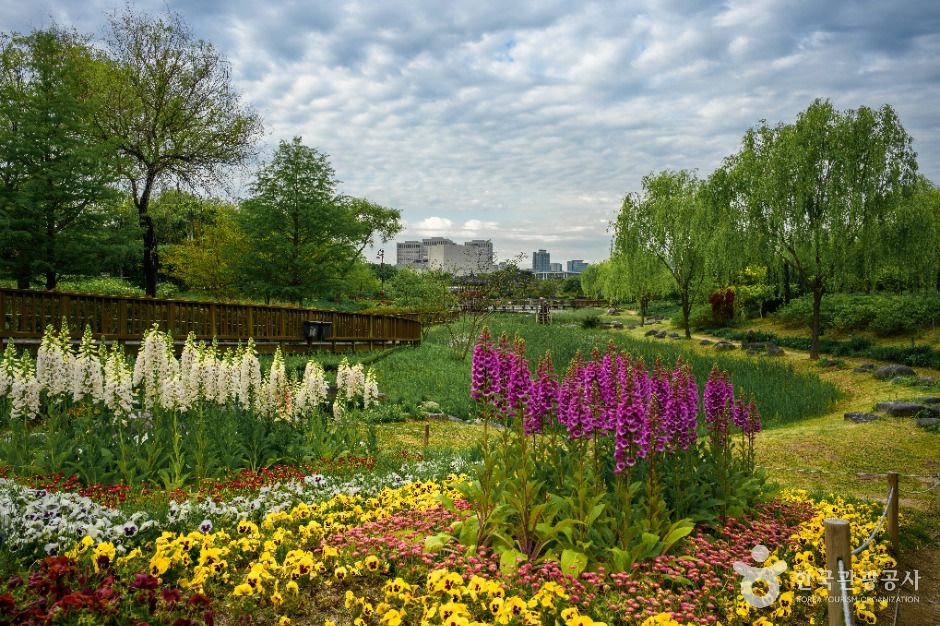
Hanbat Arboretum representative scenic panoramaZoom


+1More
1 / 6
Hanbat Arboretum representative scenic panorama
Curator's Guide & Overview
Comprehensive Guide1. Historical Origins & Cultural Background
Conceived in the late 1990s to connect the green ecological axis between the Daejeon Government Complex and the Gapcheon riverfront, Hanbat Arboretum was systematically created as Korea’s premier urban forestation achievement, opening in phases between 2005 and 2011 across 370,000 square meters of formerly paved exposition parking lots. It stands today as an international model for ecological reclamation and urban biodiversity.
2. Architectural Highlights & Key Structures
The arboretum is divided into three vast precincts: the West Garden (Seowon), focusing on wild deciduous forests, meditation trails, and wetland ecosystems; the East Garden (Dongwon), boasting manicured rose gardens, medicinal herb collections, rock gardens, and an expansive lotus lake; and the modern glass-domed Tropical Botanical Garden cultivating over 450 rare equatorial species, mangrove biomes, and indoor palm waterfalls.
3. Four Seasons Landscape & Seasonal Visiting Charms
Spring brings a breathtaking sea of cherry blossoms, azaleas, and fragrant magnolias across both gardens. Summer features flourishing pink lotus blossoms in the central lake and cool, shaded pine groves. Autumn transforms the forest trails into a radiant canopy of fiery red maples, golden ginkgoes, and dancing silver reeds. Winter offers an exotic warm retreat inside the heated Tropical Greenhouse.
4. Operating Hours & Peak Viewing Times
The outdoor gardens operate from 06:00 to 21:00 (summer) and 08:00 to 19:00 (winter). To allow ongoing botanical maintenance, the West Garden is closed on Tuesdays, and the East Garden and Tropical Greenhouse are closed on Mondays. Visiting between 09:30 and 11:30 offers peaceful birdsong and soft morning lighting across the lotus lake.
5. Admission Fees & Concessions (Youth/Foreigner Discounts)
Admission to Hanbat Arboretum, the East and West Gardens, and the Tropical Botanical Greenhouse is completely free for all domestic and foreign visitors. Bicycle rentals (single, tandem, and family surrey quad-cycles) are available in the central plaza for 3,000 to 10,000 KRW per hour.
6. Public Transit & Subway Exit Directions
Take Daejeon Metro Line 1 to Government Complex Station (Exit 3). Walk 15 minutes straight north through the landscaped Government Complex parkway or board Bus 618 directly to the Daejeon Arts Center / Hanbat Arboretum bus stop.
7. Barrier-Free Accessibility & Visitor Amenities
The entire 37-hectare facility is impeccably barrier-free, featuring flat brick paths, wide wooden wetland boardwalks with wheel bumpers, and gentle ramps throughout all outdoor zones. The Tropical Greenhouse features automated entrance doors, step-free interior ramps, and elevators. Free wheelchair and stroller rentals are provided at the visitor information center.
8. Recommended Walking Route & Highlights Tour
Enter Central Plaza → visit the glass-domed Tropical Botanical Greenhouse → explore the East Garden (Rose Garden, Rock Garden, Lotus Lake wooden bridge) → cross the circular plaza to the West Garden → wander along the forested wetland boardwalk and oak canopy trail → exit toward Expo Bridge and Gapcheon River (approx. 2 to 3 hours).
9. Local Food Specialties & Regional Flavors
The adjacent Mannyeon-dong dining district is celebrated for culinary excellence: bamboo shoot steamed rice sets (daenamu-bap), cold buckwheat noodles (makguksu), charcoal-grilled galbi, and artisanal bakeries lining the southern perimeter.
10. Dietary Options (Vegetarian, Halal & Allergen Guide)
Vegetarian diners will appreciate Mannyeon-dong’s traditional Korean temple food and pure tofu hotpot restaurants. The arboretum's central plaza cafes provide soy milk alternatives and fresh fruit smoothies.
11. Signature Photo Spots & Golden Hour Lighting
Signature photo spots include the curved wooden boardwalk crossing the East Garden lotus pond with the city skyline behind it, the indoor waterfall bridge inside the Tropical Greenhouse surrounded by giant palms, and the golden metasequoia avenue in the West Garden during peak autumn.
12. Visitor Etiquette & Cultural Property Regulations
Preserve the botanical living collection: do not pick flowers, fruits, or branches. Bicycles, roller skates, and e-scooters are prohibited inside the gardens (permitted only in the central outdoor plaza). Tents, hammocks, and cooking are strictly forbidden.
13. Safety Precautions & 1330 Tourism Hotline Support
Emergency call boxes are positioned throughout garden trails. The Forest Education Center houses first aid facilities, and safety rangers patrol on electric carts. Multilingual assistance is accessible via 1330.
14. Nearby Connected Attractions & Walking Links
Daejeon Arts Center, Daejeon Museum of Art, and Lee Ungno Museum border the arboretum's southern plaza, while Expo Science Park lies directly across Expo Bridge to the north.
15. Frequently Asked Questions (FAQ)
Q: Are guided botanical tours available in foreign languages? A: Free docent-guided botanical forest commentary is offered twice daily (10:00 and 14:00) with English translation available upon advance reservation via the official website.
16. Regional Extended Day Trip Itinerary
Morning botanical exploration of Hanbat Arboretum and Tropical Greenhouse → lunch at Mannyeon-dong Tofu Village → afternoon visit to Daejeon Museum of Art and Lee Ungno Museum → sunset across Expo Bridge to Hanbit Tower.
Essential Visitor Facts
Operating Hours
West Garden: 06:00 - 21:00 (Closed Tuesdays); East Garden: 06:00 - 21:00 (Closed Mondays); Tropical Greenhouse: 09:00 - 18:00
Admission / Price
Free Arboretum & Greenhouse Entry
Closed Days
Open 365 Days
Best Time to Visit
Morning (around 09:30-10:00)
Transit & Access Directions
Daejeon Metro Line 1 Government Complex Station Exit 3 (15 min walk north or Bus 618)
Accessibility & Special Amenities
Wheelchair ramps, tactile paving, accessible restrooms
Location Coordinates
Latitude: 36.3686
Longitude: 127.3887
Discover Themes & Highlights
Key interest areas and cultural highlights:
#hanbat-arboretum#VisitDaejeon#KoreaTravelAtlas
Community Traveler Reviews0 Reviews
Visitor tips, feedback, and questions submitted by real travelers.
No community reviews submitted yet. Be the first traveler to share your experience!
Connected Cultural Destinations
Handpicked nearby attractions and regional cultural highlights.

Expo Science Park & Hanbit Tower
엑스포과학공원 한빛탑Expo Science Park & Hanbit Tower, Daejeon, South Korea
Expo Science Park is Daejeon’s landmark innovation sanctuary born from the 1993 World Expo, featuring the iconic 93-meter Hanbit Tower, musical dancing fountains, and night media art.
Morning (around 09:30-10:00)
Details→
Yuseong Hot Springs Open-Air Foot Spa
유성온천 야외족욕체험장Yuseong Hot Springs Open-Air Foot Spa, Daejeon, South Korea
Yuseong Hot Springs is Korea’s famed 1,000-year-old royal alkaline thermal spring, featuring free open-air natural mineral foot baths shaded by weeping willows and fringetree blossoms.
Morning (around 09:30-10:00)
Details→
Sung Sim Dang Heritage Bakery
성심당 본점Sung Sim Dang Heritage Bakery, Daejeon, South Korea
Sung Sim Dang is South Korea’s most legendary heritage bakery founded in 1956, celebrated in the Michelin Green Guide for its iconic Twigim Soboro (fried streusel buns) and Chive Bread.
Morning (around 09:30-10:00)
Details→
National Science Museum
국립중앙과학관National Science Museum, Daejeon, South Korea
The National Science Museum is South Korea’s flagship science institution, spanning 160,000 square meters of interactive aerospace, maglev train exhibits, and ancient Korean technological relics.
Morning (around 09:30-10:00)
Details→