National Museum of Korea
Curator's Guide & Overview
Comprehensive Guide1. Historical Origins & Cultural Background
The National Museum of Korea traces its ancestry to the National Museum opened in 1945 upon liberation, originally housed within the former Government-General building. In 2005, it relocated to its sprawling, state-of-the-art permanent home in Yongsan on reclaimed parkland formerly occupied by the US military base. Housing over 400,000 national treasures and artifacts spanning from the Paleolithic era to the contemporary period, it serves as the ultimate custodian of Korea's 5,000-year civilizational heritage.
2. Architectural Highlights & Key Structures
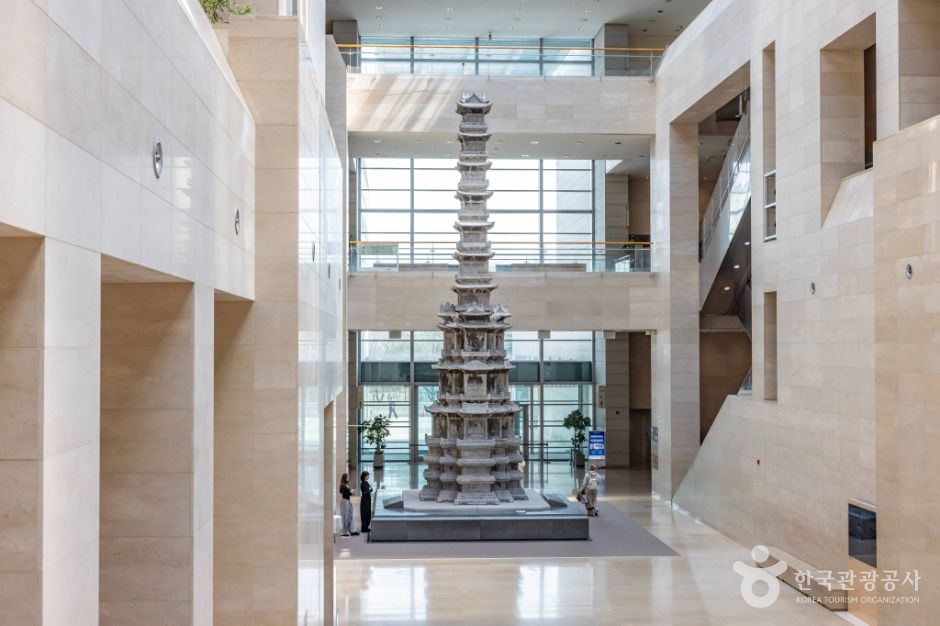
Designed as a modern interpretation of traditional Korean walled fortresses and open courtyards, the building features the celebrated 'Open Plaza' (Yeollin Madang), an open-air central breezeway that frames Namsan Mountain and N Seoul Tower in a breathtaking architectural aperture. Inside, the 'Path to History' runs through the central spine, dominated by the towering Ten-Story Stone Pagoda from Gyeongcheonsa Temple (National Treasure). The internationally acclaimed 'Room of Quiet Contemplation' provides a minimalist meditative sanctuary housing two National Treasure Pensive Bodhisattvas.
3. Four Seasons Landscape & Seasonal Visiting Charms
The museum's expansive outdoor grounds feature Mirror Pond (Geoulmot), the traditional Cheongjajeong Pavilion, and a tranquil open-air sculpture garden. Spring brings blooming weeping cherries and royal azaleas reflecting off the pond. Summer offers cool breezes from cascading fountains and lush weeping willows. Autumn blankets the connected Yongsan Family Park in vibrant maple canopies, while winter dusts outdoor stone pagodas and lanterns with pristine white snow.
4. Operating Hours & Peak Viewing Times
Permanent galleries operate Monday, Tuesday, Thursday, Friday, and Sunday from 10:00 to 18:00 (last admission 17:30). Free extended evening openings run on Wednesdays and Saturdays until 21:00 (closed New Year's Day, Seollal, and Chuseok). For an unhurried visit, arrive promptly at 10:00 AM on weekdays or during the serene Wednesday/Saturday evening sessions (18:30 to 20:30).
5. Admission Fees & Concessions (Youth/Foreigner Discounts)
Admission to all permanent exhibition galleries—including the Room of Quiet Contemplation, Prehistory & Ancient History, Medieval & Early Modern History, Calligraphy, and Ceramics—is 100% free of charge for all visitors worldwide. Only special temporary exhibitions require separate paid ticketing, which offers a 50% discount on 'Culture Day' (the last Wednesday of each month).
6. Public Transit & Subway Exit Directions
Take Seoul Subway Line 4 or the Gyeongui-Jungang Line to Ichon Station. From Exit 2, follow the dedicated underground passage 'Museum Way' (Bakmulgwan Nadelgil). Outfitted with moving walkways and escalators, it connects directly into the museum's outdoor plaza without exposing visitors to rain, snow, or summer heat (approx. 2 to 3 minutes' walk).
7. Barrier-Free Accessibility & Visitor Amenities
The entire complex is designed with universal barrier-free standards, featuring step-free entry ramps, spacious braille-equipped elevators, and smooth polished marble galleries. Wheelchairs and strollers are loaned free of charge at the main information desk. The museum provides tactile models for visually impaired guests, sign language video guides, and free multilingual audio tours accessible via smartphone app.
8. Recommended Walking Route & Highlights Tour
Museum Way → Main Grand Foyer → Path to History and Gyeongcheonsa Pagoda → Silla Gold Crown and ancient relics (1F) → Ascend to Room of Quiet Contemplation (2F Pensive Bodhisattvas) → Goryeo Celadon and Joseon White Porcelain Gallery (3F) → Outdoor walk around Mirror Pond and Cheongjajeong Pavilion (approx. 2 to 3 hours).
9. Local Food Specialties & Regional Flavors
On-site dining options include traditional full-course Korean cuisine at 'Gyeongcheonsatap' and a modern food court serving hot stone-pot bibimbap. A 5-minute walk into neighboring Dongbu Ichon-dong reveals Seoul's premier culinary district for authentic Japanese home cooking (Mitaniya), heritage red bean porridge and shaved ice at 'Dongbinggo', and chic coffee lounges.
10. Dietary Options (Vegetarian, Halal & Allergen Guide)
The museum food court clearly marks vegetarian bibimbap and wild vegetable buckwheat noodles. In neighboring Yongsan Station and Ichon-dong, international visitors will find halal-certified dining options, vegan bakery cafes, and plant-based Mediterranean delis.
11. Signature Photo Spots & Golden Hour Lighting
The standout photo composition is standing in the Open Plaza framing N Seoul Tower within the massive concrete portal. Inside, the quiet, dimly lit ambience of the Room of Quiet Contemplation highlights the subtle smiles of the bronze Bodhisattvas, while Mirror Pond provides stunning sunset reflections of the Cheongjajeong Pavilion against the evening sky.
12. Visitor Etiquette & Cultural Property Regulations
Flash photography, tripods, and selfie sticks are strictly prohibited within the galleries. Outside food and unsealed beverages are not permitted inside exhibition spaces. In the Room of Quiet Contemplation, visitors are asked to observe silence, silence mobile phones, and refrain from loud conversations to preserve the meditative atmosphere.
13. Safety Precautions & 1330 Tourism Hotline Support
Mind small children on high escalators and stay behind safety stanchions near fragile ancient ceramics. For lost property or medical first aid, contact the Main Information Desk (02-2077-9000). For 24/7 multilingual translation and travel guidance, call the Korea Tourism Organization Hotline at 1330.
14. Nearby Connected Attractions & Walking Links
The outdoor museum trail connects directly into the scenic woodlands of Yongsan Family Park. Just east across the plaza sits the National Hangeul Museum (free admission), celebrating the invention and history of the Korean alphabet, making it a natural companion visit.
15. Frequently Asked Questions (FAQ)
- Q: Is permanent admission really free for international tourists?
A: Yes, admission to the entire permanent collection is completely free for all foreign and domestic visitors without any tickets needed.
- Q: How do I access foreign language audio guides?
A: Download the official free "National Museum of Korea" mobile app (available on iOS and Android) to stream audio commentary in English, Japanese, and Chinese.
16. Regional Extended Day Trip Itinerary
Morning: National Museum of Korea highlights and the Room of Quiet Contemplation → Lunch: Stone-pot bibimbap at Mirror Pond restaurant or Japanese home dining in Ichon-dong → Afternoon: National Hangeul Museum and stroll through Yongsan Family Park → Evening: Dinner and nightlife in Yongridan-gil near Shinyongsan Station.
Essential Visitor Facts
Seoul Metro Line 4 & Gyeongui-Jungang Line, Ichon Station, Exit 2 (Connected via Museum Nadeul-gil underground walkway)
Barrier-free accredited facility; tactile exhibits, braille guides, electric wheelchair charging, accessible elevators.
Location Coordinates
Discover Themes & Highlights
Key interest areas and cultural highlights:
Community Traveler Reviews1 Review
Visitor tips, feedback, and questions submitted by real travelers.
Visiting National Museum of Korea was one of the true highlights of my journey in Seoul. Easy access via public transit, remarkably well-maintained grounds, and authentic local food nearby.
Connected Cultural Destinations
Handpicked nearby attractions and regional cultural highlights.

Gyeongbokgung Palace
경복궁Gyeongbokgung Palace is the grandest royal palace of the Joseon Dynasty, established in 1395 in northern Seoul. Framed by Mount Baegaksan, its majestic grounds encompass Geunjeongjeon Throne Hall, ...
N Seoul Tower (Namsan)
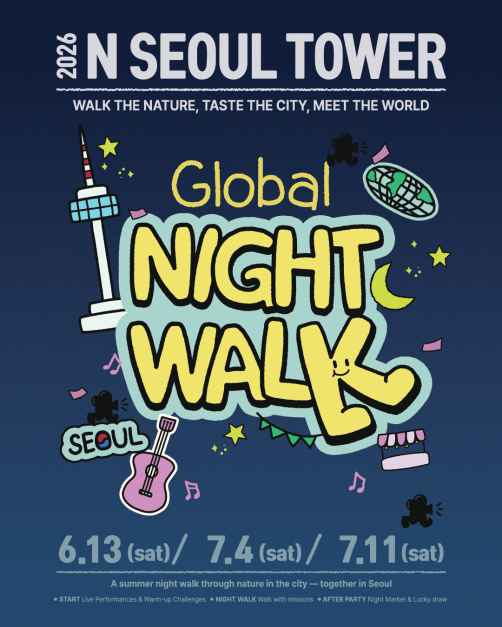
N서울타워N Seoul Tower rises 479 meters above sea level atop Mount Namsan, serving as an iconic metropolitan transmission tower and observation landmark since 1980. The tower offers uninterrupted 360-degree...
Bukchon Hanok Village
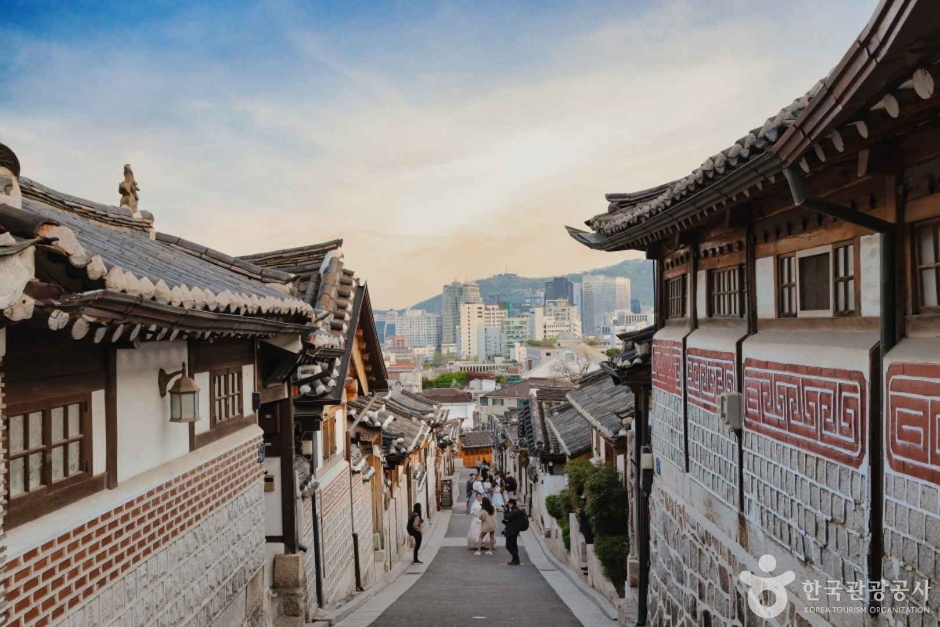
북촌한옥마을Bukchon Hanok Village is a preserved historic residential neighborhood nestled between Gyeongbokgung and Changdeokgung palaces. Preserving over 600 years of Seoul urban history, Bukchon features hu...
Gwangjang Market
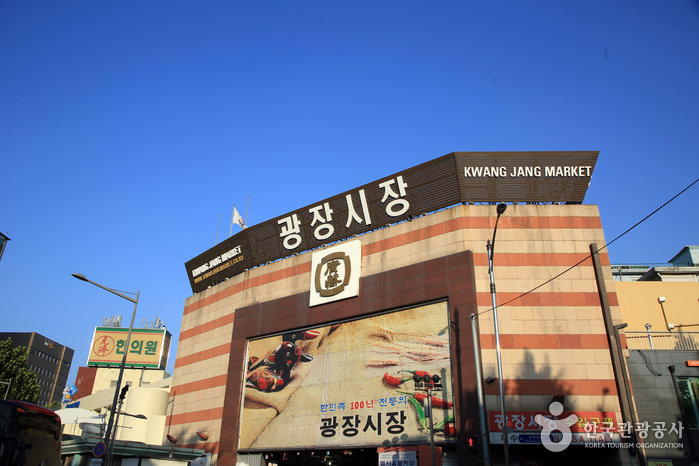
광장시장Gwangjang Market is South Korea’s oldest continuously operating permanent traditional market, founded in 1905 in the heart of Jongno. Renowned worldwide for its bustling food alleys, the market ser...