Korea Travel AtlasIndependent Multi-lingual Guide
BusanHeritage

海东龙宫寺

해동용궁사
4.8(1条评价)
Address: 86 Yonggung-gil, Gijang-eup, Gijang-gun, Busan (부산광역시 기장군 기장읍 용궁길 86)
待編輯審核
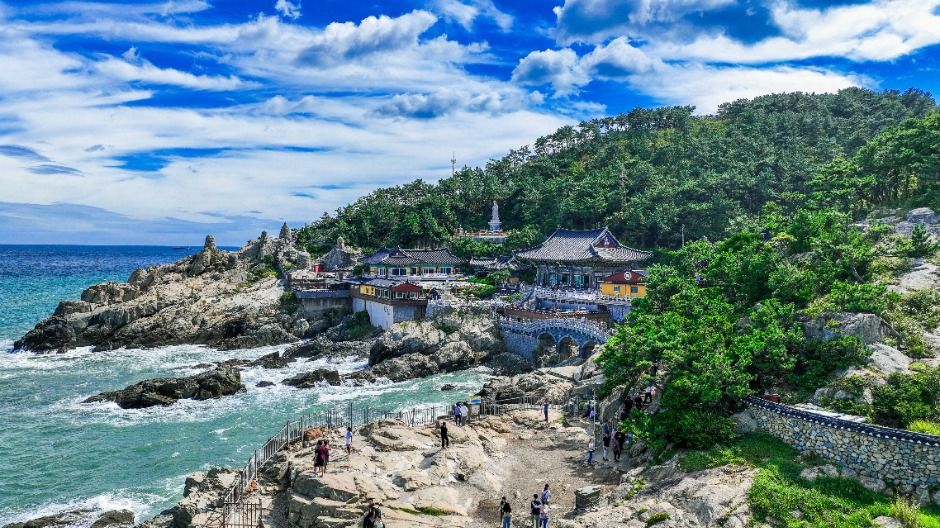
Haedong Yonggungsa Temple photo 1
照片 1 • 韩国旅游发展局 / 官方档案

Curator's Guide & Overview

Comprehensive Guide

1. Historical Origins & Cultural Background

Haedong Yonggungsa Temple was originally established in 1376 during the reign of King U of Goryeo by Great Master Naong, a revered royal preceptor. According to historical records, the Sea God of the East Sea appeared in Master Naong's dream, prophesying that building a sanctuary on the coastal promontory would bring prosperity and peace to the realm. Named Bomungsa initially, it was destroyed during the 1592 Japanese invasion and restored in 1970 by Monk Jeongam, who renamed it Haedong Yonggungsa after dreaming of the Bodhisattva of Compassion ascending on the back of a sea dragon.

2. Architectural Highlights & Key Structures

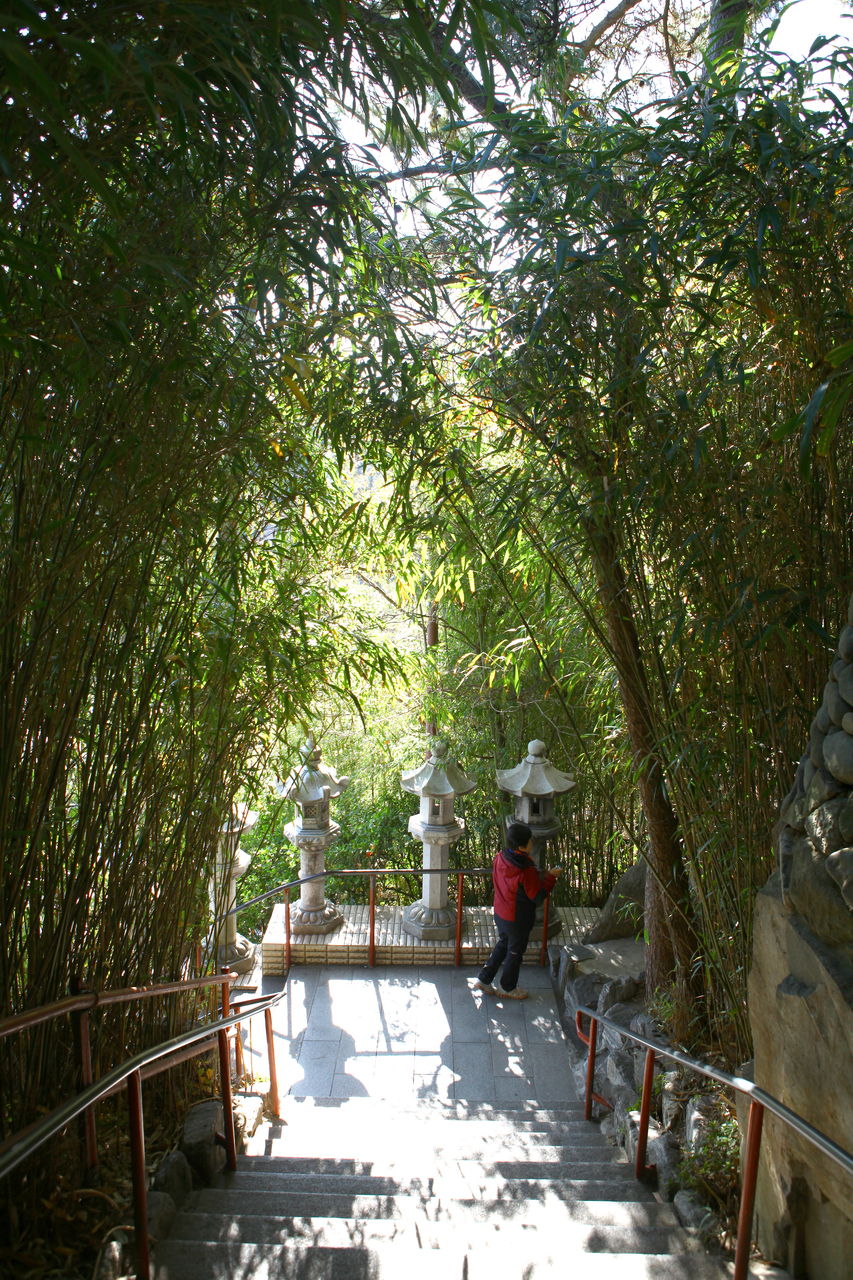
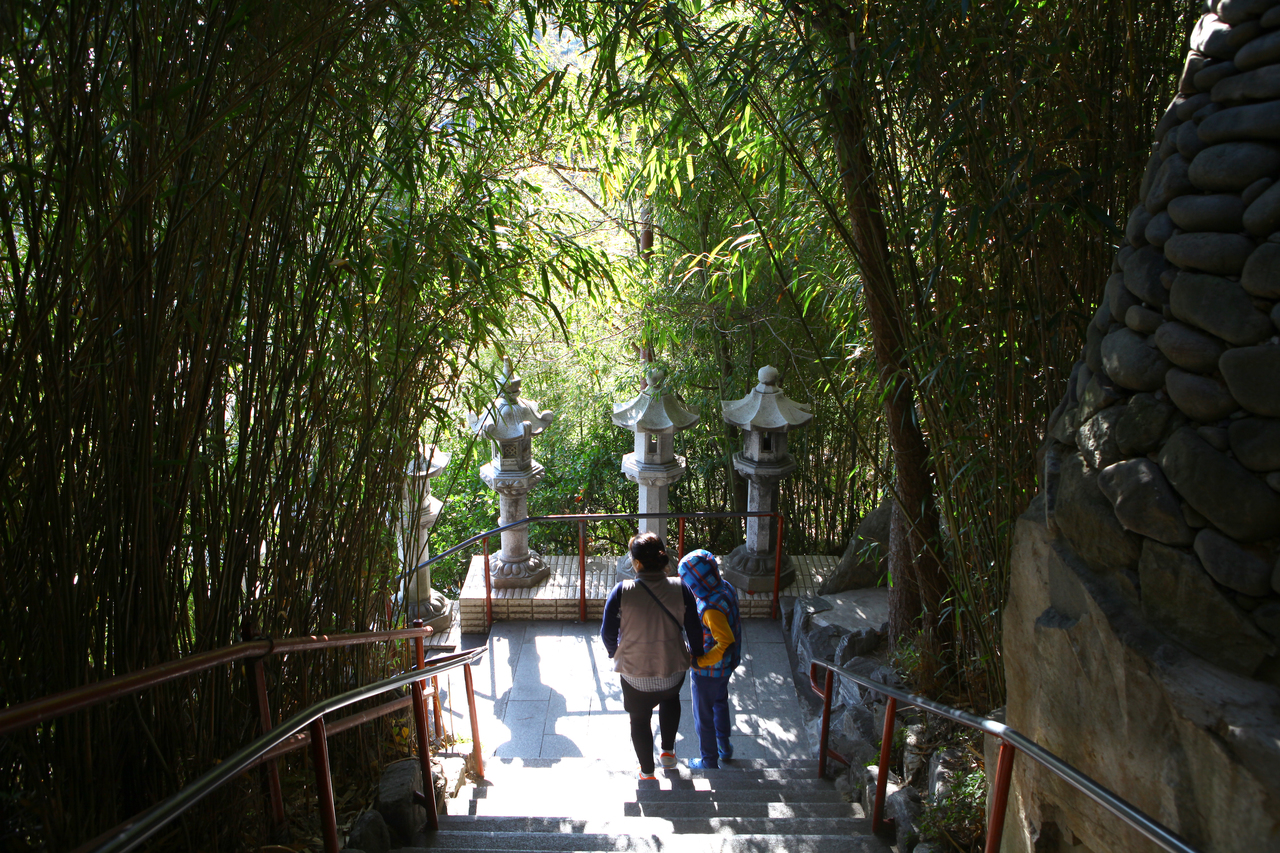
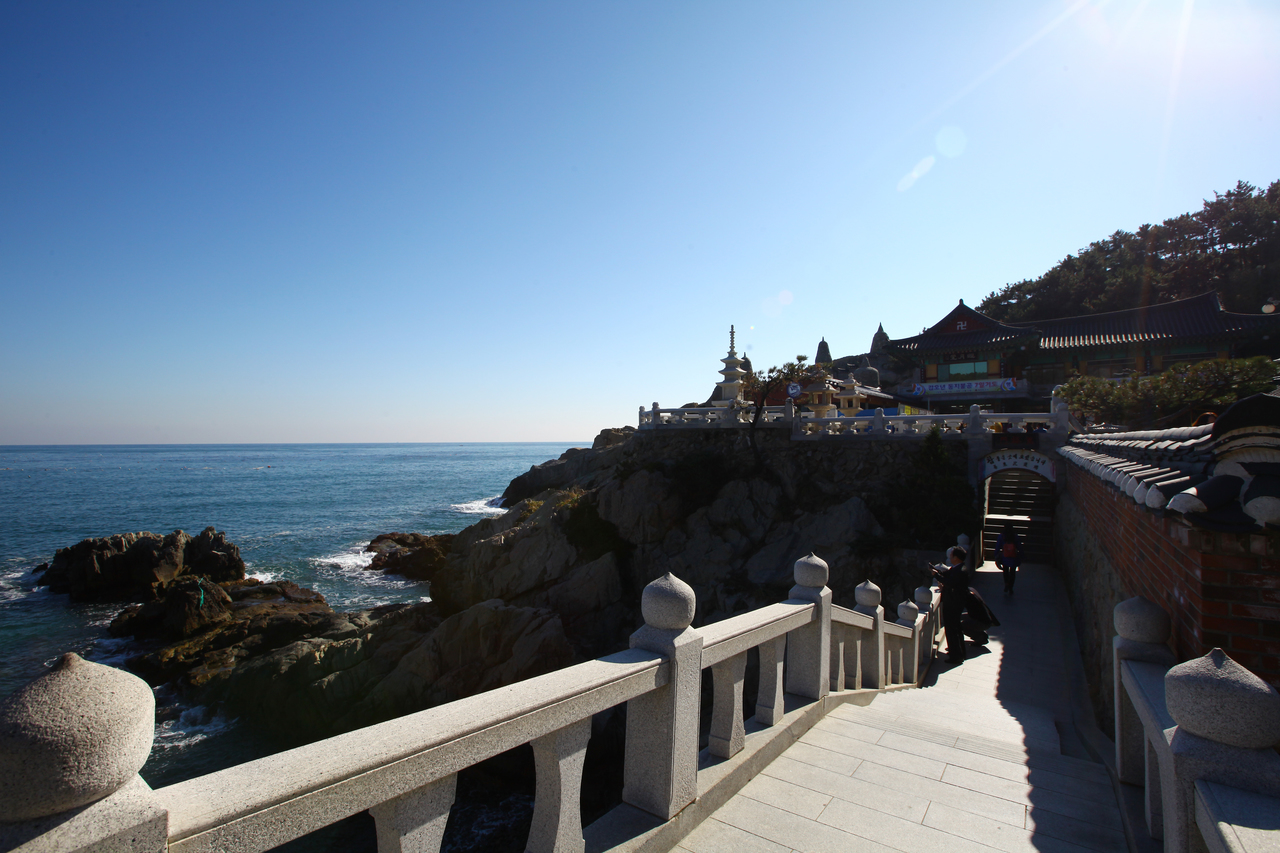
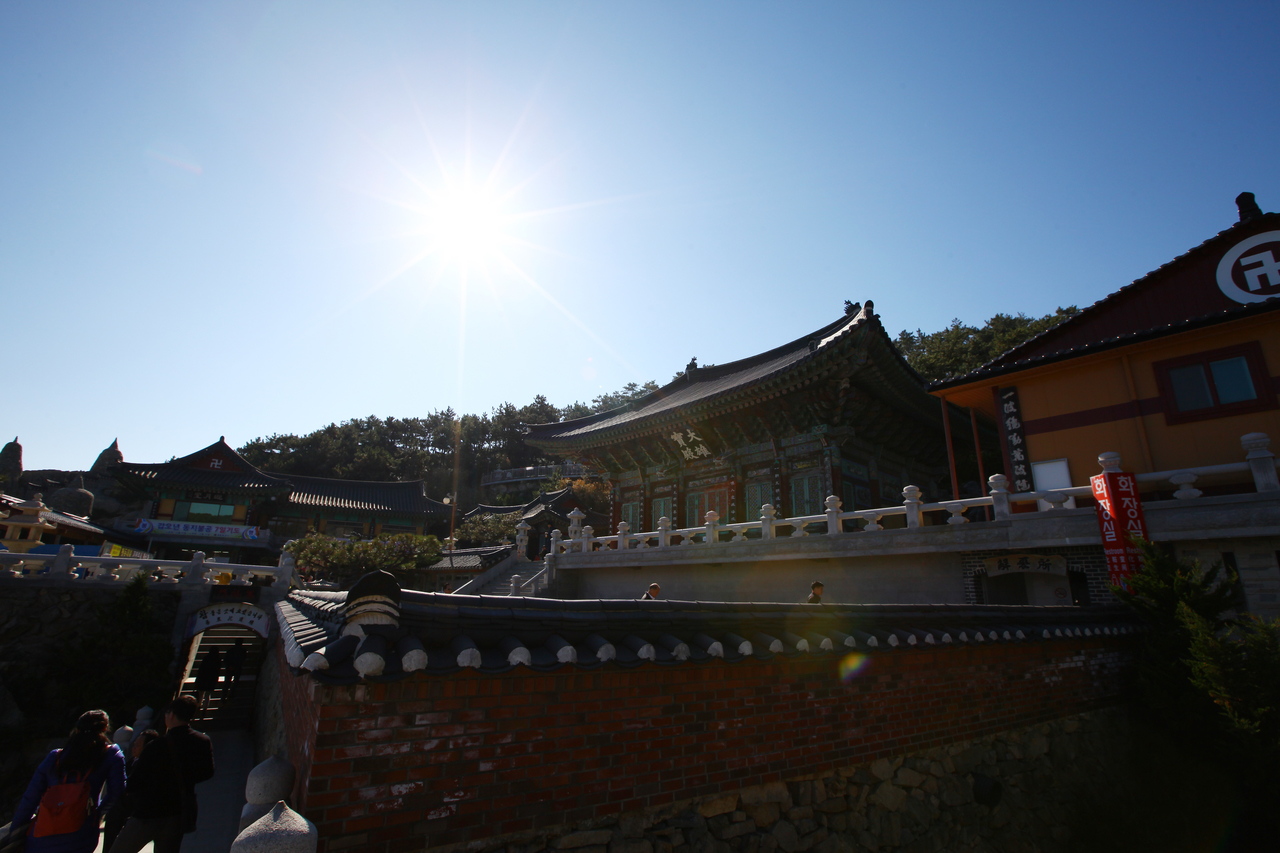
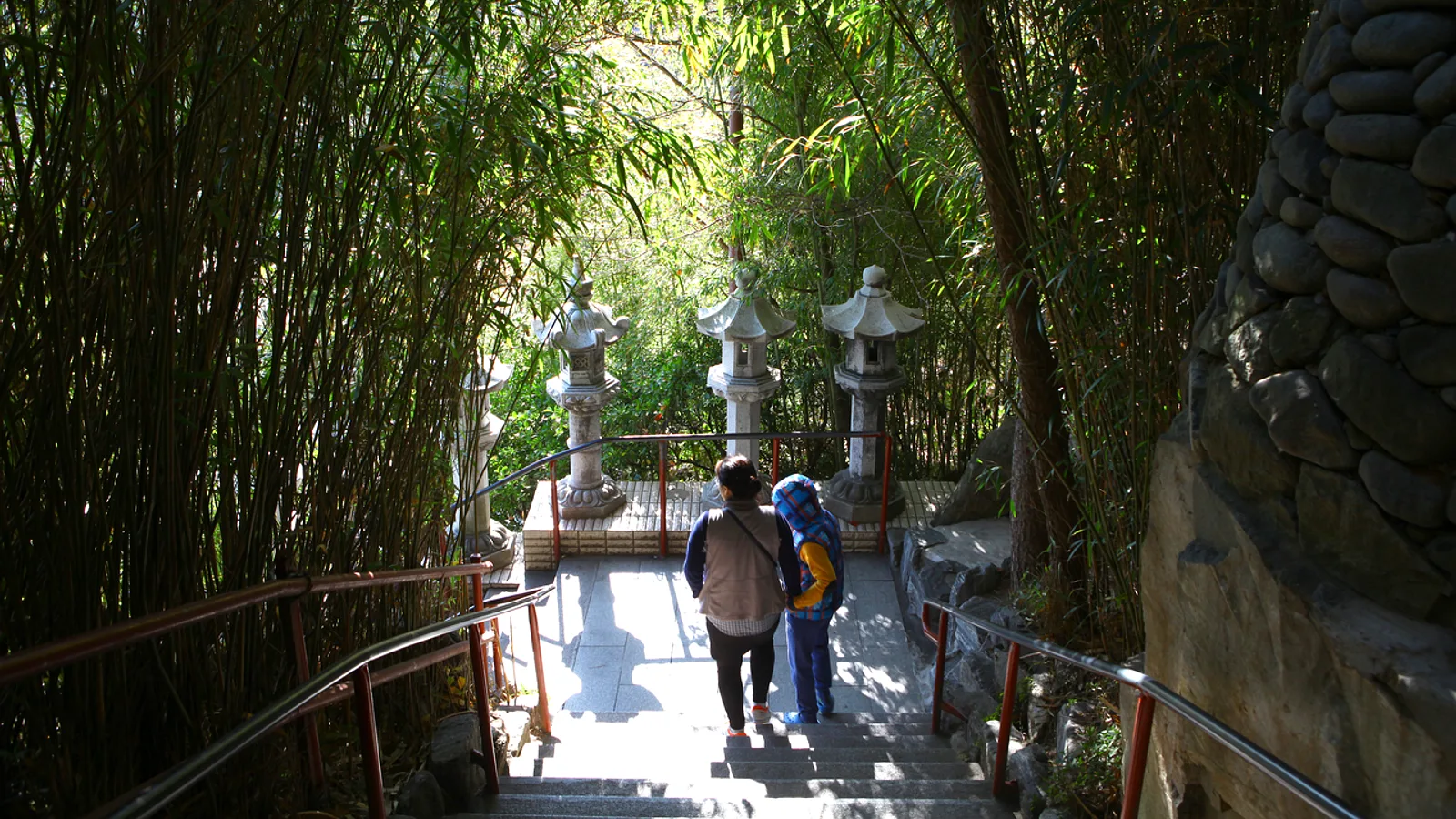
While the overwhelming majority of Korean Buddhist temples reside high in interior mountain valleys, Haedong Yonggungsa is unique as an ocean temple built dramatically onto sheer granite coastal cliffs directly pounded by breaking sea waves. Landmark elements include the '108-Step Long-Life Stairway' (where descending the stone steps relieves earthly agonies), the imposing 10-meter 'Haesu Gwaneum Daebul' (Seawater Great Goddess of Mercy) gazing out over the waters, Daeungjeon Main Sanctuary, the Dragon King Shrine (Yongwangdan), and the mysterious natural rock cavern sanctuary 'Gulbeopdang'.

3. Four Seasons Landscape & Seasonal Visiting Charms

Spring adorns the rocky descent with thousands of colorful lotus lanterns and blooming coastal cherry blossoms. Summer brings refreshing white crests and cool ocean breezes crashing against the stone embankments. Autumn carpets the coastal cliffs in blooming wild sea chrysanthemums under crisp azure skies, while winter draws nationwide pilgrims to witness the first sunrise of the New Year from its eastern-facing vantage.

4. Operating Hours & Peak Viewing Times

The temple opens daily from dawn at 04:30 until 19:20 (last entry around 18:50; adjusted seasonally with daylight). The absolute pinnacle experience is greeting the sunrise: watching the brilliant crimson sun breach the East Sea horizon and illuminate the temple rooftops in blinding gold is an unforgettable spiritual encounter. For daytime visits, arrive early between 08:00 and 10:00 AM to avoid crowds.

5. Admission Fees & Concessions (Youth/Foreigner Discounts)

Admission to Haedong Yonggungsa is completely free of charge for all domestic and foreign travelers. Visitors may explore the grounds, participate in prayer, and take photographs freely. Optional traditional activities like inscribing roof tiles with wishes (10,000 KRW) or tossing lucky coins into stone basins beneath Yongmungyo Bridge are purely voluntary donations.

6. Public Transit & Subway Exit Directions

Take the Donghae Line commuter rail to OSIRIA Station (Exit 1) and catch local city bus 139 for a quick 5-minute ride to the 'Yonggungsa National Institute of Fisheries Science' stop. Alternatively, take Busan Subway Line 2 to Haeundae Station (Exit 7) and board bus 181, which delivers passengers to the temple entrance in approximately 25 minutes without transfers.

7. Barrier-Free Accessibility & Visitor Amenities

Due to the temple's sheer cliffside terrain, access down to the main ocean sanctuary requires negotiating the steep, narrow stone steps of the 108-Step Stairway and arched footbridges, making wheelchair and stroller access impossible into the inner grounds. Mobility-impaired visitors can comfortably tour the upper entrance promenade and panoramic viewpoint. Accessible parking and restrooms are situated at the entrance parking lot.

8. Recommended Walking Route & Highlights Tour

12 Zodiac Animal Statues entry boulevard → Traffic Safety Pagoda → Descend 108-Step Long-Life Stairway → Yongmungyo Bridge → Sunrise Rock (Ilchuram) panorama → Daeungjeon Main Hall and Golden Buddha → Cavern Shrine (Gulbeopdang) → Ascend rock path to Haesu Gwaneum Daebul statue → High-angle sea view (approx. 1 to 1.5 hours).

9. Local Food Specialties & Regional Flavors

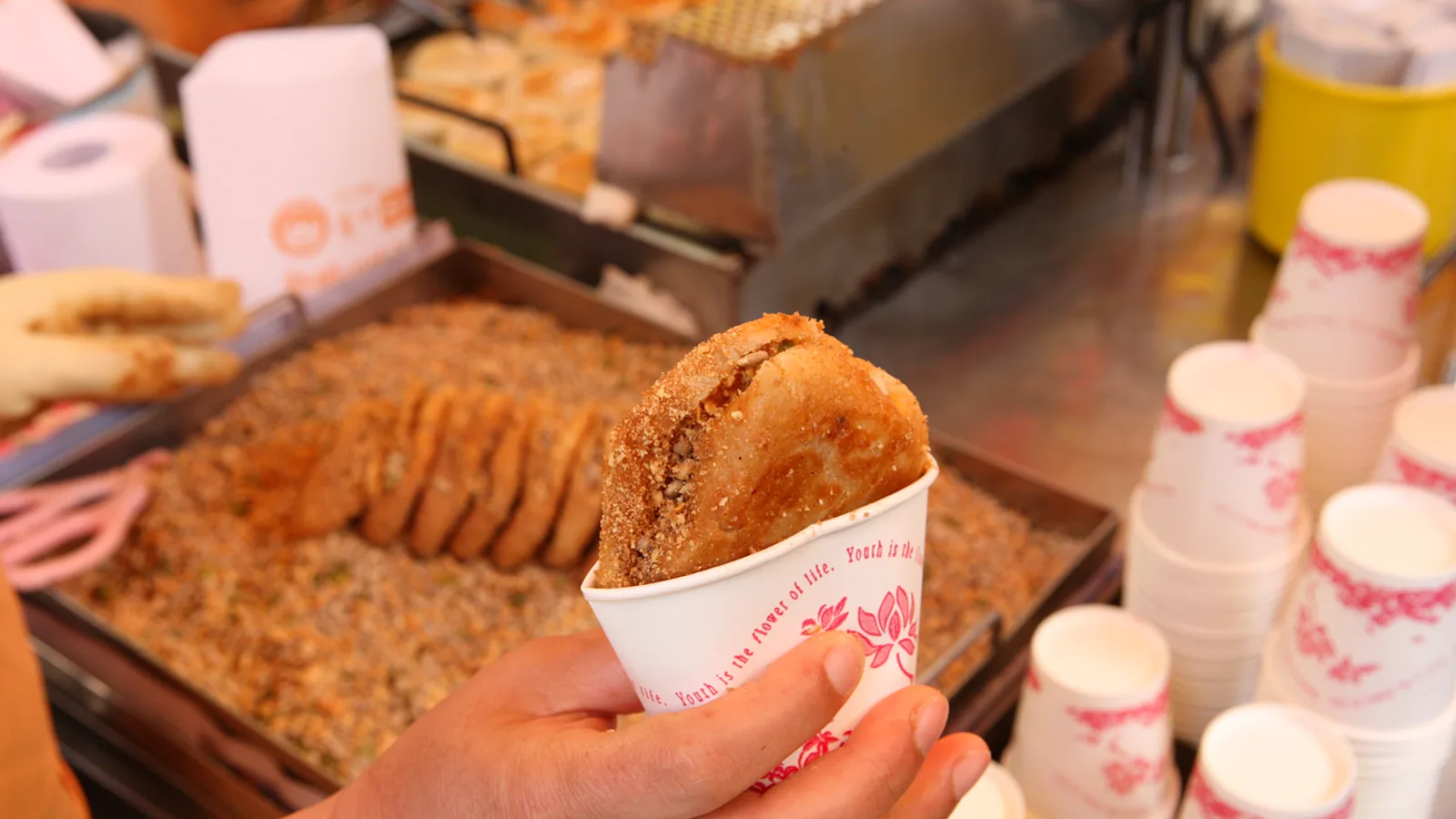
At the street market preceding the temple gates, travelers can sample freshly harvested Gijang kelp and seaweed snacks, sweet seed hotteok, and piping-hot fishcake broth. Just a short drive north into Gijang Daebyeon Port, renowned local delicacies include charcoal straw-grilled inshore sea eels (jipbul gomjangeo), nourishing abalone porridge, and fresh steamed snow crab.

10. Dietary Options (Vegetarian, Halal & Allergen Guide)

Within the temple grounds, traditional tea houses serve hot herbal infusions and simple vegetarian temple bibimbap. Across the adjacent OSIRIA complex at Lotte Mall and IKEA, visitors will find abundant plant-based dining options, vegetarian pasta dishes, and seafood options prepared without pork or lard.

11. Signature Photo Spots & Golden Hour Lighting

The world-renowned iconic angle is captured standing on the stone platform of Sunrise Rock (Ilchuram) looking back across the bay, framing the multi-tiered temple pavilions clinging to the granite cliffs with white ocean surf crashing in the foreground. Another powerful composition is photographing the 10-meter Bodhisattva statue outlined against the vast open sea horizon.

12. Visitor Etiquette & Cultural Property Regulations

Haedong Yonggungsa is an active and revered Buddhist place of worship. Visitors should dress respectfully, avoiding overly revealing beachwear. Maintain silence inside prayer sanctuaries and do not use camera flashes toward meditating worshippers. Climbing over safety railings onto wet, jagged coastal rocks is strictly prohibited.

13. Safety Precautions & 1330 Tourism Hotline Support

The seaside rocks are perpetually wet and slick with algae; stay strictly behind the safety rails, particularly during high swell warnings. For assistance, contact the temple management office (051-722-7744). For 24/7 multilingual emergency translation and bus route navigation, dial the KTO 1330 Hotline.

14. Nearby Connected Attractions & Walking Links

The temple directly connects to the coastal walking path leading toward the National Institute of Fisheries Science. The expansive OSIRIA Tourism Complex—featuring Lotte World Adventure Busan, Skyline Luge Busan, and Lotte Premium Outlets—is located just 3 to 5 minutes away by car.

15. Frequently Asked Questions (FAQ)

  • Q: What are the parking fees?

A: A paid parking lot operates at the entrance, charging a flat rate of 3,000 KRW for standard passenger cars.

  • Q: When should I arrive to see the sunrise?

A: Arrive at Sunrise Rock at least 30 minutes before official sunrise (around 05:00 AM in June; around 07:00 AM in January) to secure a good viewing spot.

16. Regional Extended Day Trip Itinerary

Dawn: Sunrise viewing and wish-making at Haedong Yonggungsa → Morning: Abalone porridge breakfast at Yeonhwari Haenyeo Village → Midday: Skyline Luge racing and entertainment at Lotte World Busan → Afternoon: Coastal cafe lounging along Gijang's seaside promenade.

Essential Visitor Facts

營業時間
04:30 - 19:20 (Sunrise prayer entry permitted; Last entry 18:50)
門票價格
Free Public Admission (National cultural heritage fee abolished)
Closed Days
Open 365 Days Year-Round
Best Time to Visit
早晨(約09:30-10:00)
Transit & Access Directions

Busan Donghae Line, Osiria Station, Exit 1 -> Take Bus 139 to Haedong Yonggungsa Temple / National Institute of Fisheries Science stop (10 min)

Accessibility & Special Amenities

Coastal cliffs feature 108 stone steps down to the main sanctuary; strollers and wheelchairs must remain at upper entrance pavilion.

✓ 附近有清真餐飲選擇✓ 附近有素食餐飲選擇

Location Coordinates

Latitude: 35.1884
Longitude: 129.2234

Discover Themes & Highlights

Key interest areas and cultural highlights:

#haedong-yonggungsa#VisitBusan#KoreaTravelAtlas

Community Traveler Reviews1 Review

Visitor tips, feedback, and questions submitted by real travelers.

Share Your Experience

5.0 / 5.0
TravelerSarah_Global
5.0

Visiting Haedong Yonggungsa Temple was one of the true highlights of my journey in Busan. Easy access via public transit, remarkably well-maintained grounds, and authentic local food nearby.

Posted: 5/18/2026

Connected Cultural Destinations

Handpicked nearby attractions and regional cultural highlights.

Gamcheon Culture Village

감천문화마을
203 Gamnae 2-ro, Saha-gu, Busan
4.8

Gamcheon Culture Village in Saha-gu, Busan, is a vibrant hillside community celebrated as "Korea's Santorini" or "Machu Picchu of Busan" for its terraced rows of pastel-hued residences clinging to ...

清真素食早晨(約09:30-10:00)
查看詳情

Haeundae Beach

해운대해수욕장
Haeundae Beach, Busan, South Korea
4.8

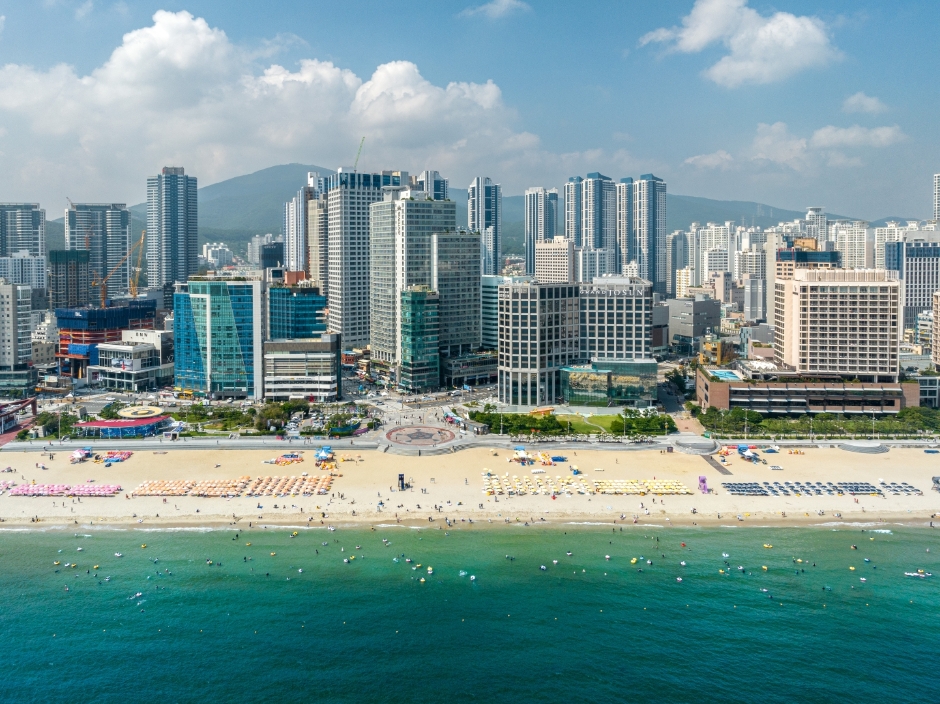
Haeundae Beach is South Korea’s most celebrated coastal seaside destination, stretching for 1.5 kilometers of soft golden sand along Busan’s southeastern shoreline. Backed by modern skyscrapers, se...

清真素食早晨(約09:30-10:00)
查看詳情

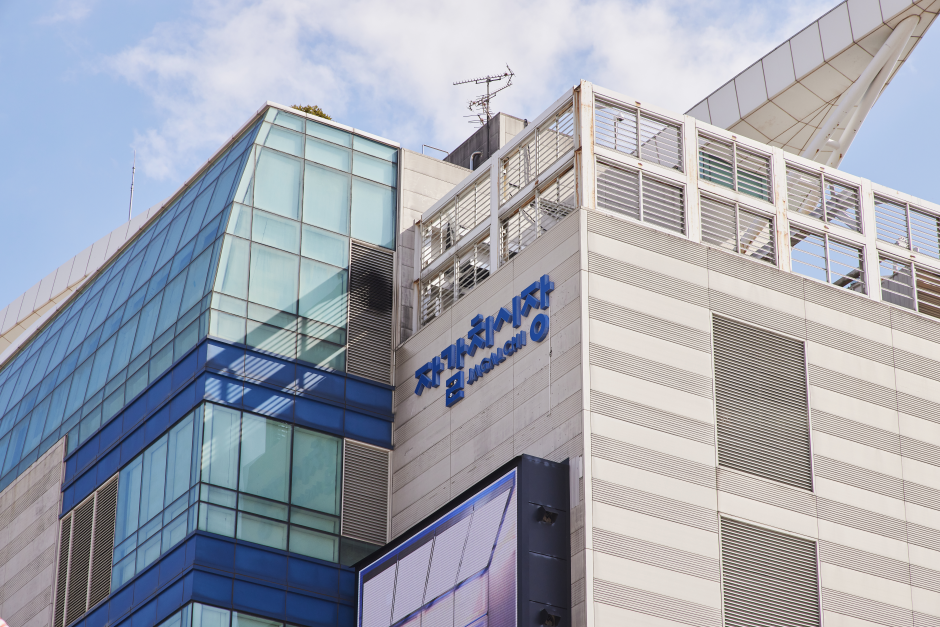
Jagalchi Fish Market

자갈치시장
Jagalchi Fish Market, Busan, South Korea
4.8

Jagalchi Fish Market (자갈치시장) in Busan. A bustling authentic marketplace renowned for street food specialties, artisanal goods, and regional hospitality, situated with convenient transit connections...

清真素食早晨(約09:30-10:00)
查看詳情

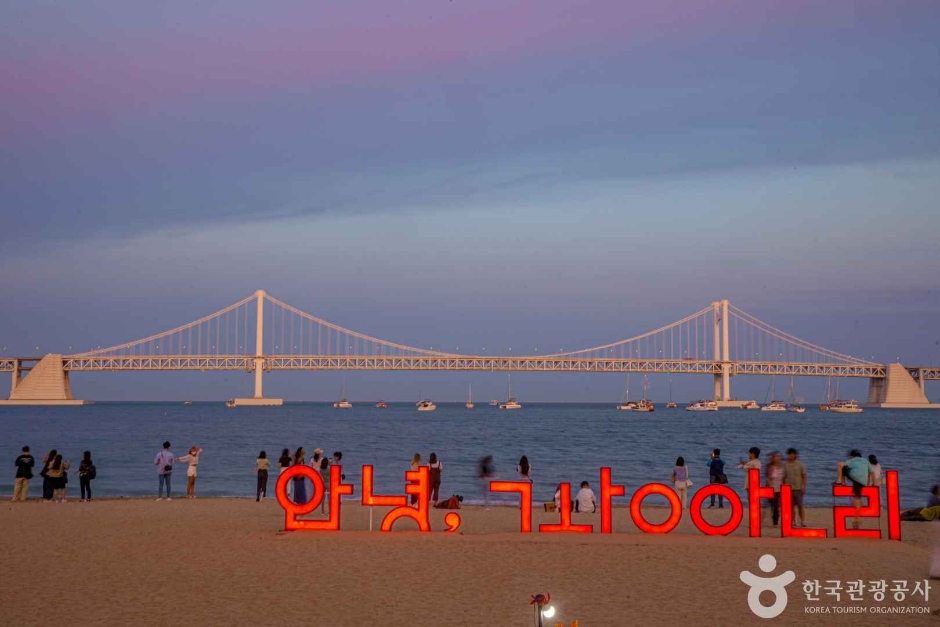
Gwangalli Beach

광안리해수욕장
219 Gwanganhaebyeon-ro, Suyeong-gu, Busan
4.8

Gwangalli Beach, curving gracefully in Suyeong-gu, Busan, is renowned for its sweeping vistas of the monumental 7.42-kilometer Gwangan Grand Bridge (Diamond Bridge) spanning the ocean horizon. Frin...

清真素食早晨(約09:30-10:00)
查看詳情
海东龙宫寺 - Korea Travel Atlas & GEO Map